

WNBA Playoff Field Set for 2026, but All Eight Seeds Remain Open Ahead of Season Finale
All eight WNBA postseason spots are locked in, but final seedings and first-round matchups will be determined during the regular season's final week ending Sept. 24.
By The Global Wire Newsroom · Reported from Michael Voepel
Link preview · horizonglobalnews.com
WNBA Playoff Field Set for 2026, but All Eight Seeds Remain Open Ahead of Season Finale
All eight WNBA postseason spots are locked in, but final seedings and first-round matchups will be determined during the regular season's final week ending Sept. 24.
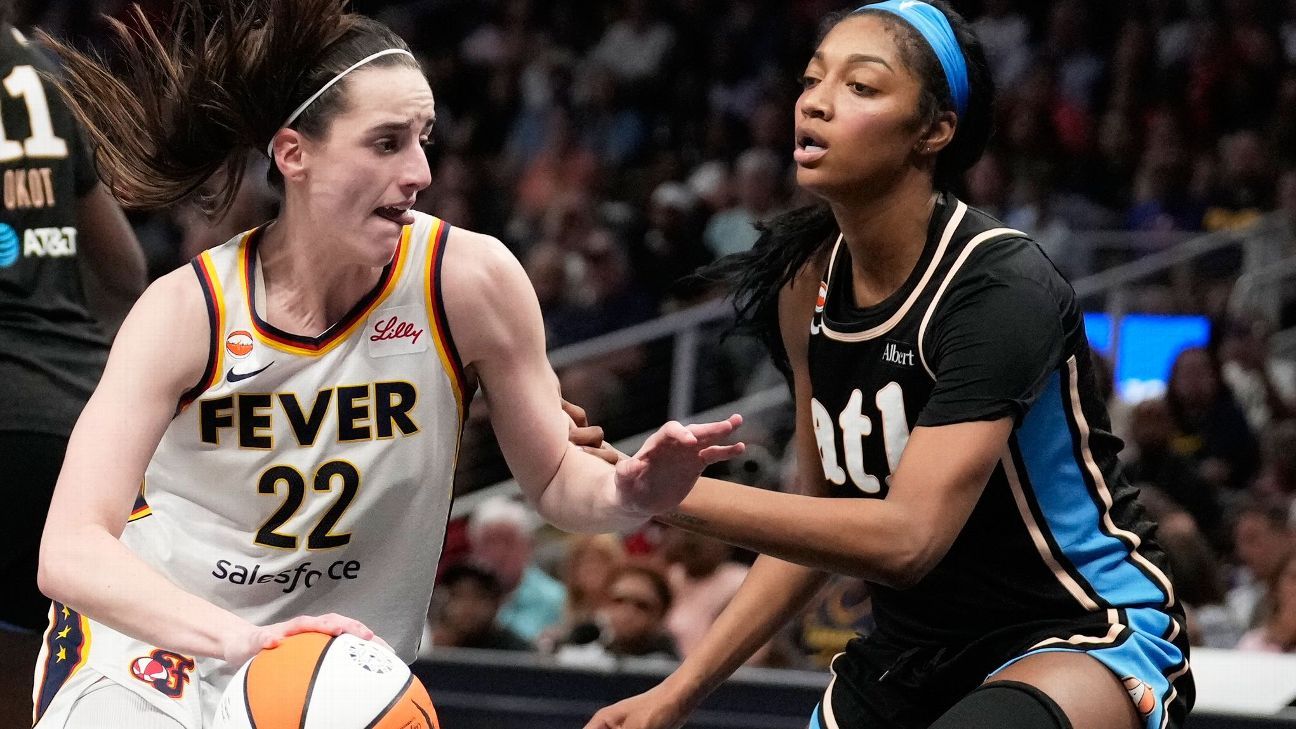
The Women’s National Basketball Association has finalized the eight franchises that will compete in its 2026 postseason, but the final standings and opening-round playoff matchups remain entirely unsettled heading into the final week of the regular season. According to reporting published on Sept. 17, 2026, by journalist Michael Voepel, all eight postseason seeds remain open for competition prior to the formal end of the regular season on Sept. 24, 2026. Although the field of playoff participants has been closed to non-qualifying teams, the distribution of positions within the eight-team bracket will depend on the outcomes of games played over the closing seven days of the schedule.
Key facts
What happened
With the 2026 WNBA regular season drawing to a close, the league has reached a rare juncture where the complete roster of postseason participants is established, yet no team has locked in its precise position on the tournament bracket. Reporting by Michael Voepel on Sept. 17, 2026, highlighted that while lower-ranked franchises have been mathematically eliminated from contention, the remaining slate of games through Sept. 24, 2026, will dictate every first-round pairing.
During this final seven-day window, teams across the league are engaged in a fluid battle for position. Teams near the top of the standings are competing for the premier seeds to ensure home-court advantage throughout the early rounds of the postseason, while teams positioned in the middle and lower tiers of the top eight are seeking to elevate their rank to avoid higher-seeded opponents in the opening round or to host postseason games.
Because multiple teams remain clustered tightly in the win-loss column, single-game outcomes during the final week can trigger significant movement across the bracket. The situation forces coaching staffs to balance the tactical imperative of securing favorable seeding against the physical necessity of managing player health and fatigue prior to the start of elimination play.
Why it matters
The unresolved state of all eight playoff seeds entering the final week carries direct competitive, tactical, and financial consequences for teams, players, and league executives.
From a competitive standpoint, home-court advantage represents a pivotal factor in WNBA postseason dynamics. Under the league's playoff format, the higher-seeded team hosts games in the opening round, providing an immediate environment advantage in short series where a single loss can bring a season to an abrupt end. Securing a top-four seed guarantees hosting privileges in the first round, while earning the top overall seed ensures home-court dominance through the semifinals and Finals.
Tactically, bracket placement determines potential matchups. Teams actively evaluate potential first-round opponents based on tactical suitability, regular-season head-to-head performance, and roster matchups. A shift of one position in the final standings can alter a team's path from facing a heavily favored contender to meeting a more manageable opponent in the opening series.
Financially and operationally, home playoff games generate substantial revenue for team owners through ticket sales, venue concessions, and local corporate sponsorships. For arena operations and broadcast production teams, fluid seedings require complex logistical planning for travel, venue scheduling, and television scheduling across multiple potential host cities until the regular season concludes on Sept. 24.
The background
The structure of the WNBA postseason has undergone significant evolution since the league’s inaugural season in 1997. Originally, the league employed a traditional conference-based playoff system, in which top teams from the Eastern Conference and Western Conference competed within their respective brackets before meeting in the WNBA Finals.
In 2016, the WNBA instituted a fundamental structural change by abandoning conference-based playoff qualification in favor of a flat, single-bracket system. Under this model, the eight teams with the best overall regular-season records qualify for the postseason regardless of conference affiliation, ensuring that the highest-performing teams across the entire league enter the championship pursuit.
Further modifications were implemented in 2022, when the league redesigned the tournament format to eliminate single-elimination first- and second-round games. Under the current structure, the first round consists of a best-of-three series between seeded pairs (No. 1 versus No. 8, No. 2 versus No. 7, No. 3 versus No. 6, and No. 4 versus No. 5). The winners advance to best-of-five semifinal series, followed by a best-of-five WNBA Finals series to crown the champion.
When teams finish the regular season with identical win-loss records, the league resolves ties using a multi-step tiebreaker procedure. The first criteria is head-to-head winning percentage between the tied teams during the regular season. If a tie remains unresolved, secondary metrics are applied, including winning percentage against teams finished at or above .500, winning percentage against teams within the same conference, and cumulative point differential in head-to-head contests.
Reaction
Coaches and team executives across the qualified franchises are actively navigating the strategic dilemmas presented by the final week of play. While team leadership typically seeks to maximize seeding to secure home-court advantage, managers must weigh that objective against the risk of player injury or exhaustion ahead of the postseason.
Players in the locker room face intense pressure during this seven-day stretch, as back-to-back game scheduling and late-season travel schedules compound the physical strain of a rigorous regular-season calendar. For athletes on teams occupying fringe seeds, every remaining possession carries high stakes for post-season survival.
Television rights holders and league media operations are preparing contingency coverage plans. Network programmers must wait for the final outcome of games on Sept. 24 before finalizing national broadcast schedules, commentator assignments, and prime-time air slots for the opening round of the 2026 playoffs.
What we don't know yet
Despite the clarification that eight teams have secured postseason berths, several essential elements remain unconfirmed due to gaps in available details.
First, the specific names and win-loss records of the eight qualified franchises were not itemized in the initial reporting summary by Voepel, leaving the precise team-by-team standings unlisted in this text. Consequently, exact head-to-head tiebreaker scenarios between specific clubs cannot be calculated from the primary summary alone.
Second, it remains unknown how individual head coaches will handle player rotations over the final week. Whether teams locked into the middle of the pack choose to rest star players or push full starter minutes to pursue higher seeds will only become clear as starting lineups are submitted before each game.
Finally, the precise start dates, tip-off times, and broadcast pairings for the first-round series will remain unknown until the league office officially audits the standings and executes tiebreaker procedures following the final buzzer on Sept. 24.
What to watch
In the days leading up to the conclusion of the regular season, several specific indicators will determine how the 2026 postseason bracket takes shape:
This report is based on original news coverage published by Michael Voepel on Sept. 17, 2026.
How this story was produced
This report was written by The Global Wire newsroom from reporting first published by Michael Voepel. We verify the core facts against the original report, write our own account, and add the background and consequences a short wire item leaves out. Drafting is AI-assisted inside an editor-supervised pipeline, and every story is checked for accuracy of attribution, structure and duplication before it appears — full detail in our AI and funding disclosure.
Spotted an error? Tell us at corrections@horizonglobalnews.com and read our corrections policy or editorial standards.




Reader comments
Loading comments…