

USDA Biological Control Program Suppresses Invasive Giant Salvinia in Gulf Coast Waterways
A multi-year study in Texas and Louisiana demonstrated that salvinia weevils effectively cleared dense aquatic weed infestations without chemical herbicides.
By The Global Wire Newsroom · Reported from Team Global
Link preview · horizonglobalnews.com
USDA Biological Control Program Suppresses Invasive Giant Salvinia in Gulf Coast Waterways
A multi-year study in Texas and Louisiana demonstrated that salvinia weevils effectively cleared dense aquatic weed infestations without chemical herbicides.
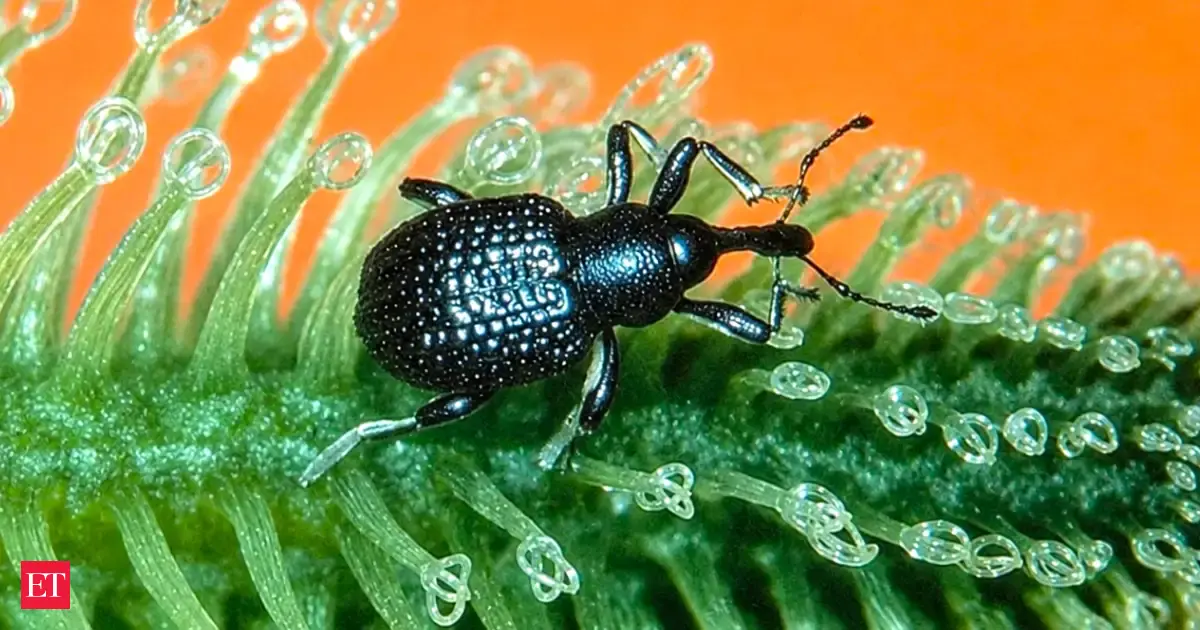
In a major landmark for sustainable invasive species management across the American South, long-term field research evaluated by the United States Department of Agriculture demonstrated that introduced salvinia weevils (*Cyrtobagous salviniae*) successfully suppressed massive infestations of giant salvinia (*Salvinia molesta*) in Texas and Louisiana. Following controlled releases initiated by USDA researchers in 2001, scientists observed a dramatic reduction in floating weed density near primary release locations by 2003, as reported by Team Global. In contrast, unmanaged control waterways remained completely choked by the invasive aquatic fern, underscoring the long-term viability of targeted biological control agents as a chemical-free alternative for freshwater management.
Key facts
What happened
The field intervention began in 2001 when USDA Agricultural Research Service scientists selected controlled release sites across Texas and Louisiana freshwater bodies heavily impacted by giant salvinia. Researchers placed carefully measured populations of *Cyrtobagous salviniae*—a tiny, host-specific weevil native to South America—onto active mats of the floating fern. To rigorously evaluate the effectiveness of the insects against natural environmental variables, scientists designated neighboring infested waterways as untreated control zones where no biological control agents were introduced.
Over the subsequent two-year monitoring period from 2001 to 2003, researchers tracked changes in plant canopy cover, biomass density, and overall surface coverage. The biological mechanism unfolded in distinct stages: adult weevils fed upon the young terminal buds of the plant, disrupting new growth, while female weevils deposited eggs within the plant's tissue. Once hatched, the insect larvae burrowed directly into the rhizomes and stems, severing vascular structures and preventing nutrient transport.
By 2003, the cumulative damage inflicted by the reproducing insect colonies led to widespread structural collapse of the giant salvinia canopy in treated locations. The damaged plants yellowed, decayed, lost buoyancy, and ultimately sank to the sediment floor, leaving open water corridors. Conversely, the designated control sites experienced uninterrupted vegetation growth, maintaining dense green carpets that blocked light penetration and severely restricted water circulation. The trial proved that once established, the weevil populations maintained continuous pressure on the invasive host plant without requiring repeated human interventions or chemical treatments.
Why it matters
The success of the 2001–2003 trials carries profound long-term implications for freshwater management, agricultural infrastructure, and regional economies across the southern United States. Giant salvinia is widely recognized as one of the world's most aggressive aquatic weeds. Left unchecked, its dense floating mats completely cover lakes, reservoirs, bayous, and canals, cutting off light to native submersed vegetation and driving severe dissolved oxygen depletion that leads to massive fish kills and ecological collapse.
From an economic perspective, giant salvinia inflicts severe financial damage on agricultural producers and municipal entities. The plant clogs agricultural irrigation canals, chokes drainage ditch networks, fouls public water intakes, and impedes commercial inland shipping and fish farming operations. In recreational sectors, carpeted waterways eliminate boating, waterfowl hunting, and sport fishing, harming local economies reliant on ecotourism.
Historically, water authorities relied almost exclusively on chemical herbicides such as glyphosate, diquat, or fluridone to clear clogged channels. Chemical applications carry substantial annual expenses, often costing hundreds of dollars per acre, and require recurring treatments because herbicides rarely eliminate latent plant tissue completely. Furthermore, broad-spectrum chemical sprays risk non-target damage to beneficial native flora, carry potential regulatory restrictions, and raise environmental concerns regarding chemical accumulation in municipal watersheds.
By demonstrating that *Cyrtobagous salviniae* can achieve durable population control, the USDA study proved that biological control offers an ecologically sound, highly targeted, and cost-effective management strategy that permanently reduces reliance on chemical interventions.
The background
Giant salvinia (*Salvinia molesta*) is a free-floating aquatic fern native to southeastern Brazil. Owing to its attractive foliage, the species was historically spread around the globe through the commercial aquarium and water garden trades. Outside its native range, lacking natural predators, the plant exhibits explosive growth. Under optimal summer conditions in warm Gulf Coast waters, giant salvinia can double its surface area in less than a week, forming mats up to three feet thick that contain multiple layers of compressed vegetation.
The plant was first recorded in North America in South Carolina in 1995. By the late 1990s, human activity, boat transfers, and connected water networks facilitated its rapid spread into Texas, Louisiana, Mississippi, Alabama, and Florida. Recognizing the severe ecological threat, researchers turned to international precedents for solution strategies.
In the early 1980s, Australian scientists with the Commonwealth Scientific and Industrial Research Organisation (CSIRO) conducted groundbreaking research on biological control agents in South America. They identified the tiny, host-specific weevil *Cyrtobagous salviniae*, which feeds exclusively on *Salvinia* species. Initial releases in Australia's Lake Moondarra and later in the Sepik River basin of Papua New Guinea yielded astounding success, reducing multi-square-mile infestations to negligible levels within months to years.
Before releasing the insect into North American ecosystems, the USDA Agricultural Research Service subjected *Cyrtobagous salviniae* to years of strict quarantine testing. Scientists tested the insect against dozens of non-target plant species, including native aquatic plants, commercially vital crops such as rice, and related fern species. The research conclusively confirmed that the salvinia weevil is an obligate specialist that cannot feed, reproduce, or complete its life cycle on any plant other than giant salvinia and closely related *Salvinia* species, ensuring zero risk to native vegetation or agricultural output.
Reaction
The positive outcomes documented in the USDA study drew strong interest from natural resource managers, agricultural extension agents, and conservation organizations across the Gulf Coast region. Water management districts and agricultural authorities have consistently favored the expansion of biological control initiatives, pointing to the unsustainable financial burden of perpetual herbicide spraying across vast river basins and marshlands.
State wildlife agencies, including the Texas Parks and Wildlife Department and the Louisiana Department of Wildlife and Fisheries, subsequently established dedicated insect rearing programs based on these foundational findings. Environmental groups and freshwater conservation advocates have lauded the biological approach as a model for sustainable ecosystem management, emphasizing that natural pest suppression preserves native aquatic biodiversity without introducing synthetic compounds into public drinking water sources or commercial fisheries.
What we don't know yet
Despite the proven success of salvinia weevils in warm climates, key scientific and operational questions remain regarding their long-term effectiveness in variable climatic conditions. One primary uncertainty involves the northern thermal limit of the insect. Salvinia weevils are tropical and subtropical insects that suffer high mortality during prolonged freezing events. In northern parts of Texas and Louisiana, winter freezes can devastate local weevil populations, allowing giant salvinia—which often survives cold spells in sheltered water pockets—to rebound rapidly in the spring before insect populations recover.
Additionally, long-term multi-decadal cycles of pest-host dynamics remain an area of ongoing study. When weevils successfully destroy giant salvinia mats, their food source disappears, causing insect numbers to collapse. It remains uncertain how frequently supplemental weevil restockings are required to prevent secondary giant salvinia resurgences. Finally, precise economic comparisons detailing exact dollar savings per acre across different specific watershed types remain incompletely quantified in early study cohorts.
What to watch
In the coming years, key indicators will determine the expanded trajectory of biological control against giant salvinia across North American waterways:
This report relies on original reporting and research findings evaluated by Team Global regarding the USDA salvinia weevil biological control program in Texas and Louisiana.
How this story was produced
This report was written by The Global Wire newsroom from reporting first published by Team Global. We verify the core facts against the original report, write our own account, and add the background and consequences a short wire item leaves out. Drafting is AI-assisted inside an editor-supervised pipeline, and every story is checked for accuracy of attribution, structure and duplication before it appears — full detail in our AI and funding disclosure.
Spotted an error? Tell us at corrections@horizonglobalnews.com and read our corrections policy or editorial standards.




Reader comments
Loading comments…