

US Rules Out Immediate Iran Strikes, Pivoting to Sanctions and Maritime Pressure
Secretary of State Marco Rubio told allied foreign ministers Washington will focus on economic sanctions and naval enforcement while keeping military options in reserve.
By The Global Wire Newsroom · Reported from India Today World Desk
Link preview · horizonglobalnews.com
US Rules Out Immediate Iran Strikes, Pivoting to Sanctions and Maritime Pressure
Secretary of State Marco Rubio told allied foreign ministers Washington will focus on economic sanctions and naval enforcement while keeping military options in reserve.
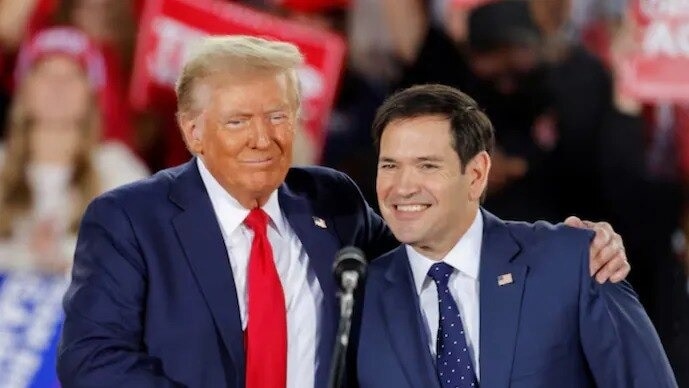
The United States has signaled a strategic shift in its policy toward Iran, telling foreign allies that immediate military strikes against Tehran are not currently under consideration. In diplomatic communications with allied foreign ministers, U.S. Secretary of State Marco Rubio outlined an approach centered on intensifying financial sanctions and expanding maritime interdiction operations across critical Middle Eastern sea lanes. According to reporting by India Today World Desk, Washington intends to maximize economic leverage over the Iranian government while maintaining military readiness to act defensively if Iranian forces or regional proxy groups launch attacks against American or allied targets.
Key facts
What happened
The revised strategic direction was conveyed directly by Secretary of State Marco Rubio during diplomatic discussions with foreign ministers representing key U.S. partner nations. The briefings were designed to establish a shared understanding among allies regarding Washington's immediate military and diplomatic stance toward Iran.
Instead of pursuing kinetic military actions, the U.S. administration intends to concentrate resources on non-kinetic pressure mechanisms designed to restrict Tehran's financial capacity and operational flexibility. On the economic front, the plan involves expanding targeted sanctions against international entities, financial intermediaries, and shipping firms that assist Iran in evading trade restrictions and exporting crude oil.
On the high seas, Washington is planning an expanded maritime enforcement posture. This initiative entails increased naval surveillance, interdiction operations, and boarding protocols targeting unflagged or non-compliant merchant vessels suspected of transporting Iranian petroleum or illicit armaments. The operations will focus primarily on high-density commercial sea routes, including the Persian Gulf, the Strait of Hormuz, the Gulf of Oman, and the Red Sea corridor.
While emphasizing economic and maritime pressure, Rubio made clear to foreign ministers that the policy does not eliminate military options. U.S. military forces deployed in the Middle East will maintain their force posture to act defensively. The strategy establishes a clear conditional threshold: kinetic military strikes remain a secondary resort, reserved strictly for responding to any preemptive attacks launched by Iranian state forces or affiliated regional proxy organizations against American or allied targets.
Why it matters
The policy decision to emphasize economic squeeze and maritime enforcement over direct military engagement carries significant geopolitical, economic, and security consequences.
From an energy market perspective, ruling out immediate preemptive military strikes reduces the short-term risk of a systemic supply shock across the Persian Gulf. However, an intensified campaign of maritime interdiction introduces distinct operational friction to maritime trade. The Strait of Hormuz alone handles roughly 20 percent of total global petroleum consumption, representing approximately 21 million barrels of oil and petroleum products daily. Stepped-up naval inspections, potential ship seizures, and heightened military activity in these narrow sea lanes can increase shipping insurance premiums, delay vessel transit times, and generate price fluctuations in global crude benchmarks.
For international allies, Washington's focus on sanctions and maritime enforcement offers a manageable framework for diplomatic cooperation. Major European and Asian economies, which rely heavily on Middle Eastern energy imports and generally seek to prevent widespread regional warfare, tend to favor economic containment and law-enforcement-style maritime patrols over open kinetic conflict. By emphasizing multilateral sanctions enforcement, the U.S. strategy aligns more closely with allied preferences for regional containment while pressing partner nations to enforce trade bans more rigorously within their jurisdictions.
Furthermore, targeting Iran's maritime trade network directly threatens the revenue streams that sustain Tehran's national budget and foreign operations. Unofficial oil exports, largely routed to Asian markets via complex transshipment networks, represent a primary source of foreign currency for the Iranian state. Severing or significantly slowing these supply chains degrades Iran's economic resilience without initiating full-scale armed conflict. However, this strategy also raises the likelihood of asymmetric counter-measures by Iran's Islamic Revolutionary Guard Corps (IRGC) Navy, which historically responds to maritime enforcement by targeting or harassing Western-linked commercial vessels transiting regional waterways.
The background
The strategic calibration by Washington reflects a long history of confrontation between the United States and Iran, marked by cycles of diplomatic estrangement, trade embargos, and naval friction in the Middle East.
Economic sanctions have served as the core mechanism of U.S. foreign policy toward Tehran for several decades. The regulatory framework expanded dramatically following Washington's 2018 departure from the Joint Comprehensive Plan of Action (JCPOA), the nuclear agreement concluded in 2015 alongside the United Kingdom, France, Germany, Russia, and China. Following the withdrawal, the U.S. Department of the Treasury's Office of Foreign Assets Control (OFAC) instituted secondary sanctions intended to sever Iranian state banks and state-owned enterprises from global financial systems and eliminate Iranian crude exports.
To counter financial isolation, Iran developed an extensive illicit trade infrastructure. This network relies on a "shadow fleet" of aging, unflagged, or foreign-flagged oil tankers, ship-to-ship petroleum transfers conducted in international waters, and complex webs of front companies located in foreign jurisdictions. These mechanisms allowed Iran to continue selling crude oil to international buyers, generating crucial government revenues despite formal trade prohibitions.
Concurrently, maritime security has remained a central operational domain for U.S. armed forces in the Middle East. The U.S. Navy's Fifth Fleet, based in Manama, Bahrain, oversees maritime operations across 2.5 million square miles of water, including the Persian Gulf, Gulf of Oman, Red Sea, and Arabian Sea. Through international maritime coalitions such as the Combined Maritime Forces (CMF) and the International Maritime Security Construct (IMSC), multinational naval units patrol strategic waterways like the Bab al-Mandab Strait and the Strait of Hormuz to safeguard commercial navigation.
Tensions in these maritime passages have escalated periodically due to drone attacks, limpet mine explosions on commercial tankers, and vessel seizures executed by Iranian naval forces or aligned proxy groups such as the Houthis in Yemen. The current U.S. strategic approach leverages these existing naval structures and sanctions authorities to pressure Tehran while seeking to avoid triggering an open military confrontation.
Reaction
Diplomatic partners, international organizations, and security analysts are evaluating the operational implications of Washington's strategy.
Allied capitals across Europe and the Middle East are expected to respond constructively to the explicit confirmation that immediate military strikes are not planned. European governments, including the United Kingdom, France, and Germany, have consistently advocated for measures that prevent broader military escalation in the Middle East while maintaining pressure against nuclear proliferation and regional proxy warfare. Foreign ministries in Gulf Cooperation Council (GCC) member states are closely monitoring U.S. force deployments, seeking assurances that maritime security will be preserved without exposing regional infrastructure to Iranian retaliation.
In Tehran, official commentary is expected to condemn the planned enforcement measures as illegal violations of international trade and freedom of navigation. Iranian military leaders frequently characterize U.S. naval deployments in the Persian Gulf as destabilizing, asserting that regional security should be managed exclusively by littoral states. Historically, Tehran has reacted to increased sanctions enforcement by expanding its nuclear enrichment activities or conducting naval exercises in proximity to vital shipping corridors.
Within the United States, congressional committees on foreign relations and armed services will review the administration's policy. Lawmakers are anticipated to examine the legal frameworks governing maritime interdictions in international waters and evaluate the operational posture of deployed naval units.
What we don't know yet
Several key operational details and legal mechanisms regarding the updated strategy remain unspecified in available reports:
What to watch
The trajectory of this strategic shift will depend on several measurable developments across economic, diplomatic, and military sectors in the coming weeks:
This report is based on original news coverage reported by India Today World Desk, detailing diplomatic briefings provided by U.S. Secretary of State Marco Rubio to allied foreign ministers regarding Washington's policy on Iran.
How this story was produced
This report was written by The Global Wire newsroom from reporting first published by India Today World Desk. We verify the core facts against the original report, write our own account, and add the background and consequences a short wire item leaves out. Drafting is AI-assisted inside an editor-supervised pipeline, and every story is checked for accuracy of attribution, structure and duplication before it appears — full detail in our AI and funding disclosure.
Spotted an error? Tell us at corrections@horizonglobalnews.com and read our corrections policy or editorial standards.





Reader comments
Loading comments…