

UK Business Secretary to Meet Jaguar Land Rover CEO Over Reported Workforce Cutback Plans
Britain's Business Secretary Jonathan Reynolds will meet Jaguar Land Rover leadership to address reports of potential widespread job cuts across the automaker's operations.
By The Global Wire Newsroom · Reported from news.rthk.hk
Link preview · horizonglobalnews.com
UK Business Secretary to Meet Jaguar Land Rover CEO Over Reported Workforce Cutback Plans
Britain's Business Secretary Jonathan Reynolds will meet Jaguar Land Rover leadership to address reports of potential widespread job cuts across the automaker's operations.
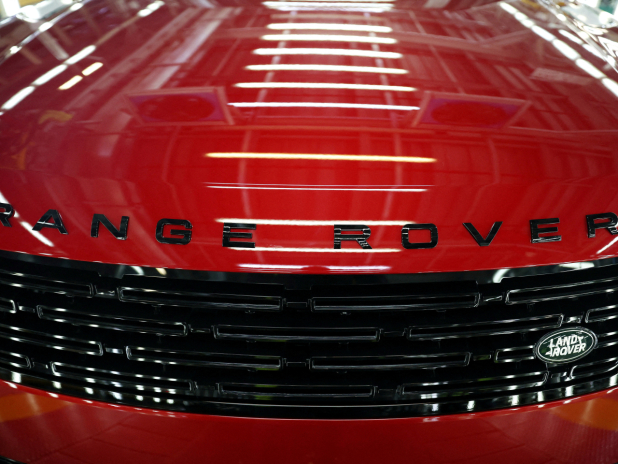
LONDON — The British government is intervening in prospective restructuring plans at Jaguar Land Rover after reports indicated the country's largest automotive producer is contemplating significant workforce reductions. Business Secretary Jonathan Reynolds stated he will hold direct discussions with the chief executive officer of Jaguar Land Rover during the second week of September 2026 to discuss the automaker's financial posture, corporate strategy, and the potential impact of employment adjustments on manufacturing facilities across the United Kingdom.
Key facts
What happened
Reporting by RTHK in early September 2026 revealed that Jaguar Land Rover (JLR) is assessing broad operational cost reductions that could include mass employment terminations. The revelation prompted swift government engagement, with Jonathan Reynolds, the UK Business Secretary, publicly confirming that he would meet directly with JLR's chief executive officer during the week following the report.
The planned high-level talks aim to evaluate the scope of the prospective employment reductions and explore measures to mitigate the effect on the domestic workforce. Government intervention at the cabinet level highlights the strategic importance of JLR to the British industrial economy. When major vehicle manufacturers contemplate headcount reductions, national business authorities typically seek detailed explanations regarding whether the cuts are driven by short-term financial headwinds, structural demand shifts, or broader regional restructuring.
Neither JLR management nor government officials initially released specific numbers detailing how many job losses were being considered or which individual facilities would bear the brunt of any proposed cuts. However, the decision by Reynolds to schedule immediate talks signals that the Department for Business and Trade considers the reported corporate downsizing a matter of national economic priority.
Why it matters
The potential contraction of Jaguar Land Rover's workforce carries substantial ramifications for the UK economy, industrial policy, and the ongoing transition toward green technology. As the primary economic engine of the UK automotive sector, JLR supports tens of thousands of direct manufacturing and engineering positions, as well as an extensive ecosystem of domestic suppliers, logistics providers, and specialized technology vendors.
A significant contraction in employment at JLR threatens to create severe ripple effects through the nationwide auto component supply network. Industry benchmarks indicate that for every direct assembly line position eliminated in vehicle manufacturing, several secondary jobs across tier-one and tier-two component suppliers are placed at risk. Small and medium-sized precision engineering firms throughout the West Midlands and North West regions rely heavily on continuous procurement contracts from JLR.
Furthermore, the reported job cuts occur at a critical moment in the global automotive industry's conversion to electric vehicles (EVs). Car manufacturers worldwide are navigating a complex financial transition requiring billions of pounds in upfront capital investments for battery technology, dedicated software platforms, and retooling traditional assembly plants. Simultaneously, many automotive companies are experiencing margin compression due to fluctuating retail demand for high-end vehicles, elevated borrowing costs for consumers, and intense pricing pressure from imported electric vehicles.
For the UK government, maintaining high-value manufacturing employment is a central economic target. Forced redundancies at JLR would complicate cabinet efforts to demonstrate growth in heavy industry and regional manufacturing hubs. The situation forces policymakers to balance strict emissions regulations against the reality of rising production costs faced by legacy vehicle manufacturers operating in Britain.
The background
Jaguar Land Rover has long served as a flagship component of British industrial manufacturing. Formed through the merger of two iconic British brands, the enterprise was purchased by Indian conglomerate Tata Motors from Ford Motor Company in June 2008 for roughly $2.3 billion. Under Tata's ownership, JLR experienced periods of rapid growth driven by strong global demand for premium luxury SUVs and sedans, particularly in North America, Europe, and China.
However, the company has also navigated recurring structural challenges over the past decade. In January 2019, JLR announced a major global restructuring plan known as Project Charge, which resulted in approximately 4,500 job cuts worldwide as the firm sought to save £2.5 billion in response to declining sales in China, reduced demand for diesel vehicles, and economic uncertainty surrounding the UK's exit from the European Union.
In February 2021, JLR unveiled its "Reimagine" strategy under then-chief executive Thierry Bolloré, setting out a road map to reshape the business around luxury electric vehicles. The strategy outlined plans for Jaguar to become an all-electric luxury brand by 2025, while Land Rover planned to introduce six pure electric variants across its Range Rover, Discovery, and Defender vehicle families over a six-year period. The strategy also involved rationalizing manufacturing operations, repurposing the historic Castle Bromwich plant near Birmingham away from traditional sedan assembly, and concentrating vehicle assembly at Solihull and Halewood.
In recent years, the broader British automotive sector has grappled with systemic hurdles. The departure of the UK from the EU single market introduced new customs procedures and rules-of-origin requirements for battery components. Additionally, persistent inflation, high industrial energy tariffs in the UK relative to foreign markets, and global microchip shortages between 2021 and 2023 disrupted factory outputs.
To support the auto industry's long-term electrification, the UK government and Tata Group announced a joint multi-billion-pound initiative in July 2023 to build a major battery gigafactory in Somerset, England. The £4 billion facility was designed to supply domestic battery cells for JLR's future vehicle lines. Despite these long-term commitments, managing the near-term operational costs of maintaining existing engine manufacturing facilities while funding next-generation EV platforms has continued to place heavy strains on balance sheets.
Reaction
Government officials have prioritized direct dialogue with corporate leadership. Business Secretary Jonathan Reynolds' decision to convene a meeting with JLR's chief executive represents an immediate governmental response intended to seek clarity on workforce impacts and discuss potential stabilizing measures.
While formal public responses from trade unions depend on the precise details revealed during executive discussions, labor organizations representing automotive workers in the UK, such as Unite the Union, traditionally respond to prospective layoff announcements by demanding guarantees against compulsory redundancies. Labor representatives typically call on management to explore voluntary severance schemes, flexible working hours, and redeployment within alternative company facilities before resorting to headcount reductions.
Industry analysts emphasize that JLR's challenges reflect broader trends across European vehicle manufacturing, where high fixed operational costs and shifting consumer adoption curves for electric vehicles have forced several major automakers to re-evaluate staffing levels and operational expenditure targets.
What we don't know yet
Several fundamental details regarding Jaguar Land Rover's potential workforce cuts remain undisclosed:
What to watch
In assessing how this corporate restructuring unfolds, key milestones to monitor include:
This report is based on coverage originally published by RTHK (news.rthk.hk).
How this story was produced
This report was written by The Global Wire newsroom from reporting first published by news.rthk.hk. We verify the core facts against the original report, write our own account, and add the background and consequences a short wire item leaves out. Drafting is AI-assisted inside an editor-supervised pipeline, and every story is checked for accuracy of attribution, structure and duplication before it appears — full detail in our AI and funding disclosure.
Spotted an error? Tell us at corrections@horizonglobalnews.com and read our corrections policy or editorial standards.





Reader comments
Loading comments…