

Trump Promises $5,000 Cash Payments to Adults if Republicans Win 2026 Midterm Elections
President Donald Trump proposed delivering $5,000 to every American adult contingent on Republican victory in the midterms, drawing immediate criticism from Democrats who called it an unfeasible gimmick.
By The Global Wire Newsroom · Reported from Michael Koziol
Link preview · horizonglobalnews.com
Trump Promises $5,000 Cash Payments to Adults if Republicans Win 2026 Midterm Elections
President Donald Trump proposed delivering $5,000 to every American adult contingent on Republican victory in the midterms, drawing immediate criticism from Democrats who called it an unfeasible gimmick.
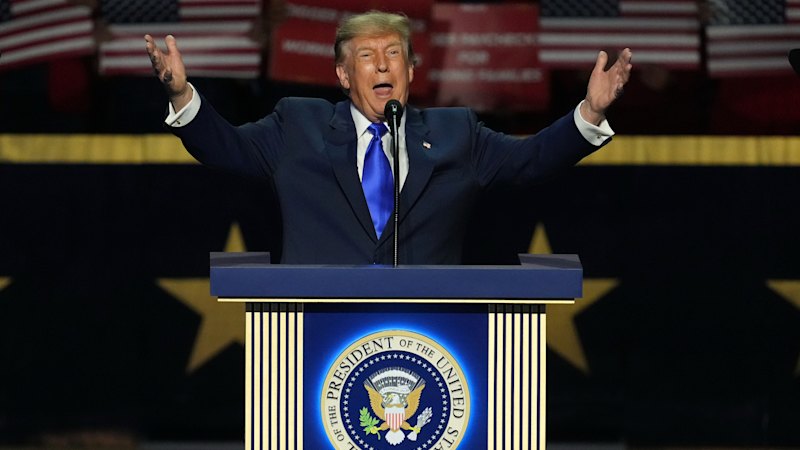
WASHINGTON — U.S. President Donald Trump has proposed distributing $5,000 cash payments to every American adult on the condition that the Republican Party retains legislative control of Congress in the upcoming midterm elections, prompting immediate condemnation from Democratic lawmakers who characterized the promise as an unworkable campaign stunt. The announcement, made ahead of the November 2026 congressional elections, links direct government financial assistance directly to electoral outcomes, raising fundamental questions about executive authority, federal budgeting, and legislative feasibility. Opposition leaders quickly pointed to previous unfulfilled pledges concerning tariff revenue distributions and projected cost-cutting dividends as evidence that the proposed cash outlay lacks a legal or fiscal framework.
Key facts
What happened
The proposal was introduced as both major political parties intensified campaign operations for the 2026 midterm elections, where majorities in the U.S. House of Representatives and the U.S. Senate are on the line, according to reporting by Michael Koziol. Trump framed the $5,000 disbursement as a direct economic benefit for voters, contending that preserving Republican leadership in both chambers of Congress would enable the administration to execute its economic agenda and return funds directly to American households.
Specific details regarding how the payments would be structured, funded, or administered were omitted from the initial proposal. Instead, the commitment was presented as a high-level political incentive explicitly tied to the partisan outcome of the national vote in November 2026.
Democratic Party officials moved rapidly to counter the announcement. Senior lawmakers and campaign strategists publicly dismissed the pledge as a political gimmick designed to influence voters without any structural plan for implementation. Opponents cited previous high-profile financial pledges that failed to progress into formal legislation, specifically noting earlier proposals to distribute revenues derived from trade tariffs or cost reductions identified by executive advisory panels.
Why it matters
A proposal to deliver $5,000 to every American adult represents one of the largest direct financial transfer promises in the history of American political campaigns. A policy of this scale carries significant economic, statutory, and institutional consequences that extend beyond standard political rhetoric.
From a fiscal perspective, providing $5,000 to approximately 260 million adult residents would require a total congressional appropriation of roughly $1.3 trillion. To put that figure in context, $1.3 trillion exceeds the entire annual discretionary budget for all non-defense federal agencies combined and represents more than half of all federal tax receipts collected in a typical fiscal quarter. Authorizing such a payout without structural spending reductions or substantial tax increases would significantly widen the federal budget deficit and add to a national debt that already exceeds $35 trillion. Macroeconomists also note that injecting $1.3 trillion in immediate liquid funds into consumer bank accounts could trigger renewed inflationary pressure, complicating monetary management by the Federal Reserve.
From an institutional standpoint, the pledge underscores ongoing debates regarding executive scope and campaign commitments. Under the U.S. Constitution, the executive branch lacks the authority to unilaterally allocate or disburse Treasury funds. Any cash transfer program must originate in Congress, clear committee review, pass both the House and Senate, and be signed into law. By conditioning a direct financial payout on the election of a specific political party, the proposal tests established norms surrounding legislative appropriations and federal governance.
For voters, the announcement establishes a sharp divide heading into the midterms. Proponents argue that direct payments provide essential financial assistance to families contending with consumer prices, whereas critics argue that promising treasury funds in exchange for electoral support misleads the public about the realities of federal budgeting.
The background
Direct government transfers to individual citizens, while historically rare in U.S. economic policy, became a central fiscal response during the economic disruptions caused by the COVID-19 pandemic. Between March 2020 and March 2021, Congress enacted three separate rounds of Economic Impact Payments to assist American households.
The initial payment was authorized under the CARES Act in March 2020 during Trump's first presidential term, delivering up to $1,200 per eligible adult through a $2.2 trillion emergency stimulus package passed with broad bipartisan support. A second payment of $600 per individual was approved in December 2020 under the Consolidated Appropriations Act. Following the inauguration of President Joe Biden, Congress passed the American Rescue Plan in March 2021, authorizing a third round of payments worth $1,400 per eligible recipient.
While those pandemic-era disbursements were tied to formally declared national emergencies and passed through bipartisan legislation, Trump subsequently floated several alternative concepts for citizen payouts linked to specific revenues. During his subsequent political campaigns and public statements, Trump suggested that revenues collected from expanded international trade tariffs could fund direct "tariff dividends" for taxpayers. However, fiscal analysts consistently noted that import duties are collected by U.S. Customs and Border Protection and deposited into general Treasury accounts, generating a fraction of the annual revenue necessary to fund broad consumer payments.
Similarly, during the establishment of the Department of Government Efficiency (DOGE)—an advisory group created to identify federal waste and regulatory costs—supporters suggested that budgetary savings identified by the body could be converted into direct payouts for citizens. While DOGE initiated public discussions regarding administrative streamline efforts, converting theoretical savings into direct payments requires formal congressional legislation to alter entitlement programs and reallocate funds.
The September 2026 proposal builds upon this history of direct-payout rhetoric, arriving at a time when lawmakers face escalating national debt levels, statutory spending caps, and high interest costs on federal borrowing.
Reaction
The proposal drew rapid pushback from political opponents and skepticism from legislative analysts, according to reporting by Michael Koziol. Democratic leaders described the offer as an unrealistic stunt aimed at shaping election outcomes. Opposition spokespersons reiterated that earlier commitments regarding tariff dividends and efficiency payouts never produced draft legislation or actual payments, urging voters to view the $5,000 promise with equal skepticism.
Within the Republican Party, reaction to the announcement highlighted political dynamics surrounding fiscal policy. While populist advocates endorsed the concept as a direct benefit for working-class voters, traditional fiscal conservatives in Congress face potential policy friction over the massive spending expansion needed to support a $1.3 trillion outlay.
Nonpartisan economic policy organizations and tax foundations are expected to release formal reviews examining the budget implications of the proposal. Formal responses are also anticipated from key leaders in Congress, including the Speaker of the House and the Senate Majority Leader, who would hold primary responsibility for drafting any funding bills required to enact such a measure.
What we don't know yet
Key operational and legal details regarding the proposed $5,000 payment remain completely unspecified.
First, the administration has not outlined how the necessary $1.3 trillion would be financed. It remains unclear whether the proposal relies on national debt issuance, offsetting cuts to existing federal entitlement programs, tax restructuring, or assumed revenues from trade tariffs.
Second, eligibility standards for the disbursements have not been defined. Initial statements referred broadly to "every American adult," but left unaddressed whether payments would feature income thresholds, tax filing requirements, age cutoffs, or citizenship criteria similar to previous federal stimulus programs.
Third, there is no established timeline for legislative action or payment distribution. Even if Republicans maintain control of both houses of Congress in November 2026, drafting statutory text, steering the measure through committees, securing necessary floor votes, and managing Treasury implementation would require months of legislative processing.
Finally, it remains unknown whether moderate members of the Republican congressional caucus would support adding $1.3 trillion to federal spending, given existing concerns over annual deficit levels.
What to watch
In the months leading up to the November 2026 midterm elections, several specific indicators will show whether the $5,000 cash proposal progresses from a campaign promise into a formal policy framework.
Policy observers will monitor whether the executive branch or congressional allies release official legislative text or detailed budget specifications detailing the mechanics of the transfer. The introduction of a draft bill in the House Ways and Means Committee or the Senate Finance Committee would signal a formal legislative initiative.
Additionally, assessments from nonpartisan budget watchdogs will provide critical clarity. Organizations such as the Congressional Budget Office (CBO) and the Committee for a Responsible Federal Budget (CRFB) are expected to publish formal cost estimates if legislative text is submitted.
Finally, public positions taken by Republican candidates in competitive House and Senate races will reveal whether legislative candidates actively campaign on the $5,000 promise or distance themselves from its fiscal impact.
This account is based on original reporting by Michael Koziol.
How this story was produced
This report was written by The Global Wire newsroom from reporting first published by Michael Koziol. We verify the core facts against the original report, write our own account, and add the background and consequences a short wire item leaves out. Drafting is AI-assisted inside an editor-supervised pipeline, and every story is checked for accuracy of attribution, structure and duplication before it appears — full detail in our AI and funding disclosure.
Spotted an error? Tell us at corrections@horizonglobalnews.com and read our corrections policy or editorial standards.




Reader comments
Loading comments…