

Trump Pauses Proposed Iran Strikes After Saudi Intervention as Tehran Denies Deal
President Donald Trump put planned military strikes against Iran on hold after a call with Saudi Arabia's Crown Prince, while Tehran rejected claims of an imminent diplomatic breakthrough.
By The Global Wire Newsroom · Reported from ET Online
Link preview · horizonglobalnews.com
Trump Pauses Proposed Iran Strikes After Saudi Intervention as Tehran Denies Deal
President Donald Trump put planned military strikes against Iran on hold after a call with Saudi Arabia's Crown Prince, while Tehran rejected claims of an imminent diplomatic breakthrough.
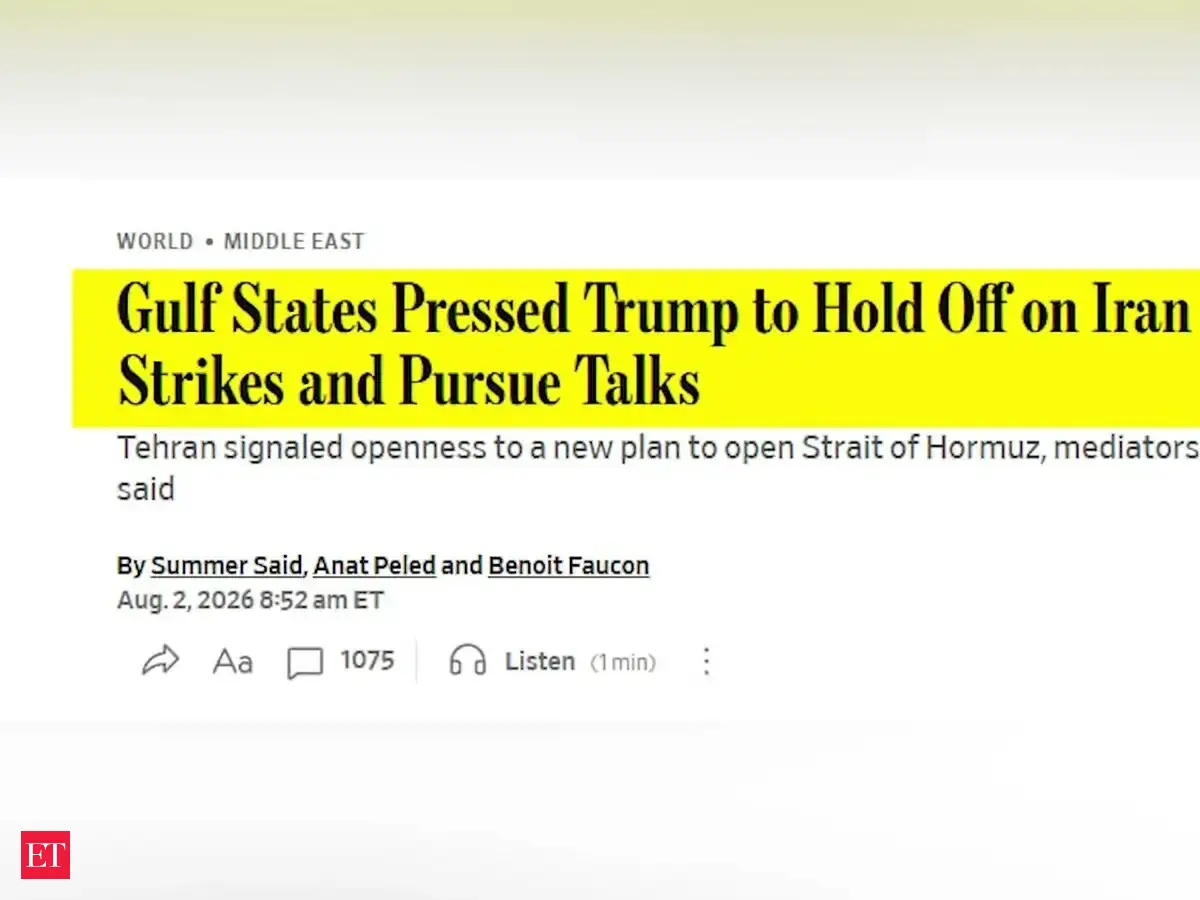
WASHINGTON — President Donald Trump has placed a proposed series of military strikes against Iran on hold following a direct phone call with Saudi Crown Prince Mohammed bin Salman, according to reporting by ET Online. The operational pause comes amid emerging reports of deep divisions among key United States allies regarding the wisdom and timing of armed intervention in the Middle East. At the same time, government officials in Tehran have publicly pushed back against assertions from Washington that a major diplomatic breakthrough has been reached, highlighting persistent instability and conflicting narratives surrounding the regional crisis.
Pause on military action
The decision to hold off on immediate military action against Iranian targets was reached after consultations between Washington and Riyadh, ET Online reported. During the strategic discussion, Saudi Crown Prince Mohammed bin Salman reportedly urged caution, emphasizing the severe potential for military escalation to spark a broader regional conflict throughout the Persian Gulf and destabilize critical economic and energy infrastructure.
The high-level conversation highlights the pivotal role played by Gulf partners in shaping White House calculus concerning military deployments. While Washington had been weighing targeted strikes in response to heightened security tensions and alleged regional provocations, the direct intervention from Riyadh provided a temporary diplomatic pivot point. Administration officials subsequently reviewed operational plans while keeping regional security concerns at the forefront, opting for a temporary pause on kinetic options to allow diplomatic communications additional room to develop.
Disagreements over diplomatic claims
Following the decision to defer military preparations, statements emerged from Washington indicating that a significant diplomatic agreement with Iran was within reach. However, official representatives in Tehran swiftly moved to dismiss those assertions, explicitly rejecting the characterization that a breakthrough deal had been finalized or was imminently close to being concluded.
Iranian leadership publicly disputed the notion that strategic concessions had been offered or agreed upon under the pressure of potential military strikes. Statements originating from Tehran indicated that while formal or informal communications may exist through established third-party intermediaries, fundamental policy disagreements remain entirely unresolved. The direct public pushback from Iran underscores the significant gap between Washington's framing of international negotiations and Tehran's strategic posture, where leaders remain resistant to appearing to negotiate under explicit threats of foreign military intervention.
Division among international partners
The internal deliberations within the United States government have laid bare noticeable divisions among traditional American partners and international coalitions. According to reporting by ET Online, key international allies expressed sharply diverging views on how best to manage the ongoing confrontation with Iran, with some foreign capitals advocating for decisive military deterrence and others pressing for restrained diplomatic engagement.
European and Middle Eastern allies have long maintained differing assessments regarding the ultimate effectiveness of direct military force against Iranian strategic assets. While certain security partners emphasize the political necessity of maintaining a credible military threat to deter regional aggression, other key nations express concern that direct strikes could trigger retaliatory actions across commercial maritime trade corridors, threaten global energy supplies, and draw regional actors into an expanded multilateral conflict. The split among allies highlights broader international anxiety over unpredictable escalation cycles in the region.
Strategic context and regional security
The broader relationship between the United States and Iran has historically been defined by periods of intense military posture interspersed with complex, often fragile diplomatic maneuvering. Saudi Arabia's direct engagement with Washington reflects a practical geopolitical reality in which Gulf states must balance their long-standing security reliance on the U.S. against the immediate risks associated with their geographic proximity to any potential conflict zone.
In recent years, changing regional dynamics have increasingly compelled neighboring nations to pursue risk-reduction measures and prevent direct military hostilities. A major armed conflict involving the United States and Iran poses direct threats to coastal energy infrastructure, commercial shipping lanes in the Strait of Hormuz, and wider economic stability across the Middle East. Consequently, calls from regional capitals for diplomatic restraint frequently emphasize the far-reaching security and financial consequences that any uncoordinated military action might provoke.
Diplomatic hurdles ahead
The stark contrast between Washington's assertions of progress and Tehran's public denials illustrates the formidable obstacles facing international diplomats. Security engagements and negotiations between the U.S. and Iran are routinely hampered by deep-seated institutional distrust, differing interpretations of compliance standards, and significant domestic political pressures within both nations.
For Iranian leadership, accepting or publicly acknowledging a negotiated settlement under the immediate threat of foreign military strikes carries substantial political risk domestically and among regional partners. Conversely, U.S. policymakers face persistent pressure to demonstrate concrete results from their stance of military readiness and economic pressure. Without mutually agreed-upon terms, explicit diplomatic frameworks, and clear verification mechanisms, public claims of diplomatic progress remain vulnerable to rapid unraveling, leaving core structural tensions largely unaddressed.
What comes next
With military options currently on hold, diplomatic attention focuses on whether third-party mediators can narrow the distance between Washington and Tehran. Middle Eastern partners, including Saudi Arabia and neighboring Gulf nations, are expected to continue active diplomatic outreach to prevent a sudden return to active military considerations.
However, the overall status of military readiness in the region remains elevated. U.S. armed forces stationed throughout the Middle East maintain operational flexibility, with administration officials reiterating that strategic options remain on the table should diplomatic channels fail to deliver verifiable results. Governments across the region will be closely monitoring upcoming official communications and diplomatic exchanges to determine whether the operational pause translates into sustained negotiations or yields a return to heightened military tension.
This article incorporates reporting originally published by ET Online.
How this story was produced
This report was written by The Global Wire newsroom from reporting first published by ET Online. We verify the core facts against the original report, write our own account, and add the background and consequences a short wire item leaves out. Drafting is AI-assisted inside an editor-supervised pipeline, and every story is checked for accuracy of attribution, structure and duplication before it appears — full detail in our AI and funding disclosure.
Spotted an error? Tell us at corrections@horizonglobalnews.com and read our corrections policy or editorial standards.





Reader comments
Loading comments…