

Trump Joins Darline Graham on Campaign Trail Ahead of Republican Primary Runoff
Former President Donald Trump campaigned alongside Senator Darline Graham in her primary runoff against Representative Ralph Norman to fill a November ballot vacancy created by her late brother.
By The Global Wire Newsroom · Reported from Caitlin Yilek
Link preview · horizonglobalnews.com
Trump Joins Darline Graham on Campaign Trail Ahead of Republican Primary Runoff
Former President Donald Trump campaigned alongside Senator Darline Graham in her primary runoff against Representative Ralph Norman to fill a November ballot vacancy created by her late brother.
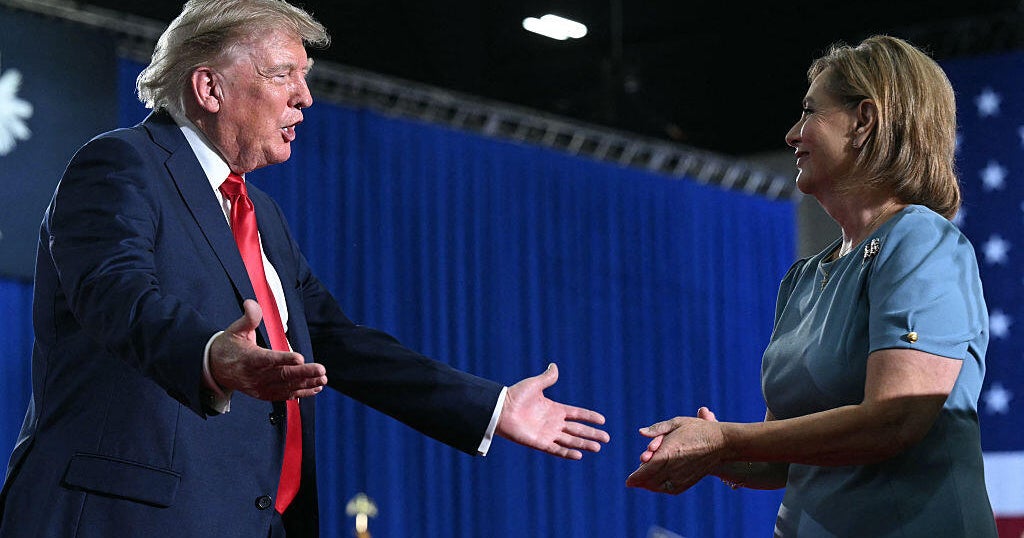
Donald Trump joined Senator Darline Graham on the campaign trail in late August 2026, delivering a high-profile rally endorsement ahead of a competitive primary runoff election in which Graham is facing incumbent U.S. Representative Ralph Norman. Speaking to supporters alongside Graham on August 21, 2026, Trump sought to frame the intra-party contest around his national political platform and personal appeal to the conservative voter base. The runoff election was triggered after an initial primary vote failed to yield a final nominee to secure the Republican slot on the upcoming November general election ballot, a vacancy created by the death of Graham's late brother. With the nomination at stake, the campaign stop highlighted the growing influence of national endorsements in local and statewide primary runoffs as both candidates compete for party leadership support ahead of the autumn campaign.
Key facts
What happened
According to reporting published by Caitlin Yilek on August 22, 2026, Trump made a personal appearance alongside Senator Darline Graham to rally primary voters ahead of the impending runoff election against Representative Ralph Norman. The campaign appearance was designed to energize grassroots conservative activists and direct base voters toward Graham in the final stretch of the primary contest.
At the rally, Trump took the stage to emphasize his personal backing of Graham's candidacy, framing the election as an extension of his own national political mandate. In his remarks to the assembled crowd, Trump made a direct appeal to his personal supporters, declaring, "Say that I'm on the ballot one more time." The statement served as a central rallying cry for the event, aimed at transforming the primary runoff into a direct test of loyalty to Trump's national platform.
The intra-party battle between Graham and Norman emerged after the death of Graham's brother left a critical vacancy on the Republican ticket for the upcoming November general election. In accordance with primary election procedures, the failure of a candidate to secure an absolute majority in the initial round of voting forced a head-to-head runoff between the top contenders. Both Graham and Norman have since engaged in an intensive campaign effort to mobilize core primary voters across the district before the polls close.
Why it matters
High-profile endorsements from former or sitting presidents play a pivotal role in intra-party primary runoffs, where voter turnout is typically a small fraction of general election participation. When national political figures personally intervene in localized nomination battles, they fundamentally alter the dynamics of the race by elevating national ideological alignment over local legislative records or regional ties.
For Senator Graham, securing Trump's active participation on the campaign trail provides a substantial advantage among dedicated party activists who view presidential backing as a primary credential for office. By explicitly inviting voters to treat her candidacy as a proxy vote for his political brand, Trump's appearance provides Graham with national visibility and direct access to the party's most motivated voters.
For Representative Ralph Norman, competing against a Trump-endorsed opponent in a Republican primary runoff creates significant strategic hurdles. Incumbent members of Congress typically rely on name recognition, legislative achievements, and established district networks to retain voter support. However, in low-turnout primary runoffs, intense base mobilization driven by national political endorsements can frequently overshadow traditional incumbency advantages.
The contest also highlights the critical political mechanisms that govern candidate replacement following an unexpected vacancy. When a candidate or officeholder dies during an active election cycle, political parties must navigate condensed timelines to select a nominee who can unite the party structure before the general election in November. How party members respond to high-profile primary contests under these circumstances can ripple into the general election campaign, affecting party unity, fundraising, and voter enthusiasm against opposing party candidates.
The background
Under the electoral framework of the United States, primary runoff elections serve as a secondary voting round utilized in several states, primarily across the American South, to ensure that a party nominee commands majority support among primary voters. In states operating under these rules, if no single candidate achieves more than 50 percent of the total vote in the initial primary, the top two finishing candidates advance to a runoff election held several weeks later.
Historically, primary runoffs experience dramatic drops in total voter participation compared to first-round primary elections. Turnout reductions of 30 percent to 50 percent are common, as casual voters often do not return to the polls for secondary nominating contests. Consequently, victory in a primary runoff depends far less on broad-scale public persuasion and far more on effective voter identification and targeted mobilization operations conducted by campaign organizations.
The necessity for this specific runoff arose following the death of Senator Darline Graham's brother, whose passing created an unexpected vacancy on the November ballot. State election laws across the country dictate precise protocols for replacing deceased candidates on general election ballots. Depending on state statutes and the timing of the vacancy relative to election deadlines, vacancies may be filled through emergency nominating conventions, party executive committee appointments, or special primary runoffs. In this instance, election procedures required a public primary runoff to determine the official Republican nominee for the autumn ballot.
Direct primary clashes between sitting state senators and incumbent U.S. representatives reflect broader competitive shifts within state political parties. State legislators often leverage regional constituent relationships and state capital legislative records, while federal representatives bring national name recognition and federal fundraising networks to primary races. When combined with national endorsements, these contests frequently serve as bellwethers for the internal ideological direction and organizational strength of state party factions.
Reaction
Following the campaign event reported by Caitlin Yilek, political discussion centered on Trump's explicit strategy to nationalize the primary runoff. By telling voters to view the ballot as a personal vote for his leadership, Trump signaled to conservative activists that Graham's candidacy represents his preferred direction for the party's general election slate in November.
While the initial wire reporting does not incorporate official public statements from Representative Ralph Norman or his campaign advisors following the rally, opponents facing national endorsements in primary runoffs typically seek to counter such events by emphasizing local constituent service, deep district roots, and independent conservative legislative voting records. In past comparable primary battles, candidates competing against presidential endorsees have focused heavily on personal voter contact and local organizational endorsements to maintain their core supporter base.
State political observers and party strategists are closely monitoring how the endorsement affects party cohesion as the general election approaches. Intra-party runoff battles can sometimes leave lasting divisions among campaign staff and primary voters, making post-runoff reconciliation an essential priority for the victorious candidate ahead of the November general election campaign.
What we don't know yet
Several important factual details regarding the runoff election remain unconfirmed in the reporting provided by Caitlin Yilek. Most notably, the initial summary does not specify the specific U.S. state or Congressional/legislative district in which the runoff is being conducted, leaving the precise geographic jurisdiction unstated.
Additionally, the reporting omits the name of Senator Darline Graham's late brother, the exact office he held or was pursuing prior to his death, and the date of his passing. The specific calendar date for the upcoming runoff election is also unstated in the available summary, as are the detailed numerical vote totals and percentages received by Graham, Norman, and any other primary candidates during the first round of voting.
Furthermore, specific policy disagreements, legislative voting contrasts, or ideological distinctions between Senator Graham and Representative Norman have not been detailed in the primary report, leaving open questions about the substantive policy issues separating the two Republican candidates beyond the national endorsement dynamic.
What to watch
This report is based on original reporting by Caitlin Yilek published on August 22, 2026, detailing Donald Trump's campaign rally appearance alongside Senator Darline Graham in her Republican primary runoff contest against Representative Ralph Norman.
How this story was produced
This report was written by The Global Wire newsroom from reporting first published by Caitlin Yilek. We verify the core facts against the original report, write our own account, and add the background and consequences a short wire item leaves out. Drafting is AI-assisted inside an editor-supervised pipeline, and every story is checked for accuracy of attribution, structure and duplication before it appears — full detail in our AI and funding disclosure.
Spotted an error? Tell us at corrections@horizonglobalnews.com and read our corrections policy or editorial standards.




Reader comments
Loading comments…