

Trump Declares $1.8 Billion Anti-Weaponization Fund Dead Amid Senate Standoff
Donald Trump said a proposed $1.8 billion anti-weaponization fund is dead as Republican senators continue blocking Todd Blanche's confirmation, creating confusion in the Senate.
By The Global Wire Newsroom · Reported from Reuters
Link preview · horizonglobalnews.com
Trump Declares $1.8 Billion Anti-Weaponization Fund Dead Amid Senate Standoff
Donald Trump said a proposed $1.8 billion anti-weaponization fund is dead as Republican senators continue blocking Todd Blanche's confirmation, creating confusion in the Senate.
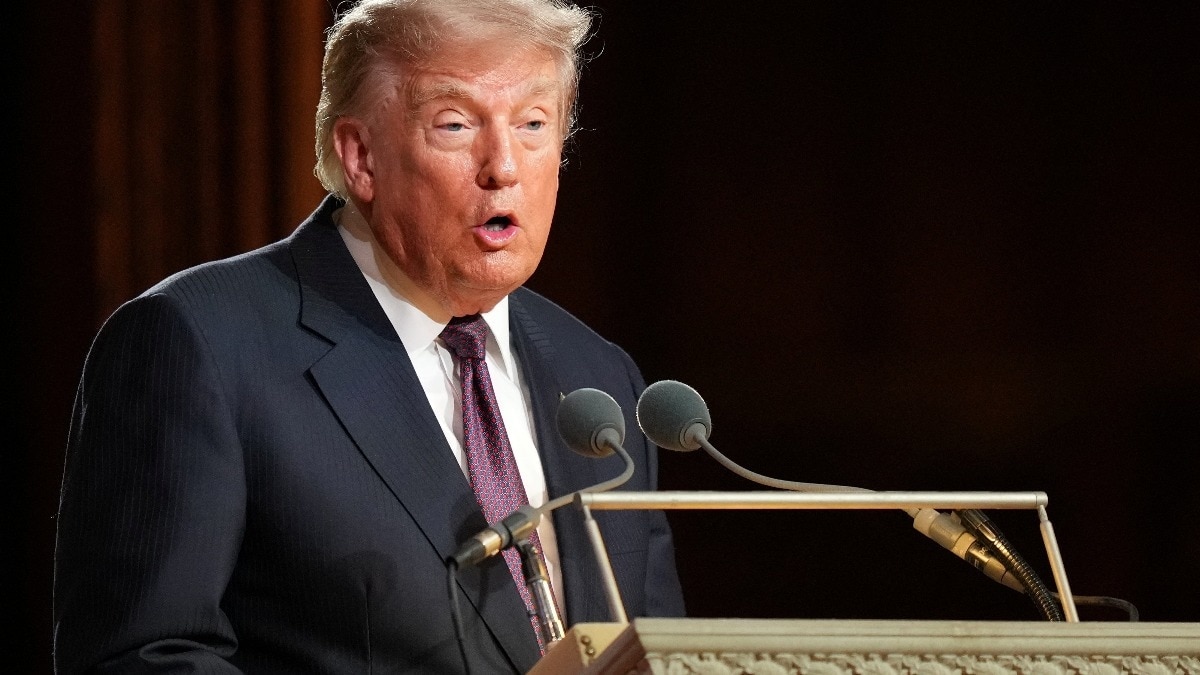
Former President Donald Trump has declared that a proposed $1.8 billion anti-weaponization fund is no longer viable following an extended impasse among Republican senators who continue to block the confirmation of nominee Todd Blanche, according to reporting by Reuters. The announcement marks a significant turn in a political dispute that has stalled key executive appointments and created confusion over the status of federal initiatives aimed at addressing alleged government overreach.
Senate Impasse Over Confirmation
The nomination of Todd Blanche has remained trapped in the upper chamber of Congress as a subset of Republican senators maintains a block on his confirmation path, Reuters reported. Under standard Senate procedures, presidential appointments to major government positions require confirmation through the advice and consent power granted to the Senate by the U.S. Constitution. While a simple majority is typically sufficient to confirm nominees, individual senators or factions within a party can utilize procedural holds, filibusters, or committee delays to stall proceedings on the floor.
The prolonged block on Blanche’s nomination highlights internal divisions within the Republican caucus. Senate confirmation battles frequently serve as leverage points for lawmakers seeking policy concessions, legislative commitments, or changes to executive branch priorities. In this case, the decision by Republican senators to withhold support for Blanche has effectively halted progress on his appointment, leaving the position unfilled and creating broader ramifications for related political proposals.
Dissolution of the $1.8 Billion Fund
Concurrently, the collapse of the $1.8 billion anti-weaponization fund reflects the operational and political difficulties facing major funding initiatives that lack unified legislative backing. Trump’s pronouncement that the fund is dead comes after weeks of ambiguity regarding how the money would be allocated, governed, and administered, according to Reuters.
The concept of an anti-weaponization fund emerged amid ongoing political debates regarding the potential misuse of federal law enforcement agencies, legal mechanisms, and regulatory bodies for partisan ends. Proposals to establish dedicated funds or oversight mechanisms to counter such actions have frequently generated debate over spending authority, constitutional boundaries, and executive oversight. The $1.8 billion sum designated for this initiative represented a substantial financial commitment, but without clear legislative pathways and confirmed leadership to oversee the effort, the project has collapsed.
Confusion and Administrative Paralysis
The intersection of the blocked nomination and the abandoned fund has generated political confusion among lawmakers, federal agencies, and policy observers, as reported by Reuters. High-profile legislative and executive proposals usually depend on designated officials to advocate for funding allocations, establish administrative structures, and address congressional inquiries. With Blanche’s nomination stalled in the Senate, the administrative architecture required to manage or defend the $1.8 billion fund remained largely unanchored.
The uncertainty surrounding the fund underscores the fragile balance between executive branch initiatives and legislative oversight. In federal finance, funds proposed or backed by political leaders cannot easily be deployed without corresponding statutory authorization and appropriations from Congress. When legislative standoffs prevent key personnel from taking office, associated policy initiatives often suffer from a lack of direction, leading to procedural delays or outright cancellation.
Intra-Party Friction on Capitol Hill
The deadlock over Blanche and the anti-weaponization fund brings into sharp focus the internal tensions confronting the Republican party in the Senate. Historically, Senate caucuses strive to maintain unity on high-profile personnel votes, particularly when executive appointments align with the party’s broader policy platform. However, disputes over nominee qualifications, policy priorities, or political strategy can lead individual members to break ranks.
In the current legislative environment, the ability of a minority of senators to delay nominations reflects the narrow margins and decentralized power structures governing the chamber. Senate rules allow individual members broad latitude to object to unanimous consent agreements, forcing leadership to expend valuable floor time on cloture motions and extended debate periods. When internal disagreements persist, leadership must weigh the cost of spending limited legislative calendar days against the risk of failed floor votes or further intra-party discord.
Broader Consequences for Executive Appointments
The broader implications of the standoff extend beyond Blanche’s individual nomination and the $1.8 billion fund. Stalled confirmations often create a backlog of appointments across government, leaving departments and agencies dependent on temporary leadership or career civil servants acting in unconfirmed capacities. Legal scholars and governance experts routinely note that prolonged vacancies in top posts can impede policy execution, limit long-term strategic planning, and weaken agency accountability to Congress.
Furthermore, the failure to secure confirmation for high-profile nominees signals friction between executive leadership and legislative committees. When funding proposals like the $1.8 billion anti-weaponization package become entangled in personnel battles, it demonstrates how deeply institutional procedures in the Senate can disrupt executive branch planning.
Looking Ahead in the Senate
As the Senate continues its legislative calendar, the path forward for both Blanche’s nomination and any alternative funding mechanisms remains unclear. Senate leadership faces pressure to resolve internal caucus disputes and determine whether Blanche’s nomination will eventually be brought to the floor for a full roll-call vote or withdrawn in light of persistent opposition.
Similarly, the collapse of the $1.8 billion anti-weaponization fund leaves unanswered questions about how future policy proposals regarding government oversight will be structured or financed. Lawmakers aligned with the initiative may seek to redraft legislative language or incorporate similar concepts into broader annual spending bills, while opponents are likely to view the fund's end as a demonstration of the limits of executive spending proposals.
This report is based on original reporting conducted by Reuters.
How this story was produced
This report was written by The Global Wire newsroom from reporting first published by Reuters. We verify the core facts against the original report, write our own account, and add the background and consequences a short wire item leaves out. Drafting is AI-assisted inside an editor-supervised pipeline, and every story is checked for accuracy of attribution, structure and duplication before it appears — full detail in our AI and funding disclosure.
Spotted an error? Tell us at corrections@horizonglobalnews.com and read our corrections policy or editorial standards.




Reader comments
Loading comments…