

Trump and Mamdani to Hold Third Gracie Mansion Meeting Ahead of 2026 Midterm Push
New York Mayor Zohran Mamdani will host Donald Trump at Gracie Mansion on Monday for their third bilateral session to discuss municipal priorities during the 2026 midterm election cycle.
By The Global Wire Newsroom · Reported from Amanda Macias
Link preview · horizonglobalnews.com
Trump and Mamdani to Hold Third Gracie Mansion Meeting Ahead of 2026 Midterm Push
New York Mayor Zohran Mamdani will host Donald Trump at Gracie Mansion on Monday for their third bilateral session to discuss municipal priorities during the 2026 midterm election cycle.
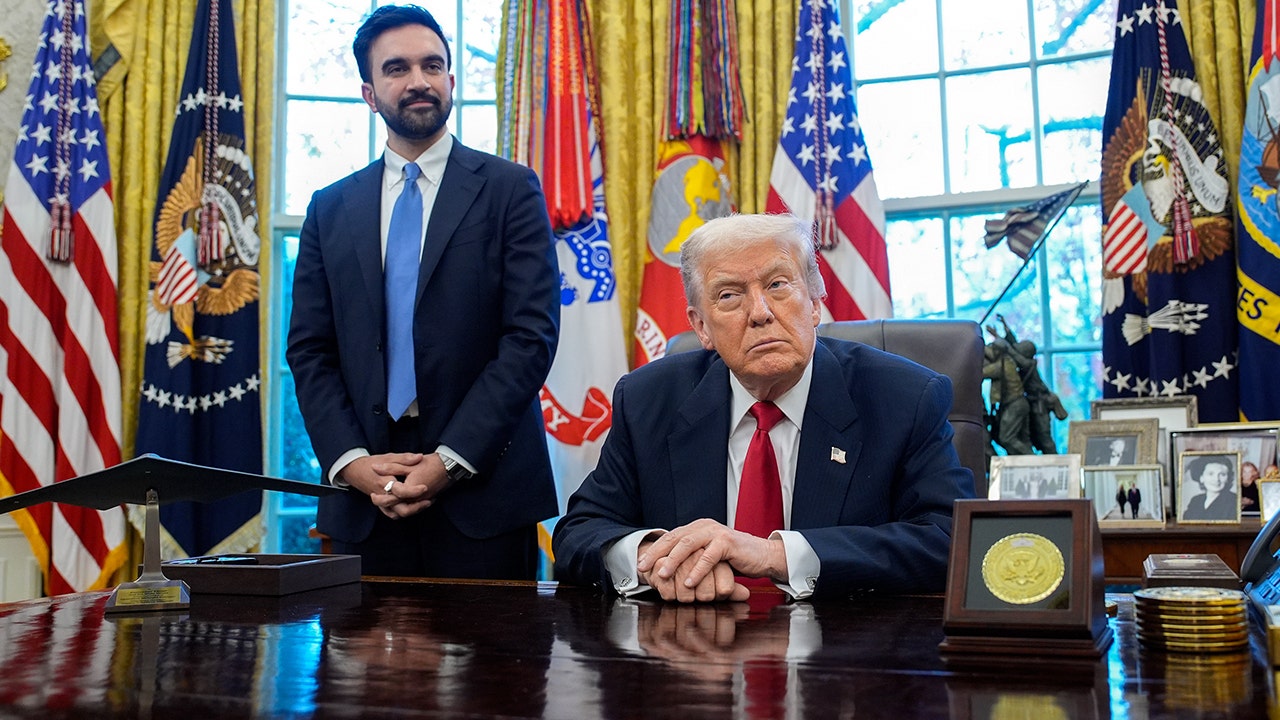
New York Mayor Zohran Mamdani is scheduled to host Donald Trump at Gracie Mansion on Monday for their third face-to-face meeting, according to reporting by Amanda Macias. The high-level conference comes during an intense stretch of political activity ahead of the 2026 midterm elections, bringing together two distinct political figures at the official executive residence of New York City. The talks are set to focus on key policy matters affecting municipal residents across the five boroughs, highlighting the ongoing necessity for local executives to engage directly with federal figures regardless of ideological divides.
Key facts
What happened
According to reporting by Amanda Macias, Zohran Mamdani will receive Donald Trump on Monday at Gracie Mansion, the historic municipal residence located in Manhattan. The gathering represents the third formal face-to-face encounter between Mamdani and Trump, continuing a series of direct communications focused on federal and municipal policy issues affecting New York City residents.
While specific agenda documents have not been made public prior to the conference, the meeting brings national political attention to Gracie Mansion during a critical phase of the 2026 election calendar. With midterm campaign activities accelerating across the country, high-profile meetings involving major national political figures in New York City draw significant scrutiny from voters, media organizations, and policy analysts.
The session is organized to provide a forum for discussing pressing local requirements, ranging from municipal infrastructure support to broader economic conditions facing city residents. By hosting the session at Gracie Mansion—the official home of New York City's mayor since 1942—the encounter underlines the formal diplomatic protocol that governs relations between local executive leadership and national political figures, even when their political platforms diverge significantly.
Why it matters
The summit between Mamdani and Trump carries direct implications for New York City's public finance, infrastructure development, and national political positioning. New York City operates as the nation's most populous municipality, with a population exceeding 8.3 million people and a municipal budget that regularly tops $100 billion. Maintaining functional communication channels with federal figures is essential for securing federal grant distributions, transportation subsidies, and emergency assistance funds.
Major urban centers rely heavily on federal backing for large-scale capital projects. For example, federal transit assistance administered through the Federal Transit Administration (FTA) provides funding for Metropolitan Transportation Authority (MTA) subway, bus, and rail modernization programs. Similarly, federal programs managed by the U.S. Department of Housing and Urban Development (HUD), such as Community Development Block Grants (CDBG), provide resources for public housing repairs, tenant assistance, and community development across the city. Direct dialogue at the highest levels of municipal and federal politics can influence how federal administrative priority is assigned to local funding applications.
From a national political perspective, holding a high-stakes summit in Manhattan during the 2026 midterm campaign highlights how urban policy issues—including housing affordability, public transit, public safety, and fiscal governance—are integrated into broader national campaign messaging. Midterm congressional elections often turn on economic sentiment and governance outcomes in key metropolitan regions. How municipal executives interact with prominent national leaders can influence voter turnout, coalition building, and legislative priorities in the United States Congress.
The background
Gracie Mansion, located at East End Avenue and 88th Street within Carl Schurz Park on Manhattan's Upper East Side, has served as the official residence of New York City mayors since Mayor Fiorello La Guardia took up residence there in 1942. Originally constructed in 1799 as a private country house for merchant Archibald Gracie, the yellow wooden mansion has historically served as a venue for diplomatic receptions, policy conferences, and meetings between city leadership and visiting heads of state, U.S. presidents, and federal cabinet officials.
Historically, New York City mayors have frequently engaged in high-profile negotiations with federal officials to navigate fiscal, economic, and security crises. In 1975, Mayor Abraham Beame engaged in urgent negotiations with President Gerald Ford's administration as the city faced imminent bankruptcy, ultimately securing federal loan guarantees through the New York City Seasonal Financing Act of 1975. Subsequent mayors, including Edward Koch, David Dinkins, Rudolph Giuliani, Michael Bloomberg, and Bill de Blasio, regularly met with federal executives to petition for mass transit funding, post-disaster recovery funds following September 11, 2001 and Superstorm Sandy in 2012, and federal security reimbursements for protecting international dignitaries.
Zohran Mamdani entered New York political life as a housing counselor and community organizer before being elected to the New York State Assembly in November 2020, representing District 36 in Astoria, Queens. Affiliated with the Democratic Socialists of America (DSA), Mamdani built his legislative career around tenant protections, public transit funding, eviction prevention, and expanding social services. His transition into executive municipal leadership positioned him at the helm of a massive city government operating under the New York City Charter, which grants the mayor broad executive authority over city agencies, public safety, and municipal budgeting.
Donald Trump, a native of Queens, New York, spent decades as a real estate developer and executive in Manhattan before entering national politics, serving as the 45th President of the United States from 2017 to 2021. As a major national figure whose political apparatus maintains widespread influence across the Republican Party, Trump remains a dominant force in defining political debates during midterm election cycles. Midterm elections, held every four years at the midpoint of a presidential term, determine the composition of all 435 seats in the U.S. House of Representatives and one-third of the U.S. Senate, making every executive meeting during this period politically significant.
Reaction
Political leaders, advocacy organizations, and civic associations across New York City and the wider nation are closely watching the outcomes of the Gracie Mansion meeting. Progressive advocacy groups and grassroots community coalitions, particularly those aligned with tenant rights and public transit advocacy, are focused on whether municipal leadership will press for expanded federal funding without conceding core progressive policy principles.
Conversely, business groups, commercial real estate representatives, and civic institutions—such as the Partnership for New York City—typically encourage active dialogue between municipal executives and federal leadership. Business leaders view productive relations between City Hall and national figures as vital for preserving federal financial support, protecting public infrastructure investment, and enhancing economic stability in the five boroughs.
National political strategists in both major political parties will scrutinize the encounter for campaign dynamics. Republican strategists often highlight urban administration challenges to emphasize conservative governance themes during midterm election pushes, while Democratic leaders monitor how local engagements affect broader party messaging in competitive suburban and urban congressional districts across New York State and the nation.
What we don't know yet
Despite confirmation of the meeting by Amanda Macias, several critical details remain unverified:
These open questions are important because public disclosure of meeting outcomes allows municipal agencies, the New York City Council, and local residents to evaluate the tangible benefits of executive intergovernmental engagement.
What to watch
In the coming days and weeks, several key developments will indicate the broader consequences of the Gracie Mansion summit:
This report is based on original reporting by journalist Amanda Macias.
How this story was produced
This report was written by The Global Wire newsroom from reporting first published by Amanda Macias. We verify the core facts against the original report, write our own account, and add the background and consequences a short wire item leaves out. Drafting is AI-assisted inside an editor-supervised pipeline, and every story is checked for accuracy of attribution, structure and duplication before it appears — full detail in our AI and funding disclosure.
Spotted an error? Tell us at corrections@horizonglobalnews.com and read our corrections policy or editorial standards.


Reader comments
Loading comments…