

The Future of X-Planes: Balancing High-Cost Research with Autonomous Drone Warfare
As cheap, uncrewed aerial systems reshape modern military tactics, defense planners are re-evaluating the role and budgets of America's traditional experimental aircraft programs.
By The Global Wire Newsroom · Reported from Michael Dempsey
Link preview · horizonglobalnews.com
The Future of X-Planes: Balancing High-Cost Research with Autonomous Drone Warfare
As cheap, uncrewed aerial systems reshape modern military tactics, defense planners are re-evaluating the role and budgets of America's traditional experimental aircraft programs.

The United States military and aerospace research apparatus is confronting a pivotal strategic question: where do high-cost, long-horizon "X-plane" experimental flight programs fit in an era increasingly dominated by low-cost, mass-produced uncrewed aerial vehicles? In an analysis reported by Michael Dempsey on Sept. 24, 2026, defense strategists and aviation engineers are weighing the future of America’s premier experimental aircraft traditions against the rapid operational shifts demonstrated on modern battlefields, where cheap, consumable drones are redefining air power.
Key facts
What happened
The core dynamic driving current aviation debate, as outlined in reporting by Michael Dempsey, is the dramatic disparity in cost and development timelines between traditional experimental aircraft and emerging uncrewed systems. For nearly eight decades, the United States has relied on the "X-plane" designation to push the outer boundaries of flight. Managed primarily by NASA, DARPA, and specialized branches of the U.S. Air Force, these programs traditionally involve customized, high-risk airframes engineered to validate radical aerodynamic, propulsion, or structural concepts.
However, recent military engagements in Eastern Europe and the Middle East have highlighted a profound structural shift in air warfare. Small, inexpensive, commercial off-the-shelf and military-grade drones have proven capable of intelligence collection, electronic warfare, and precision strikes at a fraction of the cost of traditional airframes. This operational reality has prompted military leadership and congressional oversight committees to question whether the astronomical capital investments and decade-long development cycles required for specialized crewed or complex uncrewed X-planes remain justified.
Rather than replacing experimental programs entirely, the shift is forcing a re-evaluation of project scopes. Major aerospace defense contractors—including Lockheed Martin’s Skunk Works, Boeing’s Phantom Works, and Northrop Grumman—are adapting by shifting research priorities toward low-cost attritable technology. The central tension lies in determining whether high-risk flight physics research should continue to take precedence over scalable, software-centric autonomous platforms that can be lost in combat without significant strategic or financial consequence.
Why it matters
The outcome of this strategic balance directly influences national defense spending, technological leadership, and the global aerospace industrial base. For taxpayers and defense procurement officials, traditional X-plane initiatives represent multi-billion-dollar long-term commitments. When an experimental aircraft program like the Lockheed Martin X-35 matured into an operational fleet platform like the F-35 Joint Strike Fighter, total program costs over multi-decade lifecycles reached hundreds of billions of dollars. In contrast, mass-produced autonomous drones offer lower entry costs and faster operational deployment, shifting financial risk away from fragile, high-value single platforms.
For air forces globally, the transition alters operational doctrine. Industrial-scale combat highlights the necessity of "attritable mass"—the ability to lose dozens or hundreds of aerial platforms in high-intensity peer-to-peer conflicts without depleting national reserves. High-end X-planes traditionally prioritize exquisite stealth or extreme high-altitude performance, which inherently limits manufacturing volume. If drone swarms can achieve tactical objectives through distributed sensing and sheer volume, the justification for specialized, multi-million-dollar testbeds shifts toward platforms designed specifically for automated production and rapid software iterations.
Furthermore, the debate shapes civil aviation and scientific research. Breakthroughs validated by X-planes have historically cascaded into commercial aviation, from jet propulsion efficiency to fly-by-wire flight control systems. A reduced commitment to physical flight research in favor of low-cost tactical drones could slow fundamental discoveries in aerothermodynamics, noise reduction, and high-speed atmospheric flight.
The background
The U.S. experimental aircraft tradition officially began in 1944 and bore its first major fruit on Oct. 14, 1947, when Captain Charles "Chuck" Yeager piloted the rocket-powered Bell X-1 past the speed of sound over the Mojave Desert. That achievement established a formal joint model between the U.S. military, the National Advisory Committee for Aeronautics (NACA, later NASA), and defense contractors to build single-purpose, experimental airframes purely for scientific data collection rather than operational deployment.
Over subsequent decades, X-planes defined major eras in aerospace engineering. The North American X-15, developed in the late 1950s and flown throughout the 1960s, reached hypersonic speeds of Mach 6.70 and altitudes exceeding 300,000 feet, providing foundational data for the NASA Space Shuttle program. In the 1960s and 1970s, lifting-body X-planes like the Martin Marietta X-24 demonstrated that wingless craft could maneuver safely back to Earth, directly influencing reusable space vehicle design.
In the late 20th and early 21st centuries, the focus shifted toward stealth, agility, and uncrewed concepts. DARPA sponsored platforms such as the X-29, which tested forward-swept wings, and the X-31, which explored thrust vectoring for post-stall maneuverability. Uncrewed experimental craft also gained momentum, notably the Boeing X-45 and Northrop Grumman X-47 series, which tested autonomous aircraft carrier landings and low-observable uncrewed combat operations in the 2000s and 2010s.
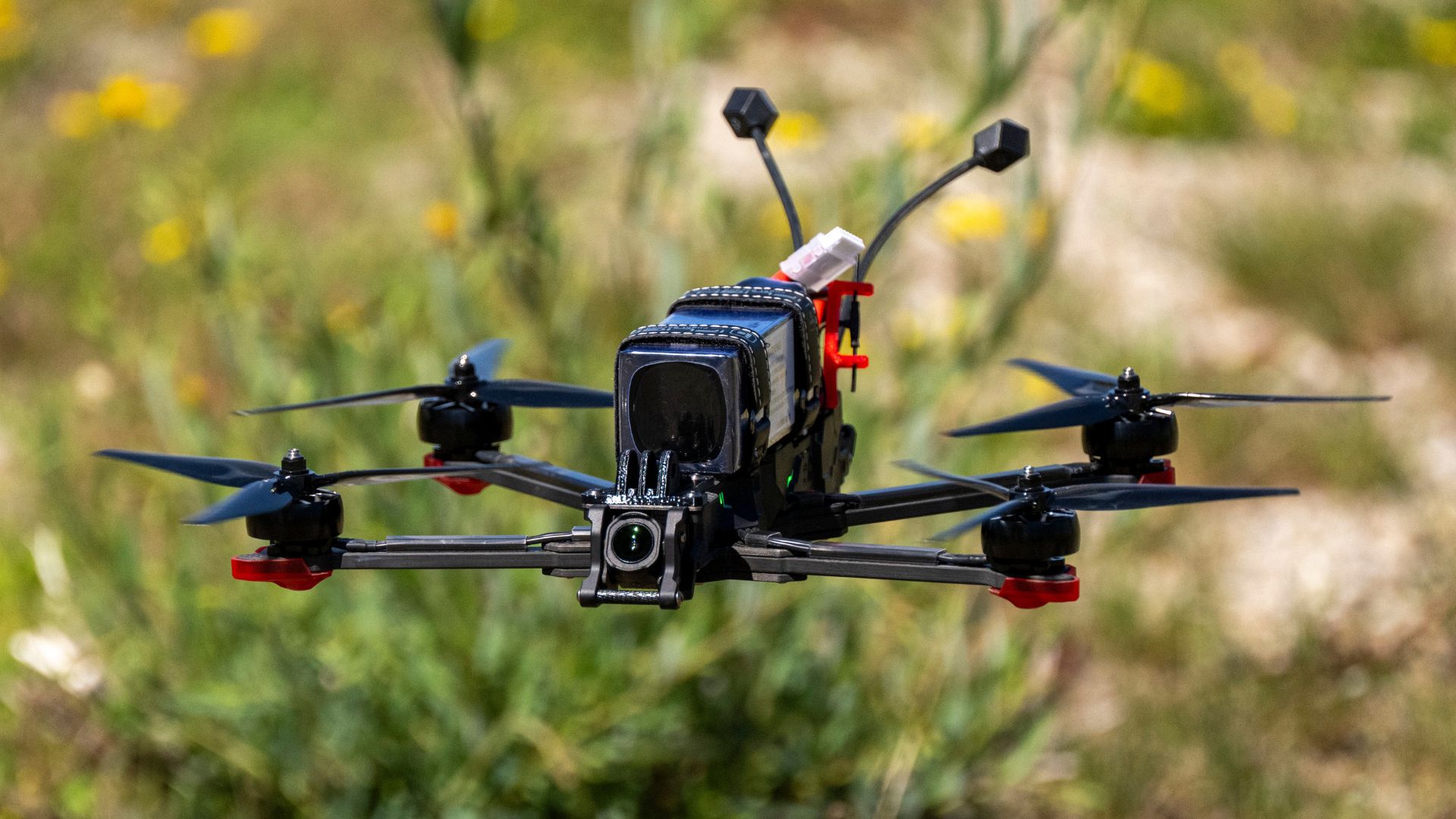
Modern active initiatives include NASA's X-59 Quiet SuperSonic Technology (QueSST), designed to test noise reduction for commercial supersonic land transport, and DARPA's X-65, built by Aurora Flight Sciences to test active flow control (AFC) without conventional mechanical flight surfaces. However, the rapid escalation of drone employment in modern warfare—accentuated by the intensive use of first-person view (FPV) drones and loitering munitions in international conflicts—has challenged the classical doctrine that technological superiority relies primarily on complex flight hardware.
Reaction
Defense experts and aerospace industry executives hold divided perspectives on how experimental programs should adapt to the proliferation of low-cost drones.
Aerospace engineers and researchers at agencies like NASA and DARPA maintain that physical X-planes remain irreplaceable for breakthroughs in fundamental fluid dynamics, high-temperature materials, and quiet supersonic flight. Representatives from this research community point out that computational fluid dynamics and wind tunnel testing cannot fully replicate real-world atmospheric conditions, making physical flight demonstrators essential for validating ground-breaking concepts like the X-59's sonic boom shaping or the X-65's non-mechanical flight control systems.
Conversely, defense procurement analysts and military leadership face immediate fiscal and tactical pressures. Key voices within the U.S. Air Force have increasingly prioritized programs like the Collaborative Combat Aircraft (CCA) initiative, advocating for lower unit costs and modular architectures that permit rapid hardware updates. Military strategists note that modern air defense networks can neutralize even advanced platforms, making low-cost, expendable uncrewed systems a more resilient investment for peer-level conflict scenarios.
What we don't know yet
Several critical uncertainties remain regarding how national defense budgets will balance high-end experimental research against autonomous drone procurement:
What to watch
Key developments in the coming years will indicate how aerospace institutions resolve this strategic pivot:
This report is based on analytical reporting published by Michael Dempsey on Sept. 24, 2026, examining the evolving role of American experimental aircraft programs in an era of low-cost autonomous drone technology.
How this story was produced
This report was written by The Global Wire newsroom from reporting first published by Michael Dempsey. We verify the core facts against the original report, write our own account, and add the background and consequences a short wire item leaves out. Drafting is AI-assisted inside an editor-supervised pipeline, and every story is checked for accuracy of attribution, structure and duplication before it appears — full detail in our AI and funding disclosure.
Spotted an error? Tell us at corrections@horizonglobalnews.com and read our corrections policy or editorial standards.



Reader comments
Loading comments…