

Supreme Court Judges to Inspect Testing Agency Facilities Amid Paper Leak Overhaul
Judges from India's Supreme Court will review upgraded security measures at the National Testing Agency following recommendations from an expert panel on exam reform.
By The Global Wire Newsroom · Reported from SECTIONS SC judges; Say Institutional Strengthening Needed
Link preview · horizonglobalnews.com
Supreme Court Judges to Inspect Testing Agency Facilities Amid Paper Leak Overhaul
Judges from India's Supreme Court will review upgraded security measures at the National Testing Agency following recommendations from an expert panel on exam reform.
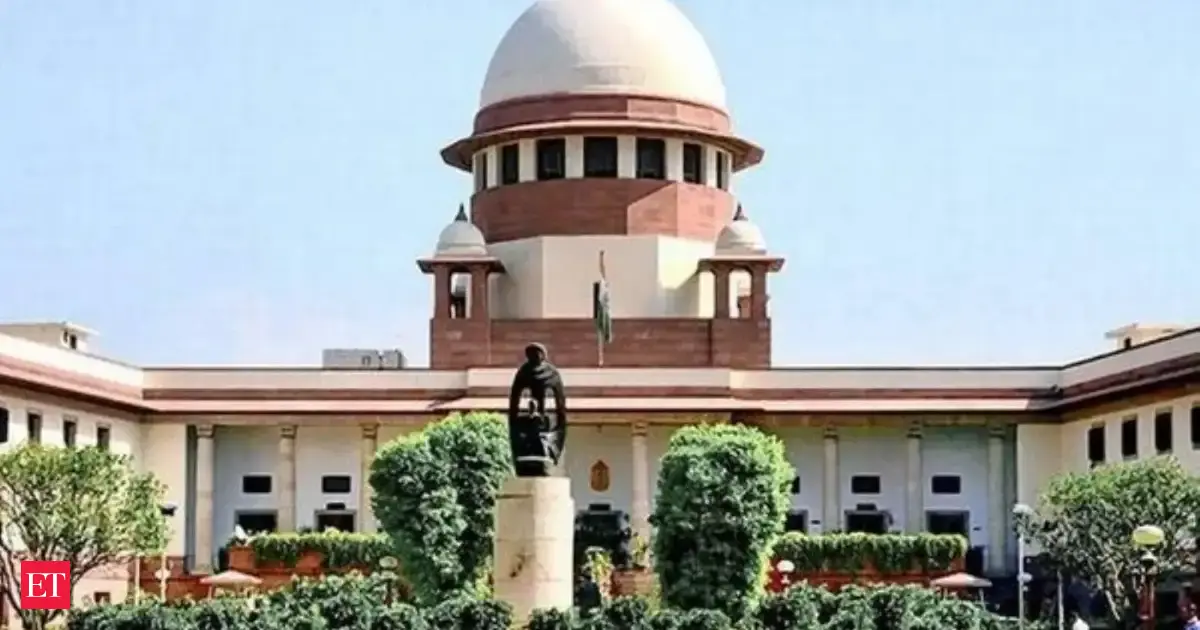
NEW DELHI — Members of the Supreme Court of India are scheduled to conduct an on-site inspection of the National Testing Agency's primary administrative and technical facilities to evaluate sweeping operational upgrades implemented to prevent question paper compromises in national entrance examinations. The judicial review follows a comprehensive overhaul of the testing body's security architecture and coincides with structural reform recommendations submitted by an independent high-powered panel. According to reporting by SECTIONS SC judges, federal authorities have prioritized systemic institutional strengthening to rebuild public faith in high-stakes testing mechanisms across the country, particularly the National Eligibility cum Entrance Test for undergraduate medical admissions.
Key facts
What happened
The planned visit by Supreme Court justices to the National Testing Agency (NTA) facilities represents an unprecedented step in judicial oversight of India's national examination infrastructure. The visit comes as the NTA completes a multi-stage restructuring of its operational workflow, initiated after severe allegations of paper leaks and security breaches disrupted major entrance tests across the country, as reported by SECTIONS SC judges.
During the upcoming inspection, the judicial delegation is expected to examine upgraded digital protocols, encrypted paper transmission systems, biometric candidate verification setups, and biometric monitoring equipment designed to track paper logistics in real time. The NTA's internal overhaul covers the entire lifecycle of an examination paper, ranging from question bank generation and secure printing facility selection to secure transport, center-level custody, and digital decryption at testing venues.
Concurrently, a high-powered expert committee appointed to review examination procedures has finalized recommendations advocating structural changes in how competitive tests are planned, managed, and executed. The committee's findings emphasize replacing legacy distribution channels with tamper-proof technological pipelines, reducing reliance on third-party center providers, and creating a permanent, specialized cadre of assessment professionals within the NTA. Government officials have affirmed that institutionalizing these reforms is a primary administrative priority, intended to safeguard the sanctity of nationwide testing calendars.
Why it matters
The integrity of competitive examinations under the NTA's purview directly affects the academic and professional trajectories of millions of young citizens each year. In India's highly competitive educational landscape, standardized tests serve as the sole gateway to professional degree programs, public university admissions, and government fellowships.
The National Eligibility cum Entrance Test for Undergraduate studies (NEET-UG) alone registers over 2.4 million candidates annually, competing for approximately 109,000 Bachelor of Medicine, Bachelor of Surgery (MBBS) and Bachelor of Dental Surgery (BDS) seats across government and private institutions. Similarly, tests like the Joint Entrance Examination (JEE Main) for engineering and the Common University Entrance Test (CUET) evaluate millions more candidates. When question papers are compromised or distributed unevenly, the core principle of meritocracy is undermined, placing honest applicants from socio-economically disadvantaged backgrounds at a grave disadvantage.
Beyond the individual impact on candidates, paper leaks generate severe systemic disruptions. Compromised examinations frequently lead to prolonged legal disputes, stay orders from courts, cancellation of test results, and mandatory re-examinations. These disruptions derail academic calendars across medical and engineering colleges, delaying the graduation and entry of new doctors and engineers into the national workforce. Furthermore, repeated breaches erode trust in state institutions and public testing bodies. Direct judicial inspection and structural overhaul signal a commitment to establishing transparent, audited, and legally resilient selection mechanisms that can withstand sophisticated organized criminal syndicates specializing in examination fraud.
The background
The National Testing Agency was established by the Ministry of Human Resource Development (now the Ministry of Education) in November 2017 as an autonomous, self-sustained testing organization under the Societies Registration Act, 1860. Created to relieve institutions like the Central Board of Secondary Education (CBSE) and the All India Council for Technical Education (AICTE) of test administration duties, the NTA was tasked with conducting standardized, computer-based, and pen-and-paper assessments adhering to international standards of security and reliability.
However, as the agency expanded its footprint to administer some of the world's largest competitive examinations, operational challenges grew exponentially. The issue reached a crisis point during the May 2024 NEET-UG examination, which saw widespread allegations of paper leaks in states including Bihar and Gujarat, alongside controversies surrounding the awarding of grace marks to over 1,500 candidates due to loss of exam time. The breach triggered nationwide student protests, multiple petitions before various state High Courts and the Supreme Court of India, and an extensive criminal investigation by the Central Bureau of Investigation (CBI).
In response to the crisis, the Ministry of Education constituted a seven-member high-powered committee of experts in June 2024, led by former Indian Space Research Organisation (ISRO) Chairman Dr. K. Radhakrishnan. The panel was mandated to submit recommendations on reforming NTA processes, improving data security protocols, and evaluating the structure and staffing of the agency. Additionally, the Indian Parliament enacted the Public Examinations (Prevention of Unfair Means) Act, 2024, which came into effect in June 2024. The law introduced stringent legal penalties for paper leaks and organized cheating syndicates, including prison terms of three to ten years and fines up to 1 crore Indian rupees.
Reaction
The decision for Supreme Court justices to personally inspect NTA facilities has drawn significant attention from legal experts, academic institutions, and student advocacy groups across India. Legal commentators note that while judicial review of administrative actions is standard, direct judicial inspection of technical facilities reflects the extraordinary nature of the crisis surrounding national entrance tests.
Student organizations and candidate welfare groups have welcomed the judicial oversight, expressing hope that direct scrutiny by the bench will accelerate the implementation of tamper-proof mechanisms. Representatives from medical and engineering aspirants' associations have publicly emphasized that structural reforms must go beyond technological fixes to include stricter vetting of private exam centers and total transparency in score normalization formulas.
While official statements from state governments remain pending subject to the inspection findings, several state education boards have previously advocated for greater decentralization or returning control of entrance examinations to individual states. Federal education officials have reiterated their commitment to implementing the high-powered committee's recommendations, maintaining that a strengthened, modern NTA remains essential for maintaining uniform national academic standards.
What we don't know yet
Despite official announcements regarding the judicial visit and institutional reforms, several key technical and administrative details remain undisclosed in available reporting. The precise schedule and full agenda of the Supreme Court judges' inspection tour have not been publicly detailed. Furthermore, specific technical specifications of the NTA's upgraded security apparatus—such as whether the agency will transition NEET-UG from a traditional paper-and-pencil OMR format to a fully digital computer-based test—have not been formally confirmed.
It also remains unclear how the high-powered panel's structural recommendations will alter the internal governance of the NTA. Gaps persist regarding whether the agency will establish a permanent cadre of security and logistics officers to replace external private vendors who previously managed center-level operations. Finally, the exact timeline for implementing all recommended institutional changes across all NTA-administered tests for the upcoming academic cycle remains subject to administrative approval.
What to watch
In the coming weeks, attention will focus on official court filings and statements resulting from the Supreme Court delegation's visit to the NTA headquarters. Key milestones include:
This report is based on original news coverage published by SECTIONS SC judges.
How this story was produced
This report was written by The Global Wire newsroom from reporting first published by SECTIONS SC judges; Say Institutional Strengthening Needed. We verify the core facts against the original report, write our own account, and add the background and consequences a short wire item leaves out. Drafting is AI-assisted inside an editor-supervised pipeline, and every story is checked for accuracy of attribution, structure and duplication before it appears — full detail in our AI and funding disclosure.
Spotted an error? Tell us at corrections@horizonglobalnews.com and read our corrections policy or editorial standards.





Reader comments
Loading comments…