

Trump Pauses Campaign Events Amid Iran Tensions as Questions Rise on Conscription Rules
Abrupt schedule changes by Donald Trump amid geopolitical tensions have reignited public debate over military conscription laws and presidential war powers.
By The Global Wire Newsroom · Reported from economictimes.indiatimes.com
Link preview · horizonglobalnews.com
Trump Pauses Campaign Events Amid Iran Tensions as Questions Rise on Conscription Rules
Abrupt schedule changes by Donald Trump amid geopolitical tensions have reignited public debate over military conscription laws and presidential war powers.
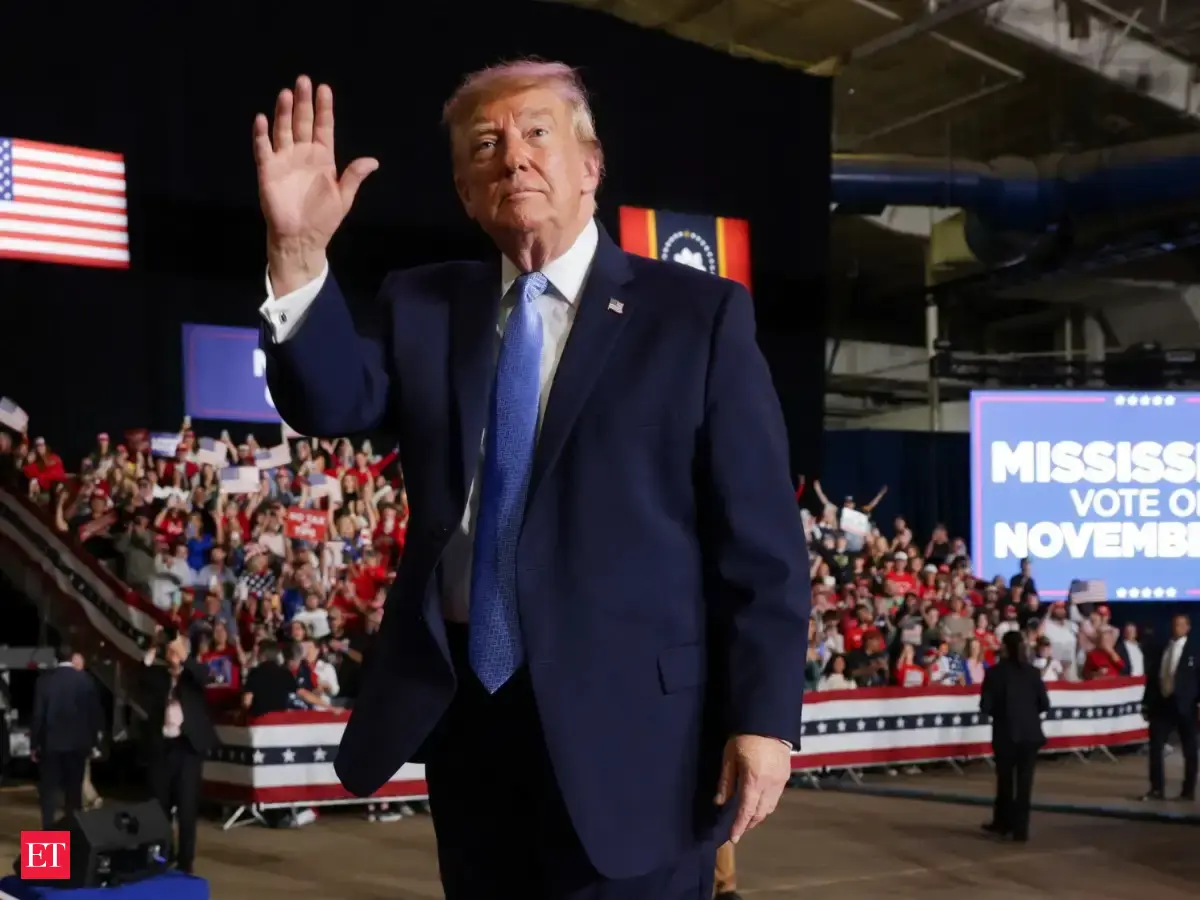
An unexpected cancellation of campaign events by Donald Trump amid escalating tensions between the United States and Iran has ignited fresh public discussion over military readiness, diplomatic stability, and the strict legal frameworks governing military conscription in the United States. The abrupt disruption to scheduled weekend campaign appearances came as geopolitical friction between Washington and Tehran intensified, prompting widespread digital speculation regarding the severity of the regional standoff and raising public inquiries into whether American civilians could theoretically face a military call-up in the event of an expanded international conflict, according to reporting by The Economic Times.
Key facts
What happened
Over the course of the weekend, scheduled campaign appearances for Donald Trump were abruptly called off against a backdrop of intensifying bilateral friction between Washington and Tehran, according to reporting by The Economic Times. The sudden withdrawal from public campaign stops immediately generated elevated interest across political and foreign policy circles, while feeding intense public speculation across social media platforms regarding the severity of the underlying geopolitical situation.
As news of the canceled events spread, online commentary rapidly turned toward extreme escalation scenarios, with search queries and public discussions surging around the theoretical prospect of wide-scale hostilities and the return of mandatory military conscription for American civilians. The reporting by The Economic Times highlighted how quickly diplomatic and security developments can alter high-profile political itineraries while simultaneously triggering public anxiety over the legal and practical mechanisms of military mobilization.
Neither the official campaign apparatus nor relevant defense authorities issued immediate statements connecting the schedule cancellations directly to tactical military operational directives. However, the juxtaposition of the abrupt political schedule change and heightened rhetoric in the Middle East was sufficient to ignite intense scrutiny regarding both campaign strategy and national security protocols.
Why it matters
Geopolitical friction involving the United States and Iran carries direct, measurable ramifications for global commerce, domestic political campaigns, and international security architecture. From an economic standpoint, escalating tensions in the Middle East invariably introduce significant volatility into global energy markets. The Persian Gulf encompasses the Strait of Hormuz, a critical maritime chokepoint through which approximately 20 percent of the world's petroleum liquids transit each day. Any military friction or threat of interdiction in these waters quickly translates into higher crude oil futures, elevated maritime insurance premiums, and increased transportation and consumer fuel costs across the globe.
Domestically, the rapid transition from a campaign schedule alteration to public discussions about military drafts illustrates the persistent fragility of public confidence during foreign policy crises. Misunderstandings regarding how military service is structured can generate unwarranted societal panic. Clarifying the actual statutory barriers to conscription is vital for public stability; contrary to viral rumors during international standoffs, an American president cannot unilaterally institute a draft by executive order or national emergency declaration. Understanding the institutional checks that separate military mobilization from political rhetoric protects citizens and market participants from making decisions based on unverified alarm.
Furthermore, the event underscores how foreign policy crises immediately permeate presidential campaigns. National security considerations routinely challenge domestic campaign logistics, forcing candidates and political organizations to balance voter outreach against operational realities, intelligence briefings, and rapid shifts in news cycles.
The background
The United States has not operated a military draft in more than five decades. Conscription was officially terminated in January 1973 under President Richard Nixon and Secretary of Defense Melvin Laird, transitioning the armed forces into an all-volunteer model. That shift followed the recommendations of the President's Commission on an All-Volunteer Armed Force, commonly known as the Gates Commission, established in 1969 to evaluate the feasibility of ending compulsory service following the domestic turmoil of the Vietnam War.
Today, the active-duty military comprises approximately 1.3 million service members across the Army, Navy, Air Force, Marine Corps, and Space Force, supported by roughly 800,000 Reserve and National Guard personnel. The primary legal vehicle governing potential conscription is the Military Selective Service Act, codified under Title 50 of the United States Code. Under current law, the Selective Service System is maintained as an independent federal agency in a standby operational posture. Registration was reinstituted in 1980 by President Jimmy Carter following the Soviet invasion of Afghanistan, mandating that virtually all male U.S. citizens and male non-citizen immigrants between the ages of 18 and 25 register within 30 days of their 18th birthday.
However, registration is purely administrative; it does not confer authority to induct individuals into active military service. To resume inductions, the U.S. Congress would have to draft, debate, and pass primary legislation authorizing the activation of conscription, which the president would then need to sign into law. Even if such legislation were enacted, the Selective Service System is designed to conduct a national lottery based on birth dates, followed by comprehensive physical, mental, and moral evaluations, alongside established administrative appeal procedures for exemptions, deferments, and conscientious objector status.
On the international stage, relations between the United States and Iran have remained hostile since the 1979 Islamic Revolution and the subsequent 444-day Iran Hostage Crisis. Tensions expanded significantly after the United States unilaterally withdrew in May 2018 from the Joint Comprehensive Plan of Action (JCPOA), the multilateral accord designed to limit Iran's nuclear enrichment capabilities in exchange for sanctions relief. Subsequent years have witnessed recurring confrontations involving commercial shipping seizures, regional drone and missile strikes, cyber warfare, and proxy engagements across Iraq, Syria, Lebanon, and Yemen. In January 2020, direct conflict spiked following the U.S. targeted strike that killed Iranian Major General Qasem Soleimani in Baghdad, drawing retaliatory ballistic missile strikes against Iraqi bases housing American troops. Throughout these cyclical crises, presidential authority to deploy forces has remained bounded by the War Powers Resolution of 1973, which requires statutory consultation with Congress and mandates troop withdrawals within 60 to 90 days absent explicit legislative approval.
Reaction
The initial report published by The Economic Times documented a surge in digital public concern, centered primarily on fears that regional friction could widen into broader conflict and prompt questions over civilian obligations. In broader political and defense spheres, institutional responses during such standoffs typically emphasize containment, deterrence, and legal boundaries.
Historically, the Department of Defense has consistently affirmed its institutional commitment to the all-volunteer force, with senior defense officials repeatedly testifying before the House and Senate Armed Services Committees that voluntary enlistments yield higher retention rates, professional specialization, and superior unit cohesion compared to conscripted forces. When international crises provoke public queries about compulsory service, the Selective Service System regularly issues informational notices reiterating that it cannot draft anyone without explicit, bipartisan congressional legislation.
Within the political arena, campaign schedule changes during foreign policy standoffs typically draw oversight and scrutiny from legislative committees, international diplomatic representatives, and market analysts tracking potential impacts on regional infrastructure and energy corridors.
What we don't know yet
Several substantive details remain unconfirmed surrounding the weekend schedule disruption. The reporting by The Economic Times did not enumerate the specific cities, rally venues, or dates of the affected campaign events, nor did it disclose whether the cancellations were driven by direct intelligence briefings, domestic security advisories, or broader political and logistical considerations.
Furthermore, the precise operational scope of the referenced tensions between the United States and Iran remains unspecified in the immediate accounts. The reporting did not clarify whether the rising tensions stemmed from naval encounters in international waterways, retaliatory actions involving regional proxy groups, heightened intelligence warnings concerning diplomatic installations, or elevated alerts among deployed military units.
It is also not yet known when the cancelled campaign events will be rescheduled, or whether future campaign engagements will undergo security alterations or itinerary modifications as regional developments unfold.
What to watch
In the coming days, observers should monitor several concrete indicators to evaluate the trajectory of both the domestic campaign schedule and the broader geopolitical situation:
This account is based on original reporting published by The Economic Times detailing Donald Trump's cancellation of scheduled campaign events over the weekend amid mounting friction between the United States and Iran.
How this story was produced
This report was written by The Global Wire newsroom from reporting first published by economictimes.indiatimes.com. We verify the core facts against the original report, write our own account, and add the background and consequences a short wire item leaves out. Drafting is AI-assisted inside an editor-supervised pipeline, and every story is checked for accuracy of attribution, structure and duplication before it appears — full detail in our AI and funding disclosure.
Spotted an error? Tell us at corrections@horizonglobalnews.com and read our corrections policy or editorial standards.




Reader comments
Loading comments…