

Stand-Up Comics Face New Piracy Threat as Synthetic Avatars Lift Routines for Adult Sites
American comedians say automated social media accounts using synthetic female avatars are scraping recorded stand-up material to funnel viewer traffic toward adult entertainment portals.
By The Global Wire Newsroom · Reported from Malay Mail
Link preview · horizonglobalnews.com
Stand-Up Comics Face New Piracy Threat as Synthetic Avatars Lift Routines for Adult Sites
American comedians say automated social media accounts using synthetic female avatars are scraping recorded stand-up material to funnel viewer traffic toward adult entertainment portals.
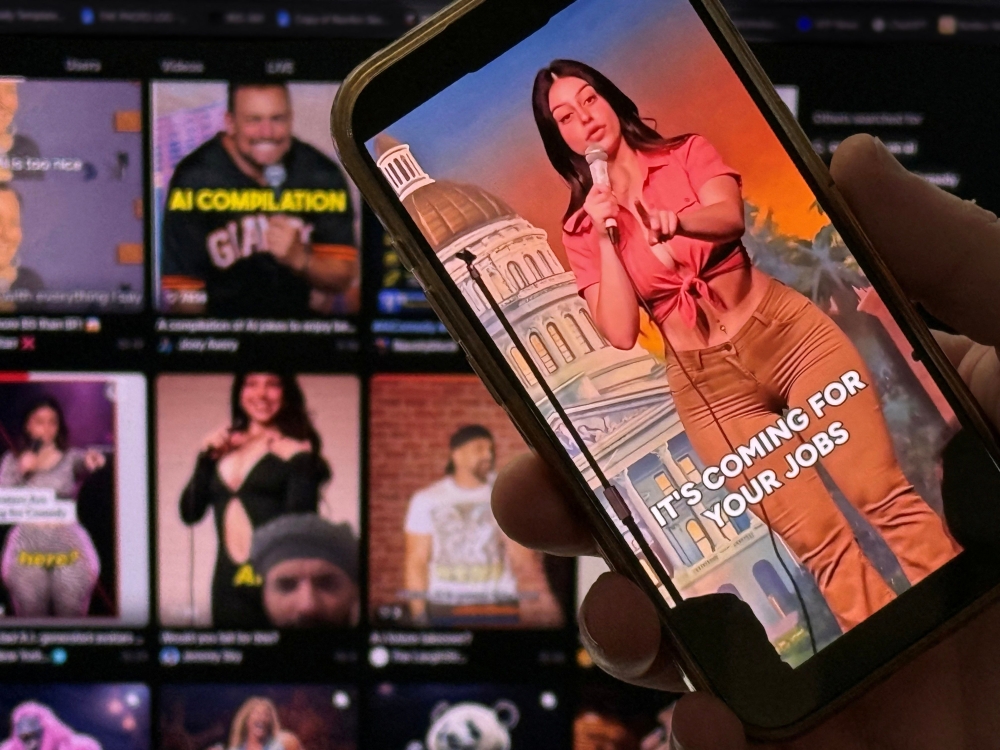
WASHINGTON — American stand-up comedians are confronting an evolving form of digital intellectual property theft as automated accounts deploy hyper-realistic, artificial intelligence-generated personas to deliver stolen stand-up material across major social media networks. The automated campaigns, designed to mimic female influencers, lift verbatim comedic timing, cadence, and punchlines from recorded comedy routines and revoice or lipsync the material to build algorithmic engagement. Creators whose jokes have been appropriated report that the synthetic accounts operate as high-volume engagement funnels, routing viewer traffic from short-form video platforms toward adult subscription portals and commercial pornography websites, according to reporting by Malay Mail.
Key facts
What happened
Comedian Julia Jasunas observed her creative work appearing in a form she had neither authorized nor anticipated: delivered by an artificially generated avatar crafted to resemble a voluptuous blonde woman on social media. The synthetic account had taken Jasunas's timing, narrative setup, and comedic punchline, mapping the verbal routine onto an animated digital model designed to capture immediate visual attention in algorithmic feeds.
Jasunas is among a growing cadre of live performers discovering that their recorded stage appearances are being systematically mined by automated networks, according to reporting by Malay Mail. Rather than human performers lifting material—a longstanding source of professional friction in the comedy industry—the current wave of appropriation is technical and automated. Operators build or license photorealistic digital models generated through diffusion software and synthetic video tools, then align the models' mouth movements to scraped audio tracks or newly synthesized voiceovers reading exact comedic scripts.
These synthetic accounts do not operate as parodies or tributes. Instead, they function as front-end distribution nodes in commercial click-funnel networks. Once an AI avatar accumulates followers and high viewer-retention metrics by delivering polished, road-tested jokes crafted by professional comedians, the account monetizes that visibility. Profile pages prominently feature aggregator links—often hosted via link-in-bio services—that guide unsuspecting platform users to paywalled adult web portals, webcam communities, and erotic subscription services.
Why it matters
This trend represents a critical collision between emerging generative media pipelines and the economic foundations of live performance art. Stand-up comedy relies on intellectual property developed through months or years of live experimentation in clubs, open mics, and theaters. When automated networks harvest that material without compensation or attribution, they effectively divert the economic value of a performer's labor into illicit commercial channels.
For comedians, the harms extend beyond straightforward copyright infringement. The association of a comic’s distinct personal voice, observational humor, and artistic identity with pornographic conversion funnels creates severe brand and reputational hazards. In the modern comedy market, performers depend heavily on digital clips published to TikTok, Instagram Reels, and YouTube Shorts to sell tickets for national tours and secure television development deals. If algorithms prioritize hyper-sexualized synthetic accounts that deliver the same jokes with higher visual engagement scores, original creators find themselves demoted by the very recommendation engines they rely on for livelihood.
Furthermore, the practice exposes systemic vulnerabilities in platform moderation architecture. Recommendation algorithms on major short-form video networks reward high audience retention and aggressive comment activity. Sexually suggestive imagery combined with sharp, battle-tested humor creates an extraordinarily potent formula for algorithmic amplification. Because the underlying visual assets are unique synthetic renderings rather than direct video rips, traditional content-matching systems such as automated hash matching often fail to flag the material as unauthorized duplication, leaving human artists without automated protections.
The background
Joke theft has plagued the performing arts for generations, dating back to 20th-century vaudeville stages, radio broadcasting, and mid-century nightclub circuits. Historically, intellectual property disputes occurred between human comedians, regulated largely by informal industry shunning, comedy club bans, and occasional high-profile public confrontations. Legally, stand-up comedy occupies a distinct space under the United States Copyright Act of 1976 (Title 17 of the United States Code). While an abstract joke concept or general premise cannot be copyrighted, the specific expression—the precise wording, sequencing, cadence, and recorded performance—is protected federal intellectual property once fixed in a tangible medium, such as a digital recording or written manuscript.
Over the past two decades, the rise of online video fundamentally transformed comedy economics. Where comics once guarded their routines jealously to preserve surprise for television specials, contemporary performers must post constant short-form video snippets to maintain algorithmic relevance. This transition required performers to place hundreds of hours of high-quality, fixed-medium comedic assets into the public digital sphere.
Concurrently, advances in generative computer vision and synthetic speech over the early 2020s dramatically lowered the technical barrier to creating realistic digital humans. Tools capable of text-to-image synthesis, automated facial manipulation, and phoneme-level lip synchronization—technologies that previously required Hollywood-scale visual effects budgets—became accessible to commercial affiliate marketers via open-source software and consumer-facing application programming interfaces (APIs).
Affiliate marketing operators in the adult industry have historically adapted rapidly to new web technologies, from search engine optimization manipulation in the late 1990s to automated social media botnets in the 2010s. The deployment of synthetic digital personas represents the latest iteration of this commercial strategy: replacing low-conversion spam bots with photorealistic, animated avatars capable of delivering charismatic human content to drive traffic through affiliate tracking links.
Reaction
Independent stand-up performers have expressed mounting outrage across creator communities, calling attention to the double standard of digital copyright enforcement. Many performers point out that while corporate music labels and major film studios enjoy sophisticated automated scanning systems that issue rapid copyright strikes, individual independent artists must navigate cumbersome manual takedown procedures.
Online advocacy organizations and creator economy labor coalitions have increasingly pressured digital platforms to enforce strict bans on non-consensual synthetic voice cloning and unauthorized script re-enactment. While digital platforms maintain comprehensive terms of service prohibiting spam, automated engagement manipulation, and intellectual property infringement, comedians argue that enforcement remains passive and reactive.
Platform operators, including Meta Platforms Inc. and TikTok, have publicly pledged ongoing investments in identifying AI-generated content through metadata standards like C2PA (Coalition for Content Provenance and Authenticity) and mandatory user-disclosure tags. However, enforcement primarily targets political disinformation and non-consensual deepfake pornography, leaving commercial joke piracy in an operational gray zone where enforcement relies almost entirely on manual Digital Millennium Copyright Act (DMCA) filings by victimized artists.
What we don't know yet
Significant operational and legal questions surrounding these networks remain unresolved. It is currently unclear whether the synthetic avatar campaigns are the work of decentralized, opportunistic affiliate marketers purchasing off-the-shelf automation scripts, or organized digital marketing syndicates operating centralized server farms to programmatically rip, revoice, and distribute thousands of comedy clips per day.
Additionally, the exact revenue generated by these funnels has not been publicly documented. While the commercial mechanism relies on standard affiliate payouts—where adult websites pay referrers a fixed bounty or a recurring percentage of subscription revenue—the conversion efficiency of AI-delivered stand-up comedy remains unquantified. It is also unknown whether social media networks are developing specialized natural language processing tools capable of matching spoken comedy transcripts against original creator uploads, or whether platforms will continue to place the entire detection and reporting burden onto independent creators.
What to watch
In the coming months, several critical indicators will determine whether this practice expands or faces technical and regulatory containment. Observers should watch for formal policy updates from major platforms regarding synthetic avatar transparency and whether automated affiliate link aggregators face stricter bio-link restrictions.
Legal developments also warrant close observation. United States federal lawmakers have introduced legislative frameworks, including the proposed NO FAKES Act, which seeks to establish clear federal property rights protecting an individual's voice and visual likeness from unauthorized synthetic recreation. While the current controversy involves the theft of written and performed material rather than direct visual face-swaps of the comedians themselves, legal scholars are monitoring whether comics will initiate class-action litigation against link-in-bio providers, affiliate platforms, or AI video generation services under federal copyright statutes and the Lanham Act for false commercial endorsement.
Finally, industry watchers will be tracking whether major comedy management agencies, talent unions, and digital distributor platforms establish collective monitoring consortiums to automate DMCA takedowns on behalf of performing artists facing algorithmic exploitation.
This report incorporates news and developments first reported by Malay Mail.
How this story was produced
This report was written by The Global Wire newsroom from reporting first published by Malay Mail. We verify the core facts against the original report, write our own account, and add the background and consequences a short wire item leaves out. Drafting is AI-assisted inside an editor-supervised pipeline, and every story is checked for accuracy of attribution, structure and duplication before it appears — full detail in our AI and funding disclosure.
Spotted an error? Tell us at corrections@horizonglobalnews.com and read our corrections policy or editorial standards.



Reader comments
Loading comments…