

Trump Signals Wider Executive Branch Overhaul After Midterms and Wiles Exit
President Donald Trump indicated plans for additional personnel changes following the departure of Chief of Staff Susie Wiles and a contentious midterm election cycle.
By The Global Wire Newsroom · Reported from TMZ Staff
Link preview · horizonglobalnews.com
Trump Signals Wider Executive Branch Overhaul After Midterms and Wiles Exit
President Donald Trump indicated plans for additional personnel changes following the departure of Chief of Staff Susie Wiles and a contentious midterm election cycle.
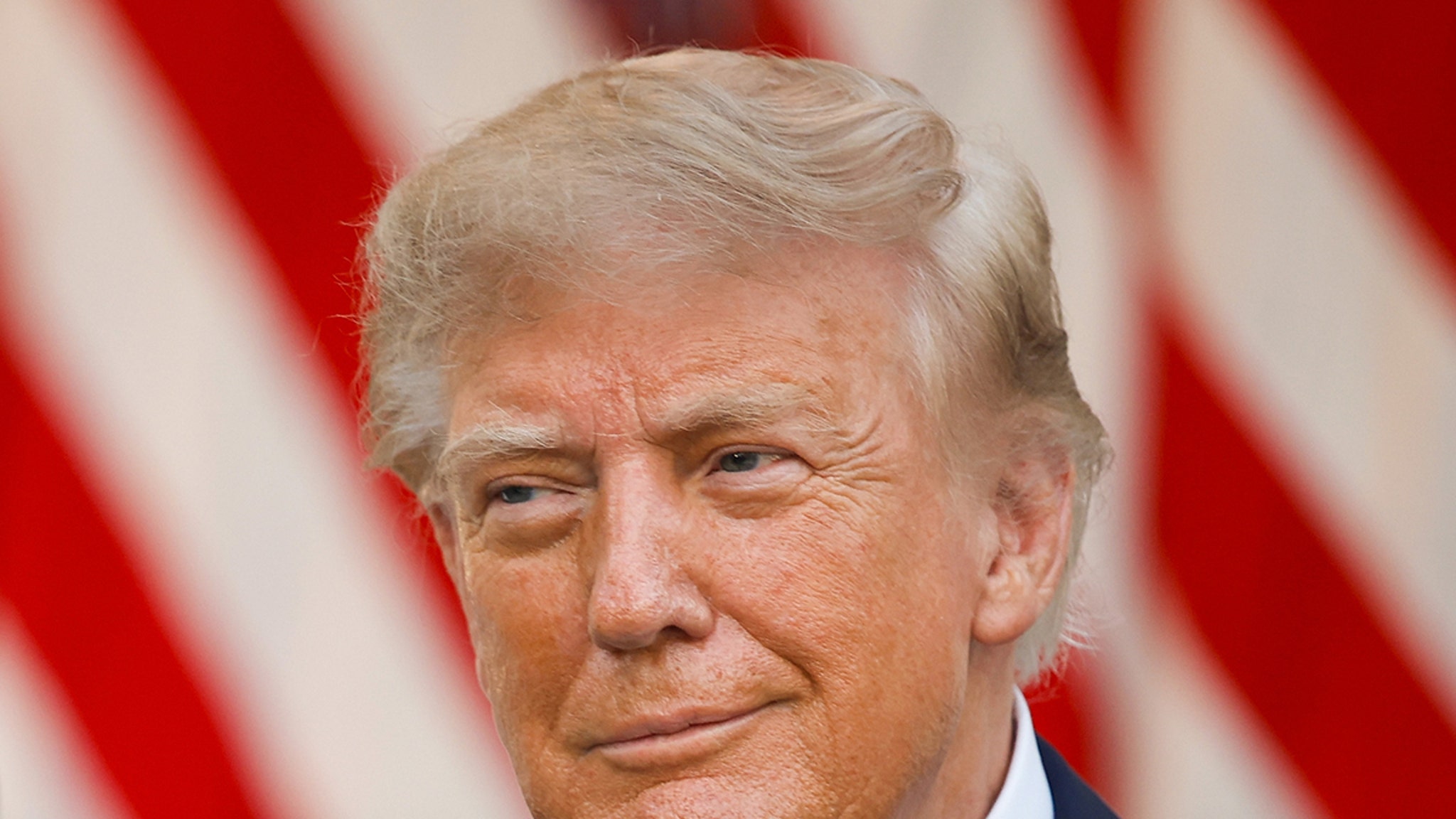
President Donald Trump has announced plans to dismiss additional personnel across his administration following the departure of White House Chief of Staff Susie Wiles and the outcome of the midterm elections, speaking in an interview broadcast on "60 Minutes." The declaration, which comes in the immediate aftermath of a difficult election cycle for congressional allies, signals an impending reshuffling of executive branch leadership. The departure of Wiles, who served as a central operational figure inside the West Wing, marks the most prominent staffing exit of the term to date and sets the stage for a broader reorganization of senior aides and departmental leadership in Washington.
Key facts
What happened
In a televised exchange on "60 Minutes," President Donald Trump stated that he intends to replace further officials across his administration, framing the anticipated personnel decisions as a direct response to recent political developments, according to reporting by TMZ. The comments arrived on the heels of the departure of Susie Wiles from her post as White House Chief of Staff. Wiles had served as a primary gatekeeper to the Oval Office, managing executive scheduling, coordinating senior policy advisers, and serving as the administrative anchor of the Executive Office of the President.
While the broadcast interview confirmed that Wiles had exited her role and that additional firings were planned, the administration did not immediately provide a comprehensive roster of targeted officials or specify the timeline over which the removals would take place. The public disclosure followed an electoral cycle characterized in news reports as an electoral rout, creating sharp internal friction over political strategy, communications, and legislative engagement. By speaking openly on national television about upcoming dismissals, the president signaled that the structural shake-up extends beyond a single personnel change at the top of the West Wing hierarchy and will reach deeper into federal agencies and executive advisory councils.
Why it matters
The dismissal of a White House chief of staff, paired with an open commitment to purge additional administration figures, carries immediate practical consequences for governance, federal rulemaking, and legislative strategy. The chief of staff is conventionally regarded as the second most powerful administrative actor in Washington, responsible for managing the flow of intelligence and policy memoranda to the president, arbitrating disputes between cabinet secretaries, and negotiating with congressional leadership. When that post becomes vacant during an administration shake-up, routine decision-making can decelerate across cabinet agencies, as department heads operate without clarity regarding which initiatives enjoy presidential backing.
For financial markets and regulatory stakeholders, sudden turnover introduces significant policy unpredictability. Major executive branch decisions—spanning trade tariffs, federal procurement contracts, antitrust enforcement, and environmental permitting—require sustained administrative leadership to withstand judicial scrutiny under the Administrative Procedure Act. When senior officials are abruptly dismissed, pending guidance documents and draft rules often stall as incoming personnel re-evaluate priorities or face legal challenges regarding their appointment authority.
Furthermore, an administration facing newly empowered political opposition on Capitol Hill must rely heavily on experienced legislative affairs personnel to manage oversight subpoenas, budget authorizations, and confirmation hearings. A wave of high-level firings diminishes institutional continuity at the precise moment congressional committees typically ramp up investigations into executive conduct. If vacancies occur within Senate-confirmed positions, the administration faces the additional hurdle of securing confirmations from a potentially hostile or narrowed Senate majority, or relying on temporary acting officials whose legal tenure is strictly constrained by federal law.
The background
Turnover among top executive branch personnel following midterm election setbacks has deep historical roots in modern American presidential history, though the scale and speed of such changes vary widely. Established administrative precedent shows that presidents frequently treat midterm defeats as an inflection point to reassign blame, pivot messaging, and reshape their policy apparatus for the remainder of their term.
Historical parallels illustrate this pattern across multiple administrations. Following the 2006 midterm elections, in which the Republican Party lost control of both chambers of Congress, President George W. Bush announced the resignation of Defense Secretary Donald Rumsfeld the very next day, signaling a strategic shift in military policy. In 2010, after Democrats suffered significant congressional losses, President Barack Obama instituted an extensive West Wing reorganization, which included the departure of Chief of Staff Rahm Emanuel and a recalibration of legislative strategy. Similarly, following the 2018 midterm elections during his first term in office, President Trump forced the resignation of Attorney General Jeff Sessions within twenty-four hours of the polls closing, replacing him on an acting basis.
The role of White House Chief of Staff was formalized under the Reorganization Plan No. 1 of 1939 and the establishment of the Executive Office of the President, evolving over subsequent decades into the linchpin of executive administration. Unlike cabinet secretaries whose positions are created by statute and require Senate confirmation under Article II, Section 2 of the United States Constitution, the chief of staff serves at the sole pleasure of the president without congressional vetting. Susie Wiles, who led Trump's successful 2024 presidential campaign and was subsequently named chief of staff, had represented a traditional operational hub, tasked with imposing organizational discipline on a historically volatile governing environment.
When removals extend beyond direct White House staff into executive agencies, the process is governed by statutory frameworks, most notably the Federal Vacancies Reform Act of 1998 (5 U.S.C. §§ 3345–3349d). This statute strictly regulates who may serve as an acting official in positions requiring Senate confirmation, limiting acting service generally to 210 days, with extensions permitted only during pending nominations. Violations of these appointment procedures can result in agency actions being invalidated by federal courts, making wholesale dismissals a legally complex undertaking.
Reaction
The public confirmation of planned dismissals has drawn close attention from political observers, federal workforce advocates, and lawmakers on Capitol Hill. While formal statements from targeted agency leaders have not been released, congressional leaders are expected to scrutinize any changes to cabinet-level personnel, particularly if vacancies bypass standard confirmation procedures.
Members of the president's party are tasked with navigating the fallout from midterm losses, with some factions likely supporting an overhaul of administrative leadership to recalibrate ahead of the next national election, while others express concern over governance instability. Opposition lawmakers are expected to utilize committee gavels to investigate the circumstances surrounding high-level departures and monitor whether incoming acting appointees comply with statutory limits. Outside watchdog organizations and administrative law scholars are monitoring the situation to determine whether impending personnel changes will affect career civil servants protected by Title 5 of the United States Code, or remain concentrated among political appointees serving at presidential discretion.
What we don't know yet
Significant critical details remain unconfirmed following the president's broadcast remarks. Foremost among them is the precise identity of the officials targeted for removal. The public statements did not identify specific cabinet departments, agency heads, or West Wing operational directors slated for dismissal, leaving executive branch leadership in a state of operational limbo.
It is also unknown who will be appointed to replace Susie Wiles as White House Chief of Staff, whether on an acting or permanent basis. The selection of the next chief of staff will reveal whether the administration intends to install an ideological loyalist, an administrative manager, or a seasoned legislative negotiator to navigate the post-midterm environment. Finally, the administration has not clarified whether these dismissals will involve negotiated resignations or immediate unilateral terminations, a distinction that carries significant legal and procedural implications for agency continuity and executive leadership transitions.
What to watch
The trajectory of the executive branch over the coming weeks will be shaped by several concrete developments and procedural milestones:
This report incorporates news reporting originally published by TMZ.
How this story was produced
This report was written by The Global Wire newsroom from reporting first published by TMZ Staff. We verify the core facts against the original report, write our own account, and add the background and consequences a short wire item leaves out. Drafting is AI-assisted inside an editor-supervised pipeline, and every story is checked for accuracy of attribution, structure and duplication before it appears — full detail in our AI and funding disclosure.
Spotted an error? Tell us at corrections@horizonglobalnews.com and read our corrections policy or editorial standards.





Reader comments
Loading comments…