

Schiff Accuses Trump, Musk and Zelensky of Conflicting Accounts on Starlink in Ukraine
Democratic Senator Adam Schiff has demanded accountability over sharply diverging claims regarding the satellite network's role and operations in the Ukrainian war effort.
By The Global Wire Newsroom · Reported from Shibra Arshad
Link preview · horizonglobalnews.com
Schiff Accuses Trump, Musk and Zelensky of Conflicting Accounts on Starlink in Ukraine
Democratic Senator Adam Schiff has demanded accountability over sharply diverging claims regarding the satellite network's role and operations in the Ukrainian war effort.
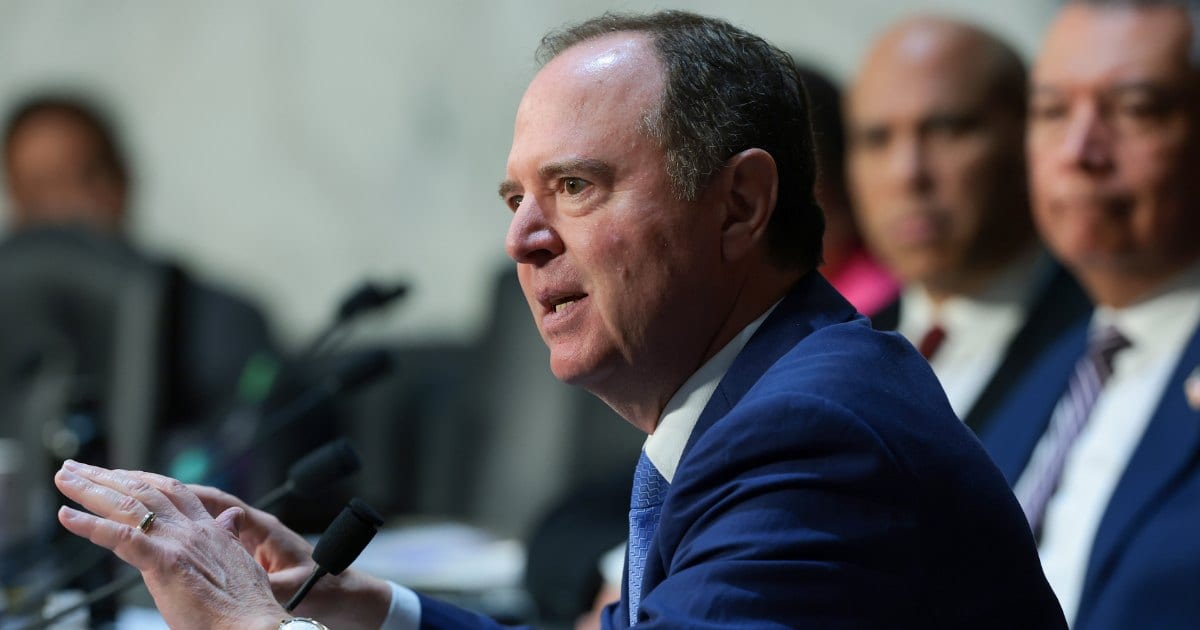
Democratic Senator Adam Schiff has publicly challenged conflicting statements delivered by Donald Trump, SpaceX chief executive Elon Musk, and Ukrainian President Volodymyr Zelensky regarding the operation and governance of the Starlink satellite internet network, declaring that the irreconcilable narratives indicate someone is not telling the truth. The California lawmaker's intervention elevates congressional scrutiny over the intersection of commercial space infrastructure, presidential diplomacy, and tactical battlefield communications in Eastern Europe, where satellite broadband has served as an indispensable instrument of national defense since early 2022.
Key facts
What happened
Senator Adam Schiff confronted a series of diverging claims surrounding the status, control, and political agreements governing Starlink terminals deployed across Ukraine. According to reporting by Shibra Arshad, Schiff underscored the explicit contradictions between accounts provided by Trump, Musk, and Zelensky, arguing that the public record cannot support all three versions of events simultaneously.
While public rhetoric from political leaders and corporate executives regarding the Ukrainian theater has frequently diverged, the friction over Starlink reaches into operational defense matters. Over recent months, Trump has repeatedly promoted his ability to negotiate rapid resolutions to the conflict in Ukraine while commenting on defense spending, technological deployment, and relations with foreign heads of state. Concurrently, Musk has advanced personal viewpoints regarding front-line access, geofencing, and the financial exposure SpaceX incurred while sustaining satellite ground stations across combat zones. In contrast, President Zelensky and his administration in Kyiv have consistently characterized reliable satellite access as a sovereign military necessity, at times disputing outside assertions regarding battlefield connectivity or political conditions tied to the hardware.
Schiff's assertion directly targets the credibility of the primary actors shaping this dialogue. By formally calling out the discrepancies, the senior lawmaker signaled that Congress will not treat conflicting explanations about wartime infrastructure as mere rhetorical posturing, pointing instead to potential misrepresentations that impact international policy and legislative oversight.
Why it matters
The dispute articulated by Schiff carries significant implications for modern military doctrine, public spending accountability, and international alliances. Modern combat operations in Ukraine rely heavily on low-Earth orbit satellite constellations. Starlink terminals coordinate artillery strikes, maintain secure battlefield communications among distributed infantries, guide uncrewed aerial vehicles, and sustain emergency hospital networks amid regular Russian strikes on terrestrial telecommunications towers and electrical power grids.
When public officials and corporate leaders offer incompatible narratives concerning the deployment, funding, or operational control of such systems, defense planners face institutional instability. Commercial satellite technology has historically operated outside traditional military procurement frameworks, allowing vendors considerable latitude over service parameters. However, when private business owners or political candidates suggest backchannel arrangements, unilateral constraints, or diplomatic bartering involving defense hardware, the integrity of federal contracting and international security guarantees is placed under strain.
Furthermore, for American taxpayers and international donors funding billions of dollars in foreign military financing, clarity regarding the contractual terms between commercial vendors and sovereign governments is essential. If political candidates claim credit for strategic shifts, if corporate executives suggest independent veto authority over allied military operations, or if allied heads of state report conflicting realities on the ground, congressional committees tasked with budget authorizations lose the transparency required to execute constitutional oversight.
The background
The reliance of Ukrainian forces on SpaceX's satellite network began in the earliest hours of the Russian invasion in February 2022. Following cyberattacks that disabled conventional European satellite networks, Ukrainian Minister of Digital Transformation Mykhailo Fedorov submitted a public appeal to Elon Musk requesting urgent hardware deliveries. Within days, SpaceX activated Starlink coverage over Ukrainian territory and began shipping thousands of user terminals, financed through a mix of private corporate funds, volunteer donations, and international aid agencies, including the United States Agency for International Development.
Over the subsequent months, the relationship grew complex. By late 2022, SpaceX informed the United States Department of Defense that it could no longer indefinitely finance terminal procurement, maintenance, and high-bandwidth data packages on its own ledger, estimating future costs in the tens of millions of dollars. Although Musk subsequently reaffirmed SpaceX’s operational support, reports surfaced detailing instances where Starlink connectivity had been restricted or denied in specific operational zones, including contested territory surrounding the Crimean Peninsula. Musk stated that he had prevented terminals from activating near Sevastopol to avoid complicity in major escalatory offensive maneuvers that might risk broader conflict.
To mitigate reliance on discretionary corporate decisions, the Pentagon’s Defense Department executed a formal defense contract in June 2023 with SpaceX. Under this agreement, the United States government procured dedicated Starlink communications capabilities—often categorized under SpaceX's defense-focused Starshield business line—ensuring continuous coverage managed according to military directives rather than private discretion.
Against this operational backdrop, former president Donald Trump frequently engaged with both domestic tech executives and foreign heads of state, presenting his own interpretations of the conflict's dynamics and criticizing the financial scale of American aid. The intersection of Trump's political campaign, Musk's growing role in national political debates, and Zelensky's persistent diplomatic outreach created overlapping and competing public narratives regarding the stability and future management of the war effort.
Reaction
Schiff’s public challenge has focused legislative attention on the unresolved tensions between corporate communications providers and national security officials. Capitol Hill lawmakers serving on the Senate Armed Services Committee and the Senate Select Committee on Intelligence have previously signaled unease regarding the private sector's outsized influence over active theater operations. Democratic members of Congress have historically called for formal hearings to examine whether the Pentagon's contractual safeguards are sufficient to protect American allies from arbitrary service interruptions.
Spokespersons for SpaceX and representatives for Trump have regularly dismissed congressional criticisms as partisan attacks, asserting that private innovation filled a vacuum left by slow-moving federal procurement systems. In Kyiv, defense officials have generally attempted to manage relationships diplomatically, offering public gratitude to Musk and American taxpayers while privately navigating the operational vulnerabilities that arise whenever access to the satellite network faces public political debate.
What we don't know yet
Significant gaps remain regarding the specific factual discrepancies that prompted Schiff's direct charge that someone is lying. The public record does not yet identify whether the dispute concerns private discussions between Trump and Musk regarding future geopolitical policy, the precise geographic limits currently imposed on Starlink terminals across the front line, or the commercial terms under which the Ukrainian military is presently receiving service.
It remains unverified whether Schiff’s assessment draws from classified briefings provided to congressional intelligence committees or whether it reflects an analysis of contradictory statements delivered across recent public interviews, campaign rallies, and corporate declarations. Additionally, the exact degree to which recent Pentagon contracts shield Ukrainian terminal operators from executive or corporate intervention remains subject to proprietary and national defense classification boundaries.
What to watch
In the coming weeks, attention will center on whether the Senate Armed Services Committee or the House Committee on Oversight and Accountability issues formal requests for records, executive briefings, or testimony from SpaceX leadership and Department of Defense procurement officers. Lawmakers may demand transcripts or documentation clarifying whether any non-governmental channels have attempted to influence Starlink’s operational availability.
Observers will also track statements from the Ukrainian Ministry of Defense and the Pentagon's Defense Information Systems Agency to verify whether any changes in connectivity, geofencing, or contract administration occur along the front lines. Furthermore, responses from Musk on social platforms or during upcoming investor updates will indicate whether SpaceX intends to address Schiff's accusations or maintain its established defense policy posture.
This account is based on original reporting published by Shibra Arshad.
How this story was produced
This report was written by The Global Wire newsroom from reporting first published by Shibra Arshad. We verify the core facts against the original report, write our own account, and add the background and consequences a short wire item leaves out. Drafting is AI-assisted inside an editor-supervised pipeline, and every story is checked for accuracy of attribution, structure and duplication before it appears — full detail in our AI and funding disclosure.
Spotted an error? Tell us at corrections@horizonglobalnews.com and read our corrections policy or editorial standards.




Reader comments
Loading comments…