

Skull Analysis Confirms Human Sacrifice in Royal Tombs of Ancient Egypt
Forensic examination of 5,000-year-old human remains from Abydos resolves a century-old debate, confirming retainers were ritually killed to accompany early pharaohs.
By The Global Wire Newsroom · Reported from Margherita Bassi
Link preview · horizonglobalnews.com
Skull Analysis Confirms Human Sacrifice in Royal Tombs of Ancient Egypt
Forensic examination of 5,000-year-old human remains from Abydos resolves a century-old debate, confirming retainers were ritually killed to accompany early pharaohs.
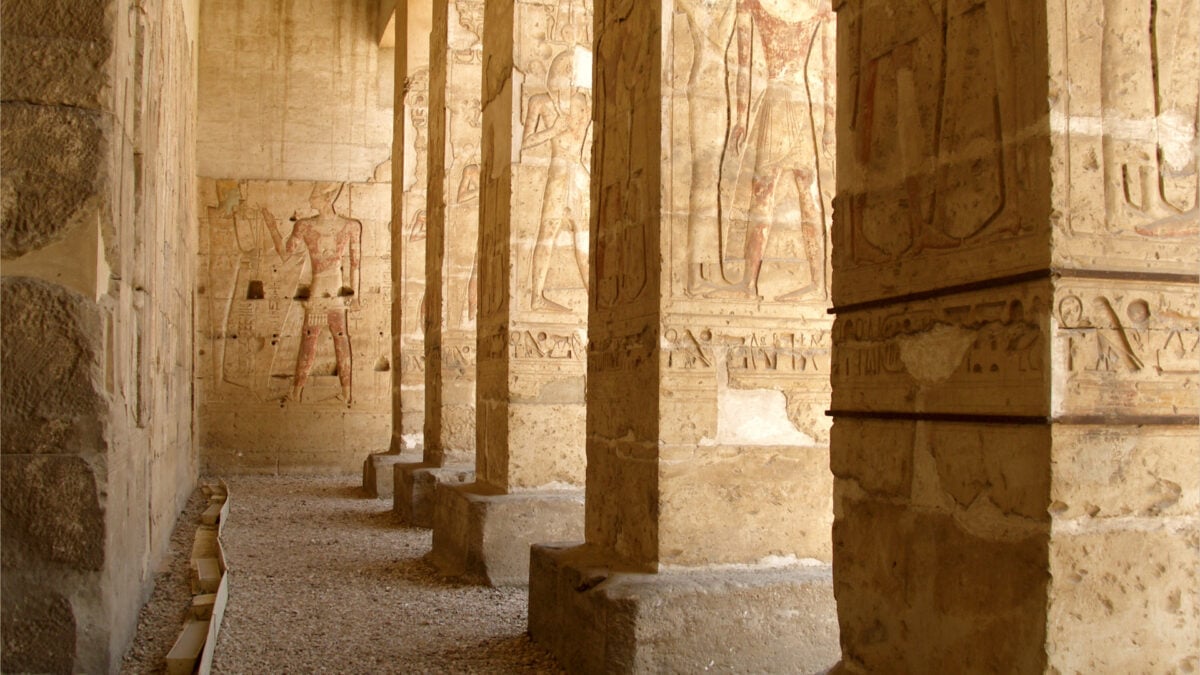
Physical evidence recovered from 5,000-year-old human remains has confirmed that retainers buried alongside Egypt’s earliest pharaohs were victims of ritual human sacrifice. Bioarchaeological analysis of human skulls excavated from subsidiary graves at the royal necropolis of Abydos demonstrates clear signs of lethal trauma inflicted near the time of death, providing empirical proof for a hypothesis first posited by archaeologists a century ago.
Key facts
What happened
Recent scientific examination of human skeletal material recovered from Abydos has focused on the crania of individuals interred in satellite graves surrounding the monumental tombs of Egypt's First Dynasty monarchs. According to reporting by Margherita Bassi, forensic analysis of these ancient skulls revealed specific patterns of perimortem trauma—injuries sustained at or near the moment of death—that demonstrate the individuals did not die of natural causes, disease, or gradual aging.
The arrangement of the satellite burials had long suggested a single, synchronized event. Hundreds of uniform brick-lined graves were constructed directly adjacent to the primary royal burial chambers. The structural layout indicated that the retainer graves were sealed simultaneously with the completion of the pharaoh's funerary rites.
The forensic examination of the physical remains focused on bone fractures, crush wounds, and specific trauma patterns on the cranial vault and base of the skull. The absence of bone healing around the fracture sites confirmed that the violent impacts occurred immediately prior to burial. This physical evidence directly supports the conclusion that court retainers, including servants, artisans, and high-ranking attendants, were systematically executed as part of the royal burial ceremony to serve the deceased ruler in the afterlife.
Why it matters
The confirmation of retainer sacrifice provides critical insights into the political authority and religious ideology of Egypt during the early state formation period. In early complex societies, the ability of a ruler to command the deaths of dozens—or hundreds—of subjects upon their own demise represents the absolute pinnacle of centralized authority and divine kingship.
For bioarchaeologists and historians, physical evidence of state-sanctioned sacrifice reframes the understanding of First Dynasty governance. Prior to these forensic findings, some scholars argued that satellite burials represented individuals who died naturally over a period of time and were saved for interment near the pharaoh, or that retainers willingly consumed poison. The presence of fatal traumatic force recorded on cranial remains shifts the historical consensus toward active, violent execution managed by the royal court.
Furthermore, this discovery offers valuable comparative data for anthropologists studying early state societies across the globe. Coerced retainer sacrifice has been documented in other early civilizations, such as the Royal Tombs of Ur in ancient Mesopotamia, the Shang Dynasty in China, and various pre-Columbian polities in the Americas. Proving the existence of the practice in early Egypt demonstrates that violent mortuary ritual was a recurring feature of early political centralization worldwide.
The background
Located approximately 300 miles south of modern Cairo in Upper Egypt, the site of Abydos—specifically the area known as Umm el-Qa'ab—served as the ancestral burial ground for the rulers of the First Dynasty (c. 3100–2890 BCE). Following the political unification of Upper and Lower Egypt under legendary figures such as Narmer, early pharaohs built expansive mud-brick funerary enclosures and subterranean tombs at the site.
When early archaeologists, including Sir William Matthew Flinders Petrie, excavated the royal tombs at Abydos in the late 19th and early 20th centuries, they uncovered vast networks of subsidiary graves surrounding the primary royal tombs. For instance, the tomb complex of Pharaoh Djer alone was surrounded by more than 300 subsidiary burials. Hor-Aha and Djet similarly possessed extensive secondary grave fields.
In the 1920s, Egyptologists began seriously questioning the logistics of these mass interments. Scholars noted that it was demographically improbable for dozens or hundreds of healthy, young court retainers to die of natural causes simultaneously with the ruling pharaoh. However, because early excavation techniques lacked modern bioarchaeological and forensic methods, clear physical proof of forced violent death remained elusive for nearly a century, leaving the concept of ancient Egyptian human sacrifice a subject of intense academic dispute.
The practice of retainer sacrifice proved to be a short-lived phase in Egyptian civilization. By the start of the Second Dynasty (c. 2890 BCE), the custom had completely vanished from royal mortuary practices. Rather than sacrificing living subjects, subsequent Egyptian dynasties developed symbolic alternatives. By the Middle Kingdom, tombs were furnished with small carved statues known as *shabtis* or *ushabtis*. These figurines were inscribed with ritual spells intended to magically animate them in the afterlife, fulfilling the labor and service requirements that were once demanded of living retainers.
Reaction
The scientific verification of human sacrifice at Abydos has drawn significant attention from the international Egyptological and bioarchaeological communities. Scholars who historically favored the natural-death or symbolic-burial hypotheses are expected to re-evaluate their interpretations of First Dynasty grave architecture and mortuary social structures.
Academic institutions specializing in Near Eastern civilizations and physical anthropology view the findings as a crucial validation of forensic methodology applied to legacy archaeological collections. Experts note that ancient skeletal remains housed in museum collections worldwide still retain critical historical data waiting to be extracted through modern forensic technology.
What we don't know yet
While the skull injuries provide clear proof of lethal physical force, several key details regarding the mechanics and demographics of the sacrifices remain unknown:
What to watch
To further illuminate this period of ancient Egyptian history, scholars and researchers are monitoring several ongoing scientific avenues:
This report incorporates original findings reported by Margherita Bassi.
How this story was produced
This report was written by The Global Wire newsroom from reporting first published by Margherita Bassi. We verify the core facts against the original report, write our own account, and add the background and consequences a short wire item leaves out. Drafting is AI-assisted inside an editor-supervised pipeline, and every story is checked for accuracy of attribution, structure and duplication before it appears — full detail in our AI and funding disclosure.
Spotted an error? Tell us at corrections@horizonglobalnews.com and read our corrections policy or editorial standards.




Reader comments
Loading comments…