

Singapore Deploys Disaster Victim Identification Team and Aid Supplies to Nepal
Specialist police officers and a joint civilian-military relief package are being sent to assist following a disaster in the Nepal-Tibet border region.
By The Global Wire Newsroom · Reported from Rachel Lim
Link preview · horizonglobalnews.com
Singapore Deploys Disaster Victim Identification Team and Aid Supplies to Nepal
Specialist police officers and a joint civilian-military relief package are being sent to assist following a disaster in the Nepal-Tibet border region.
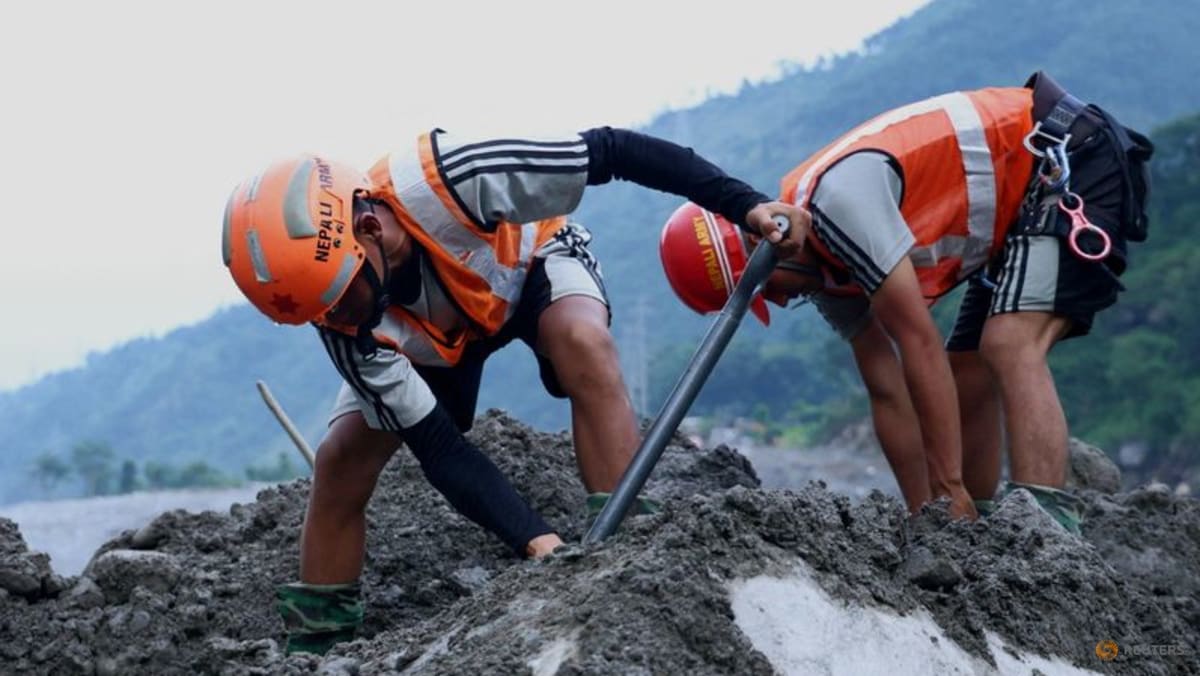
Singapore has announced the deployment of specialist police officers trained in disaster victim identification alongside a comprehensive humanitarian aid package to assist Nepal following a major disaster along the Nepal-Tibet border region. According to a statement issued by the Ministry of Foreign Affairs and reported by Rachel Lim, the relief effort combines specialized Singapore Police Force personnel with material support supplied by both civilian agencies and the Singapore Armed Forces. The deployment underscores the severe humanitarian toll and complex identification challenges facing search and rescue operations in the affected Himalayan mountain zone.
Key facts
What happened
The announcement from Singapore's Ministry of Foreign Affairs marks a coordinated international response to the emergency that struck the Nepal-Tibet frontier. On August 31, 2026, foreign ministry officials confirmed that Singapore's contribution would address both immediate physical survival needs and the complex post-disaster forensic workload created by the catastrophe.
According to reporting by Rachel Lim, the Singapore Police Force is dispatching personnel specialized in Disaster Victim Identification (DVI). These officers are specifically trained in international forensic standards, forensic dentistry, DNA sampling, fingerprint analysis, and mortuary management under extreme operational conditions. Their deployment comes as emergency responders in Nepal grapple with recovering victims from difficult, high-altitude terrain where severe environmental factors complicate recovery and preservation.
Simultaneously, Singapore is mounting an airlift of emergency supplies. The Ministry of Foreign Affairs confirmed that the aid manifest includes critical civilian aid goods—such as medical kits, temporary shelters, clean water purification units, and hygiene packages—alongside logistical and operational material supplied directly by the Singapore Armed Forces. Military transport assets operated by the Republic of Singapore Air Force have historically provided the backbone for rapid-deployment supply corridors to landlocked regions in Asia during major natural crises.
Why it matters
Disaster victim identification in high-altitude, cross-border terrain represents one of the most logistically demanding aspects of emergency management. When major natural disasters strike the Himalayan belt—whether triggered by seismic activity, glacial lake outburst floods, or torrential monsoon landslides—the destruction of local infrastructure often leaves regional authorities overwhelmed. In mass casualty events, rapid and precise DVI capability is crucial not only for humanitarian reasons—providing closure to grieving families—but also for legal and administrative processes, including inheritance, insurance claims, and international consular notifications for foreign nationals lost in the region.
Singapore's decision to deploy both police DVI teams and military material reserves reflects the internationalized nature of Himalayan disasters. The Nepal-Tibet border corridor is a critical transit and trekking zone utilized by international mountaineers, traders, and local indigenous communities. By sending specialized forensic teams trained in international disaster protocols, Singapore provides a high-value niche capability that small or developing nations often lack during sudden crises. Furthermore, the dual civilian-military aid delivery highlights the reliance of small island states like Singapore on proactive soft-power diplomacy and disaster response networks within Asia to build regional resilience and disaster readiness.
The background
The Himalayan borderland connecting Nepal and the Tibet Autonomous Region of China is one of the world's most geologically active and hazardous environments. Situated along the collision zone of the Indian and Eurasian tectonic plates, the region experiences frequent high-magnitude earthquakes, such as the catastrophic 7.8-magnitude Gorkha earthquake in April 2015, which killed nearly 9,000 people, injured over 22,000, and triggered lethal avalanches on Mount Everest and across the Langtang valley. Beyond seismic threats, late August falls within the Asian monsoon season, when torrential rain routinely triggers widespread landslides, flash floods, and mudflows that can bury entire mountain settlements and cut off vital highway links, such as the Araniko Highway connecting Kathmandu to the Kodari border crossing into Tibet.
Singapore has a long-standing history of deploying specialized urban search and rescue and disaster victim identification teams across the Asia-Pacific region under its foreign policy framework of international humanitarian assistance and disaster relief. The Singapore Police Force's Disaster Victim Identification unit operates under international standards established by INTERPOL, using primary identifiers—dental records, friction ridge skin patterns, and nuclear DNA—alongside secondary identifiers like medical implants and personal effects to achieve definitive identification.
During previous regional crises, such as the 2004 Indian Ocean tsunami, the 2014 crash of AirAsia Flight QZ8501, and the 2015 Nepal earthquake, Singapore's Civil Defence Force, Police Force, and Armed Forces deployed joint task forces to assist local authorities. The Singapore Armed Forces regularly maintain readiness packages for disaster relief, utilizing specialized medical units, water purification systems, and military transport aircraft to deliver supplies to hard-to-reach landlocked regions.
Reaction
Because the initial official announcement from the Ministry of Foreign Affairs was brief, specific formal responses from Nepalese cabinet officials or international diplomatic bodies have not yet been made public in detail. However, foreign aid deployments of this nature traditionally involve direct coordination between Singapore's diplomatic mission in the region, the Ministry of Home Affairs of Nepal, and international coordinating bodies like the United Nations Office for the Coordination of Humanitarian Affairs.
Humanitarian agencies and international forensic organizations generally emphasize that early DVI support is critical to prevent improper mass burials and ensure proper record-keeping during the chaotic aftermath of natural disasters. Further statements are expected from the Singapore Police Force regarding the exact size and composition of the DVI contingent, as well as from the Nepalese government regarding the reception and distribution network for incoming foreign aid packages.
What we don't know yet
Several vital operational details regarding the disaster and the incoming international relief operation remain unconfirmed in available reports. The precise physical nature of the disaster in the Nepal-Tibet region—whether caused by an earthquake, a glacial lake outburst flood, severe monsoon-induced landslides, or a combination of environmental triggers—has not been fully detailed in the initial release. Consequently, the total casualty count, the number of missing persons, and the geographical extent of the devastation along the border remain unknown.
Additionally, the exact number of Singapore Police Force DVI officers being deployed, their specific staging location within Nepal, and the operational duration of their mission have yet to be disclosed. It is also unclear whether the deployment will operate directly along the remote high-altitude frontier or be stationed at centralized mortuary facilities in Kathmandu. Lastly, the total tonnage, precise monetary value, and specific flight schedules of the Singapore Armed Forces transport missions delivering aid supplies remain unannounced.
What to watch
In the coming days, observers should monitor official press briefings from Singapore's Ministry of Foreign Affairs, Ministry of Home Affairs, and Ministry of Defence for operational updates on the deployment schedule of the DVI team and the arrival of military relief flights in Kathmandu. Statements from Nepal's National Emergency Operation Centre will be key to understanding how foreign DVI teams are integrated into local identification workflows and where the primary humanitarian supply distribution points will be set up.
Key markers to follow include the opening of air corridors at Tribhuvan International Airport or regional hubs such as Pokhara and Gautam Buddha International Airports, as well as joint updates from international agencies regarding casualty figures and identification progress. Any joint diplomatic coordination between Nepalese, Chinese, and Singaporean authorities regarding border-zone relief access will also be critical to watch as rescue teams reach remote mountain communities.
This report is based on original reporting published by Rachel Lim on August 31, 2026, alongside established background context on international disaster response protocols, disaster victim identification procedures, and Himalayan disaster history.
How this story was produced
This report was written by The Global Wire newsroom from reporting first published by Rachel Lim. We verify the core facts against the original report, write our own account, and add the background and consequences a short wire item leaves out. Drafting is AI-assisted inside an editor-supervised pipeline, and every story is checked for accuracy of attribution, structure and duplication before it appears — full detail in our AI and funding disclosure.
Spotted an error? Tell us at corrections@horizonglobalnews.com and read our corrections policy or editorial standards.





Reader comments
Loading comments…