

Senior British Army Officer Acquitted Over Handling of Soldier's Abuse Allegations
Colonel Samantha Shepherd has been found not guilty of failing to properly address harassment complaints raised by Gunner Jaysley Beck prior to the 19-year-old soldier's death.
By The Global Wire Newsroom · Reported from The Independent
Link preview · horizonglobalnews.com
Senior British Army Officer Acquitted Over Handling of Soldier's Abuse Allegations
Colonel Samantha Shepherd has been found not guilty of failing to properly address harassment complaints raised by Gunner Jaysley Beck prior to the 19-year-old soldier's death.
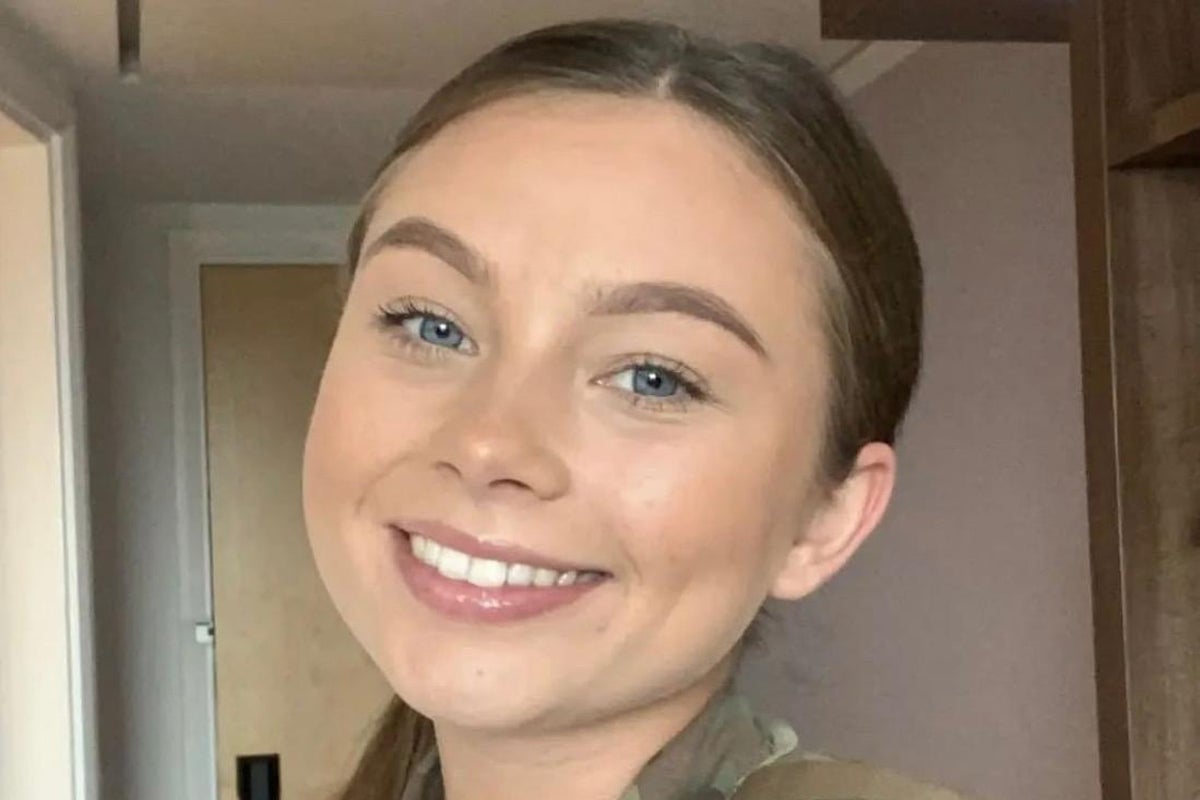
A senior British Army officer, Colonel Samantha Shepherd, has been acquitted by a military court martial of charges alleging she failed to properly handle abuse allegations raised by Gunner Jaysley Beck prior to the 19-year-old soldier's death. The verdict, delivered at court martial on September 16, 2026, clears Colonel Shepherd of misconduct charges arising from the administrative and operational response to complaints made by Beck. Beck, a Royal Artillery gunner stationed at Larkhill Garrison in Wiltshire, died by suicide in December 2021 after being subjected to persistent sexual harassment by a superior officer.
Key facts
What happened
The court martial of Colonel Samantha Shepherd centered on allegations that the senior officer neglected her professional duties by failing to take appropriate action after Gunner Jaysley Beck submitted complaints regarding workplace abuse. Beck, who joined the Royal Artillery as a teenager, had documented repeated instances of unwanted sexual advances, coercive control, and aggressive harassment from a superior officer while stationed at Larkhill Garrison in Wiltshire.
During the trial, prosecutors scrutinized internal reporting chains, military logbooks, and communications involving Beck, her unit supervisors, and senior command. The prosecution contended that warnings regarding Beck's safety and psychological well-being were improperly managed or overlooked, constituting a criminal failure of command responsibility under service discipline regulations. Prosecutors argued that senior officers had a legal obligation to intervene effectively once allegations of harassment were brought to light.
In response, the defense argued that Colonel Shepherd acted reasonably and in accordance with established administrative procedures and military regulations given the specific information available to her at the time. Defense counsel maintained that systemic delays and broader organizational communication hurdles within the military structure, rather than personal neglect or criminal misconduct by Shepherd, accounted for how the case unfolded.
Following deliberations, the court martial panel—comprising senior military personnel overseen by a Judge Advocate—cleared Colonel Shepherd of all charges. The panel determined that the evidence presented did not establish beyond a reasonable doubt that Shepherd's conduct met the legal threshold for criminal misconduct or dereliction of duty under military law.
Why it matters
The acquittal of a senior officer in a trial connected to the suicide of a junior soldier has major legal and structural implications for the Ministry of Defence and the wider British military. The decision highlights the high evidentiary threshold required to criminally convict commanding officers for administrative or supervisory failures under the Armed Forces Act.
For serving personnel, particularly women who account for roughly 11 percent of the regular British armed forces, the case represents a significant indicator of how the military justice system handles reports of sexual misconduct and internal grievances. Critics and military reform advocates argue that the outcome may exacerbate concerns among junior ranks about the efficacy of internal reporting channels and command accountability. The military leadership faces ongoing challenges with recruitment and retention, issues that senior officials have publicly acknowledged are sensitive to public perceptions of safety, equity, and workplace culture.
Furthermore, the verdict is expected to reignite debates within the UK Parliament regarding whether allegations of sexual harassment and supervisory negligence should continue to be prosecuted within the court martial system or transferred entirely to independent civilian jurisdictions.
The background
The death of Gunner Jaysley Beck in December 2021 became one of the most prominent cases drawing public scrutiny to the workplace culture of the British Armed Forces. A subsequent Service Inquiry released by the Ministry of Defence confirmed that Beck had been subjected to an intense pattern of unwanted sexual advances and harassment by a senior non-commissioned officer in the months leading up to her death at Larkhill Camp. The inquiry concluded that the distress caused by the unaddressed harassment was a major factor influencing her mental state prior to her suicide.
The UK military justice framework operates primarily under the Armed Forces Act 2006, which sets out the legal system governing service discipline, command authority, and military court martial procedures. Under this statutory structure, service members accused of criminal offences or breaches of service discipline are tried before military tribunals, which operate independently of civilian courts but apply criminal standards of proof.
In July 2021, prior to Beck's death, the House of Commons Defence Select Committee published a landmark report titled "Protecting Female Personnel in the Armed Forces," chaired by MP Sarah Atherton. The inquiry revealed that 64 percent of female veterans and serving personnel surveyed reported experiencing bullying, harassment, or discrimination during their military service. Additionally, 84 percent of respondents indicated that the existing Service Complaints system was overly complex, slow, and lacked sufficient independence from the military chain of command.
Following public and parliamentary pressure, the Ministry of Defence established the Defence Serious Crime Unit (DSCU) in December 2022. The DSCU was designed as an independent, tri-service investigative body tasked with investigating serious criminal offences, including sexual violence and domestic abuse, outside the immediate unit chain of command. Despite these organizational changes, campaign organizations such as the Centre for Military Justice have continued to press for full civilian jurisdiction over serious sexual offences and related command misconduct.
Reaction
Reactions to the court martial verdict are expected to focus heavily on the wider administrative and legislative implications for British military governance. While the court martial cleared Colonel Shepherd of criminal charges, military authorities face continued public pressure to demonstrate how grievance procedures have been improved since 2021.
Parliamentary committees, including the House of Commons Defence Select Committee, are anticipated to review the outcome as part of ongoing scrutiny into service welfare and the military justice framework. Civil society groups and advocacy organizations representing service personnel and military families are expected to renew calls for statutory reforms that would remove the handling of sexual misconduct complaints entirely from the chain of command.
Official Ministry of Defence policy maintains a commitment to zero tolerance for sexual harassment and bullying, with military spokespersons repeatedly asserting that recommendations from service inquiries are being systematically implemented across all branches of the armed forces.
What we don't know yet
Despite the conclusion of the court martial proceedings, several key operational and legal questions remain unresolved:
What to watch
Several upcoming proceedings and policy milestones will determine the next phases of this issue:
Reporting for this account was provided by *The Independent*.
How this story was produced
This report was written by The Global Wire newsroom from reporting first published by The Independent. We verify the core facts against the original report, write our own account, and add the background and consequences a short wire item leaves out. Drafting is AI-assisted inside an editor-supervised pipeline, and every story is checked for accuracy of attribution, structure and duplication before it appears — full detail in our AI and funding disclosure.
Spotted an error? Tell us at corrections@horizonglobalnews.com and read our corrections policy or editorial standards.





Reader comments
Loading comments…