

Russian Strikes Hit Kyivstar Headquarters and Ukrainian Data Centres in Infrastructure Attack
Moscow targeted the Kyiv headquarters of Ukraine’s largest mobile network alongside critical data centers on Sept. 27, hitting vital civilian and defense telecommunications.
By The Global Wire Newsroom · Reported from thestar.com.my
Link preview · horizonglobalnews.com
Russian Strikes Hit Kyivstar Headquarters and Ukrainian Data Centres in Infrastructure Attack
Moscow targeted the Kyiv headquarters of Ukraine’s largest mobile network alongside critical data centers on Sept. 27, hitting vital civilian and defense telecommunications.
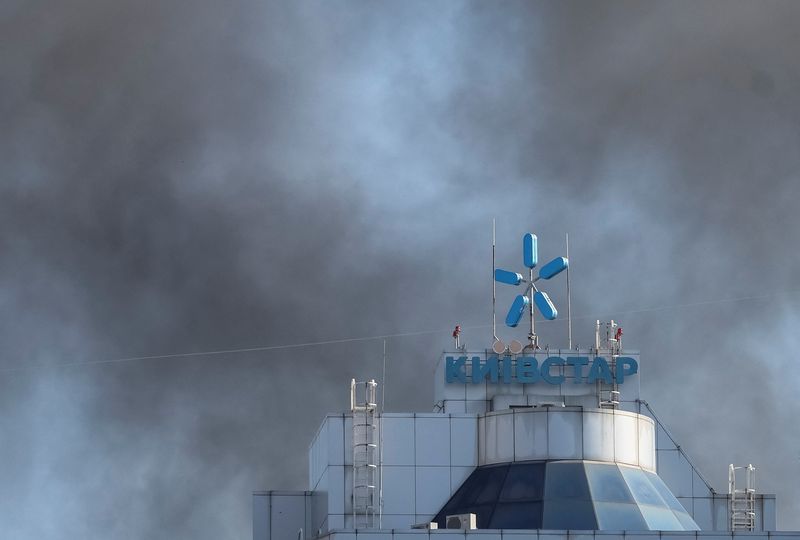
Russian military forces carried out strikes targeting the central headquarters of Kyivstar, Ukraine’s largest mobile network operator, on Sept. 27, 2026, alongside a broader barrage hitting data centers and telecommunications infrastructure across the country. Kyivstar confirmed the attack on its main facility to local media outlets in Kyiv following the bombardment. The coordinated strikes represent a significant escalation in Moscow’s long-running strategy aimed at dismantling Ukraine's civilian digital network, emergency communications networks, and essential data hosting hubs during the full-scale war.
Key facts
What happened
On the morning of Sept. 27, 2026, Russian strikes struck the central headquarters of Kyivstar in the Ukrainian capital of Kyiv, causing structural damage to the primary facility that houses key operational centers and management staff. According to statements provided by Kyivstar executives to Ukrainian news outlets, the bombardment formed part of a wider wave of targeted strikes against data centers and telecommunications facilities located in multiple regions.
Emergency services and technical teams rushed to the impacted sites in Kyiv to extinguish fires, assess structural integrity, and evaluate the operational status of server equipment and network control nodes. Mobile operators in Ukraine maintain redundant management centers, enabling network traffic to be re-routed through secondary control nodes when primary facilities suffer physical hits or power disruptions.
The strikes on data centers also threatened cloud storage networks and digital services operated by both commercial entities and public sector institutions. While initial reports focused on the physical damage inflicted upon Kyivstar's headquarters, technical teams initiated emergency diagnostic protocols across key connectivity hubs to determine whether core switching equipment, fiber-optic backbone cables, or power backup systems suffered lasting damage.
Why it matters
The physical targeting of Kyivstar’s corporate headquarters and associated data centers strikes at the nervous system of modern Ukrainian society. In wartime Ukraine, mobile networks do not merely facilitate personal phone calls; they form the backbone of national air raid warning systems, electronic banking, logistics management, military coordination, and government communications. Kyivstar serves approximately 24 million mobile subscribers and more than 1 million fixed-line internet customers, making its network stability vital to the country's daily functionality and national security.
When primary telecom hubs or data centers suffer direct hits, the disruption extends beyond mobile phone connectivity. Automated emergency notifications broadcast through cellular networks can be delayed or silenced in affected regions, putting civilian lives at risk during incoming missile or drone attacks. Furthermore, modern Ukrainian digital governance relies heavily on cloud infrastructure. Services like the government's Diia mobile application—which stores digital identity documents, handles social welfare payments, and allows citizens to report enemy troop movements—rely on secure, operational data centers.
Market operations and financial systems also face severe operational friction when core telecom nodes go offline. Ukrainian point-of-sale terminals, automated teller machines, and online banking platforms rely on stable cellular data connections managed primarily by Kyivstar and its main competitors. Prolonged outages can paralyze local commerce, disrupt fuel distribution at gas stations, and hinder logistics networks supplying both civilian populations and military forces near the front lines.
From an international perspective, the targeting of civilian telecommunications infrastructure highlights the expanding definition of strategic targets in modern warfare. By seeking to neutralize physical network hubs and data storage centers, military forces aim to create information blackouts, induce public panic, and force state authorities to divert critical resources toward network restoration and emergency repairs.
The background
Since the onset of the full-scale Russian invasion in February 2022, Ukraine’s telecommunications sector has operated under continuous physical and digital assault. In the opening days of the war, Russian strikes targeted television broadcasting towers in Kyiv, Kharkiv, and Rivne in an effort to cut off government broadcasts to the civilian population. As the conflict progressed, Russian forces regularly targeted cellular towers, electrical substations powering telecom equipment, and regional fiber-optic junctions, particularly in eastern and southern regions near the front line.
Alongside physical bombardments, Ukrainian telecommunications companies have been subject to intense cyber warfare. The most severe incident occurred in December 2023, when Russian state-sponsored hackers belonging to the unit known as Sandworm, affiliated with Russia’s military intelligence agency GRU, breached Kyivstar’s internal IT network. That cyberattack wiped thousands of virtual servers, destroyed core system configurations, and caused an unprecedented multi-day blackout of mobile and fixed-line services across Ukraine. The December 2023 hack also disabled automated air raid sirens in parts of Kyiv region and disrupted point-of-sale banking terminals nationwide, serving as a stark demonstration of the vulnerability of modern digital infrastructure.
Kyivstar is owned by VEON, a global digital operator headquartered in Amsterdam, Netherlands. Following the 2023 cyber attack and ongoing war damage, VEON pledged hundreds of millions of dollars in capital expenditure to strengthen Kyivstar’s physical resilience, expand backup satellite connections, and upgrade cybersecurity protocols. Ukraine’s mobile market is primarily shared among three major operators: Kyivstar, Vodafone Ukraine owned by Azerbaijan’s NEQSOL Holding, and Lifecell, which was acquired in 2024 by French investor Xavier Niel’s investment vehicle, NJJ Holding.
To survive physical and cyber disruptions, Ukrainian telecommunications companies and the Ministry of Digital Transformation, led by Minister Mykhailo Fedorov, implemented national roaming in March 2022. This system allows subscribers whose primary operator goes offline to automatically switch to another active operator's network free of charge. Additionally, the widespread deployment of thousands of SpaceX Starlink satellite terminals across Ukraine has provided crucial backup connectivity for critical infrastructure, military units, hospitals, and local administrative offices when landline and cellular networks are destroyed by physical strikes.
Reaction
Following the attack, Kyivstar officials issued statements to local media confirming the strike on their Kyiv headquarters and reassuring the public that engineering teams were working to maintain system stability and assess physical damage. Company representatives emphasized that decentralized network architecture was designed to absorb physical hits to administrative facilities without causing a total collapse of cellular services nationwide.
The Ukrainian Ministry of Digital Transformation and state telecommunications regulator NCEC routinely monitor network availability during such attacks, coordinating emergency access to national roaming protocols and deploying mobile generators to affected cell sites and connectivity nodes. Ukrainian government officials have consistently characterized attacks on civilian communications infrastructure as clear violations of international humanitarian law, calling on international partners to accelerate the delivery of advanced air defense systems to protect critical infrastructure.
International telecommunications organizations, Western intelligence agencies, and corporate partners have previously condemned Russian strikes on Ukraine's digital infrastructure. European Union officials and NATO member states are expected to reiterate support for Ukraine's cyber and physical infrastructure resilience programs, which have received millions of euros in technical assistance, emergency power equipment, and specialized telecom hardware since 2022.
What we don't know yet
Several critical operational and tactical details regarding the Sept. 27 attack remain unverified in available public reports:
What to watch
In the coming days and weeks, several key indicators will determine the operational impact and broader consequences of the strike:
This report is based on reporting published by Reuters and local Ukrainian media, as syndicated by thestar.com.my.
How this story was produced
This report was written by The Global Wire newsroom from reporting first published by thestar.com.my. We verify the core facts against the original report, write our own account, and add the background and consequences a short wire item leaves out. Drafting is AI-assisted inside an editor-supervised pipeline, and every story is checked for accuracy of attribution, structure and duplication before it appears — full detail in our AI and funding disclosure.
Spotted an error? Tell us at corrections@horizonglobalnews.com and read our corrections policy or editorial standards.



Reader comments
Loading comments…