

Apple Reevaluates Headset Strategy as Competition with Meta Intensifies
Apple is assessing future hardware options for its spatial computing platform as rival Meta pushes alternative wearable designs.
By The Global Wire Newsroom · Reported from Mark Gurman
Link preview · horizonglobalnews.com
Apple Reevaluates Headset Strategy as Competition with Meta Intensifies
Apple is assessing future hardware options for its spatial computing platform as rival Meta pushes alternative wearable designs.
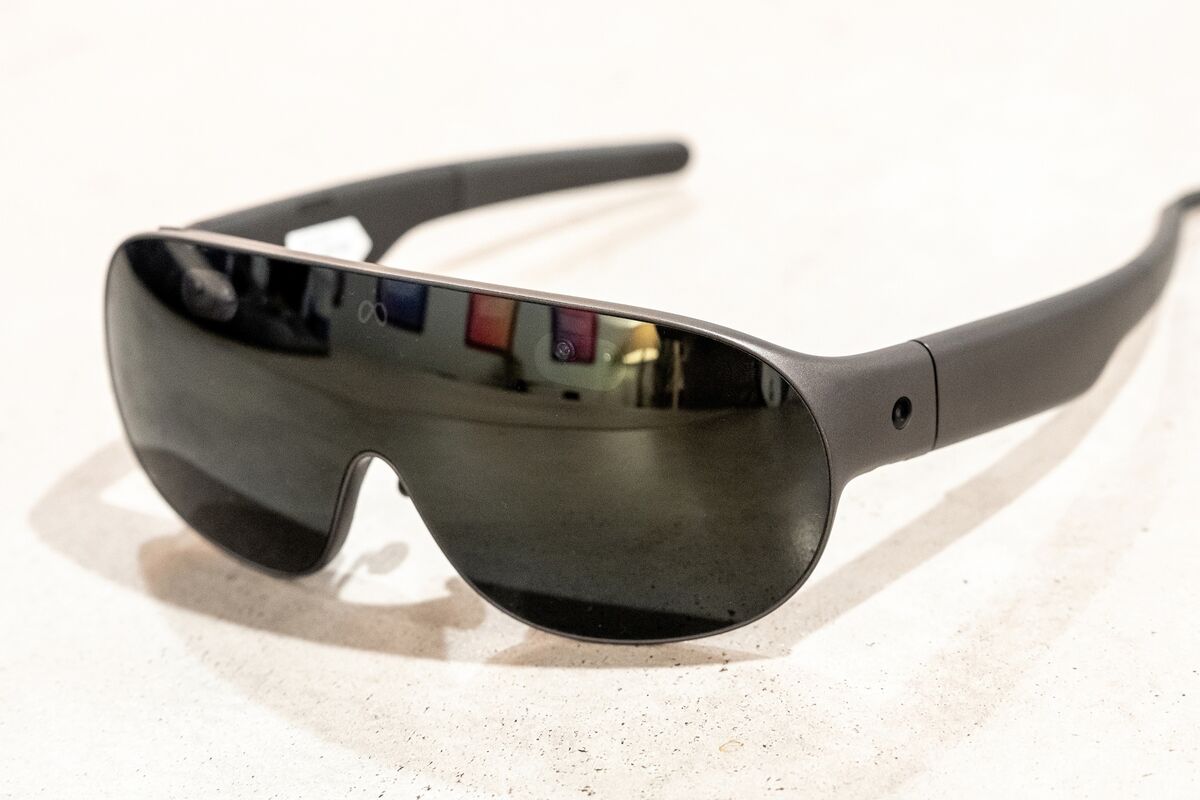
Apple Inc. is reviewing the long-term direction of its mixed-reality headset product line as executive leadership evaluates market response and hardware constraints, according to analysis by technology reporter Mark Gurman. The strategic reassessment comes as Apple compares the market trajectory of its Vision Pro device against competing hardware approaches from Meta Platforms Inc., which has focused heavily on lighter virtual reality headsets and wearable smart glasses. As the consumer technology sector debates the ideal form factor for post-smartphone computing, Apple faces decisions regarding whether to prioritize a cheaper version of its spatial headset, accelerate the development of lightweight augmented reality glasses, or alter its release cadence.
Key facts
What happened
According to reporting by Mark Gurman, Apple is deliberating over the next iterations of its wearable hardware strategy as the company evaluates consumer adoption patterns and technological readiness. The core of the internal debate centers on whether the design philosophy underlying the Vision Pro—a heavy, feature-packed visor featuring ultra-high-resolution displays and sophisticated sensor arrays—represents the most viable path forward for mainstream consumers.
In contrast to Apple's approach, rival Meta Platforms Inc. has pursued a multi-tiered hardware line that includes lower-cost virtual reality headsets such as the Quest series alongside lightweight smart glasses developed in partnership with eyewear brands. Industry observers have pointed to Meta's lightweight form factors as an alternative vision for immersive technology that emphasizes daily wearability over maximum computational horsepower.
Apple's internal deliberations involve assessing whether to release a lower-cost iteration of the Vision Pro that reduces component expenses—potentially by utilizing lower-resolution screens, less expensive materials, or fewer external sensors—or to focus engineering resources primarily on lightweight augmented reality glasses. Developing consumer-ready AR glasses that fit into standard eyeglass frames remains a formidable technical challenge across the technology sector due to battery capacity, display brightness, and miniaturization constraints.
Why it matters
Apple's potential strategy shift highlights a fundamental conflict in the head-worn technology market between high-end visual fidelity and ergonomic practicality. When Apple introduced the Vision Pro, it positioned spatial computing as a new paradigm intended to combine workplace productivity, entertainment, and personal computing into a single premium device. However, the initial price point of $3,499 restricted the user base largely to enterprise clients, affluent enthusiasts, and software developers.
For software developers, a limited install base reduces the financial incentive to create dedicated applications for Apple's visionOS operating system. Without a large library of exclusive, transformative software, convincing mainstream consumers to purchase expensive head-mounted hardware becomes significantly more difficult. If Apple shifts its focus toward lighter smart glasses or a drastically cheaper headset, it could realign the market's expectations around what wearable computing devices should cost and how they should be worn.
For the broader technology industry, Apple's structural choices carry immense weight. Supply chain vendors, display manufacturers, and software studios make long-term capital investments based on Apple's product roadmaps. A change in direction by Cupertino signals to the wider market that heavy, tethered visors may serve primarily as specialized tools or developer developer platforms rather than immediate mass-market replacements for personal computers and smartphones.
The background
Apple officially revealed the Vision Pro in June 2023 during its annual Worldwide Developers Conference, marking the company's first major new hardware category entry since the launch of the Apple Watch in 2015. The device launched commercially in the United States on February 2, 2024, before expanding to additional international markets later that year. Equipped with custom M2 and R1 processors, dual 4K micro-OLED displays, eye tracking, and hand gesture recognition, the device represented Apple's effort to define a new category called spatial computing.
Despite positive critical reviews for its display clarity and interface responsiveness, early users and reviewers frequently cited physical discomfort during prolonged use due to the device's weight, which exceeds 600 grams. Additionally, the requirement for an external tethered battery pack drew criticism from users seeking a more integrated, seamless experience.
Meanwhile, Meta Platforms Inc. entered the immersive technology market much earlier through its acquisition of Oculus VR in 2014. Under chief executive Mark Zuckerberg, Meta spent tens of billions of dollars through its Reality Labs division to establish a dominant market share in consumer virtual reality. Meta's Quest hardware line achieved volume sales by pricing headsets between $300 and $500, accepting lower hardware margins to build a consumer user base. In addition, Meta expanded into audio-centric smart glasses and demonstrated prototype augmented reality hardware aimed at offering wearable computing without the bulk of traditional VR headsets.
While Apple focused on uncompromised visual quality at a luxury price point, Meta prioritized accessibility and lightweight ergonomics. The contrast between these two strategies has driven ongoing industry debate regarding which approach will ultimately define consumer adoption of immersive hardware.
Reaction
Industry analysts and tech commentators have frequently drawn comparisons between Apple's and Meta's opposing product philosophies. Commentators have noted that while Apple delivered superior display technology and input accuracy with the Vision Pro, Meta succeeded in creating products that consumers can wear comfortably for longer periods at accessible price points.
Financial analysts tracking Apple's hardware supply chain have reported adjustments in component order volumes for high-end micro-OLED panels, leading to speculation among investors that initial production targets were scaled back. Developer communities have voiced mixed reactions: while some praise the raw capabilities of visionOS, others have expressed concern over lower active user metrics compared to established gaming and spatial platforms.
Neither Apple nor Meta has issued official corporate statements directly responding to Gurman's latest analysis. Executive leadership at Apple, including chief executive Tim Cook, has historically maintained that spatial computing represents an iterative, multi-year platform deployment, urging investors to view the product line through a long-term strategic lens rather than judging its success solely on initial launch sales.
What we don't know yet
Several crucial elements of Apple's future headset plans remain unconfirmed:
What to watch
Investors, developers, and technology consumers should monitor several upcoming key indicators:
This report is based on original reporting and analysis by technology journalist Mark Gurman.
How this story was produced
This report was written by The Global Wire newsroom from reporting first published by Mark Gurman. We verify the core facts against the original report, write our own account, and add the background and consequences a short wire item leaves out. Drafting is AI-assisted inside an editor-supervised pipeline, and every story is checked for accuracy of attribution, structure and duplication before it appears — full detail in our AI and funding disclosure.
Spotted an error? Tell us at corrections@horizonglobalnews.com and read our corrections policy or editorial standards.

Reader comments
Loading comments…