

Rockstar Games Explains Satire Strategy for Grand Theft Auto VI
Developer Rockstar Games avoids direct real-world political parody in Grand Theft Auto VI, opting for exaggerated cultural caricature to navigate modern media dynamics.
By The Global Wire Newsroom · Reported from Robert Purchese
Link preview · horizonglobalnews.com
Rockstar Games Explains Satire Strategy for Grand Theft Auto VI
Developer Rockstar Games avoids direct real-world political parody in Grand Theft Auto VI, opting for exaggerated cultural caricature to navigate modern media dynamics.
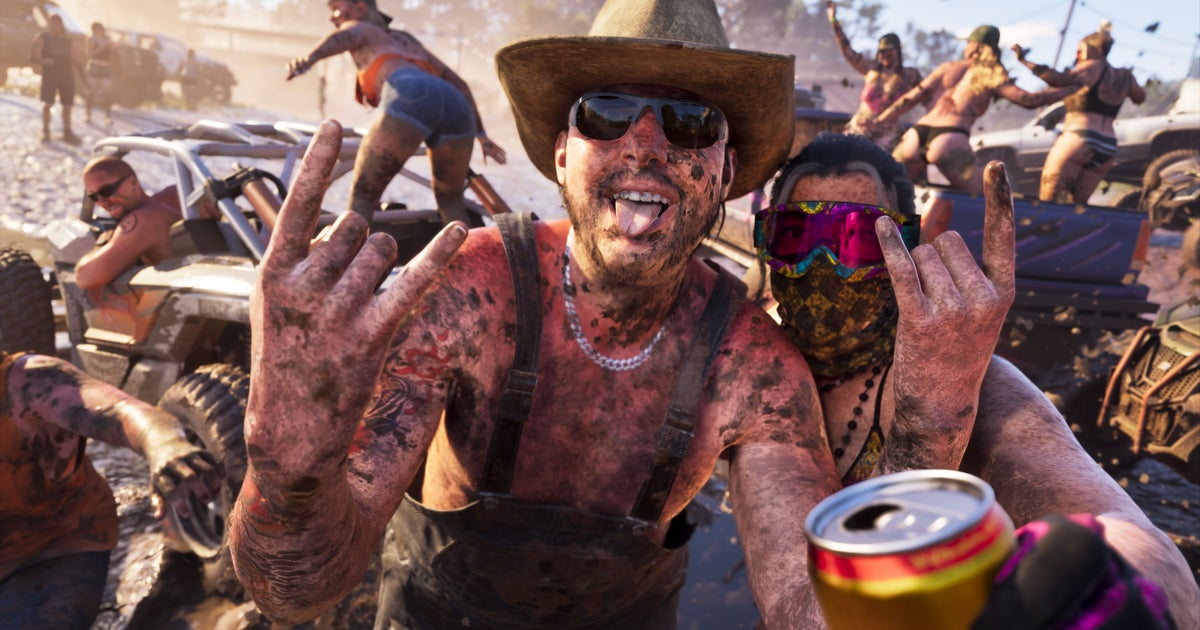
Rockstar Games has clarified its narrative philosophy regarding satire in Grand Theft Auto VI, explaining that the upcoming title intentionally avoids direct parodies of specific real-world political events in favor of a more extreme, hyper-stylized form of cultural caricature. According to reporting by journalist Robert Purchese published on October 5, 2026, the studio views modern political developments as inherently volatile, making direct real-world satire less effective over long development periods. To maintain the franchise's signature humor, the developer determined that its satirical elements must push boundaries further into absurdity rather than attempt to keep pace with daily news headlines. The decision highlights a strategic shift in narrative design for one of the interactive entertainment industry's most high-profile and commercially significant projects.
Key facts
What happened
In reporting published by Robert Purchese on October 5, 2026, Rockstar Games outlined the creative rationale behind the tone and satirical direction of Grand Theft Auto VI. Addressing long-standing questions about how the franchise handles contemporary political commentary, the developer explained why it has stepped back from mirroring specific real-world political incidents or current events in its world-building.
Rockstar emphasized that modern news cycles and real-world political occurrences move at a pace that creates distinct challenges for traditional game development. Because large-scale video game production spans several years, incorporating direct references to specific political figures, scandals, or policy debates risks making content feel outdated by the time a title reaches consumers.
To address this challenge, the studio established a creative baseline that prioritizes extreme exaggeration over literal satire. As articulated by the studio in Purchese's account, for satire to remain effective in the current cultural landscape, "It has to be more over the top, more insane, more in your face."
Rather than writing missions or dialogue that mock specific news events from recent years, Rockstar's writing team focused on broader societal trends, internet subcultures, viral media phenomena, and public behavior. By taking recognizable aspects of contemporary life—such as social media livestreaming, influencer culture, public sensationalism, and extreme subcultures—and amplifying them to surreal levels, the studio aims to craft a world that feels recognizably modern without becoming tied to specific, fast-fading news cycles.
This approach influences the environmental design, in-game television broadcasts, fictional internet networks, radio talk shows, and random civilian interactions within the game's setting of Leonida. The studio's intent is to construct a satirical mirror of modern society that relies on hyperbole and absurdity, ensuring the humor retains its relevance regardless of short-term shifts in the political landscape.
Why it matters
The narrative approach taken by Rockstar Games carries significant implications for both the video game industry and the broader business model of AAA software development. Grand Theft Auto VI represents one of the largest financial investments in entertainment history, with parent company Take-Two Interactive Software, Inc. depending on the title to generate billions of dollars in revenue over its lifecycle.
In long-term live-service entertainment, content longevity is critical. Grand Theft Auto V, released in September 2013, maintained commercial dominance for over a decade partly because its world, fictional institutions, and in-game radio commentary relied on broad cultural satire rather than ephemeral political references. Direct parodies of specific politicians or short-lived news events age rapidly, which can reduce the immersive appeal of a game intended to be played for years after release.
Furthermore, the game industry faces a complex media environment where public political discourse has become highly polarized. By avoiding direct political commentary while escalating overall narrative absurdity, Rockstar aims to maintain its reputation for irreverence without alienating segments of its vast, global audience.
From a game design perspective, the decision illustrates how modern narrative studios navigate the reality of long production timelines. When a blockbuster game requires five to eight years of continuous development, scriptwriters cannot rely on topical humor that depends on current events. Establishing a stylized, hyper-exaggerated aesthetic allows writing teams to lock in storylines early in the production process without fear that real-world events will invalidate their satire before launch.
The background
Satire has been a defining characteristic of the Grand Theft Auto series since its transition to three-dimensional environments with Grand Theft Auto III in 2001. Developed primarily by Rockstar North under the leadership of co-founders Sam Houser and Dan Houser, the franchise built its identity on a cynical, caricature-driven depiction of American capitalism, mass media, consumer culture, and law enforcement.
Throughout subsequent entries—including Grand Theft Auto: Vice City (2002), Grand Theft Auto: San Andreas (2004), Grand Theft Auto IV (2008), and Grand Theft Auto V (2013)—the series featured in-game media outlets such as Weazel News, talk radio stations like Chatterbox FM and West Coast Talk Radio, and fictionalized corporate entities like Lifeinvader and Pißwasser. These elements parodied American television news networks, talk radio hosts, tech conglomerates, and commercial advertising.
The question of how Grand Theft Auto would adapt to modern political realities became a subject of industry discussion during the late 2010s. In a 2018 interview with GQ magazine, Rockstar co-founder and lead writer Dan Houser remarked that he was relieved not to be releasing a Grand Theft Auto title during that era, noting that real-world political discourse had become so unpredictable and intense that it surpassed traditional satire. Dan Houser subsequently departed Rockstar Games in 2020, leaving the studio's narrative direction in the hands of creative teams led by Sam Houser.
When Rockstar Games released the initial trailer for Grand Theft Auto VI in December 2023, the preview showcased a setting inspired by modern Florida, designated as the fictional state of Leonida. The footage featured depictions of viral social media clips, eccentric public behavior reminiscent of widely shared internet memes, and wild animal encounters, signaling a focus on contemporary internet culture and regional absurdities rather than partisan political commentary.
Reaction
Industry commentators and game narrative analysts have largely viewed Rockstar's stated philosophy as a pragmatic response to contemporary media dynamics. Observers note that attempting to satirize real-world political figures in an era dominated by high-speed social media feeds often results in jokes that feel outdated long before software reaches store shelves.
Within the gaming community, discussion has focused on how this tonal strategy will compare to previous entries in the series. Some players have expressed approval of an approach that focuses on hyper-surrealism and viral culture, arguing that direct political parody in modern video games often causes unnecessary controversy without enhancing gameplay. Others will be evaluating whether the game retains the sharp social commentary that defined past titles or if the move toward broader hyperbole softens the franchise's historical edge.
Official regulatory bodies, commercial partners, and major distribution platforms have not issued public statements regarding Rockstar's creative direction, as content ratings and distribution agreements are traditionally finalized closer to launch based on final software builds submitted to organizations such as the Entertainment Software Rating Board (ESRB) and Pan European Game Information (PEGI).
What we don't know yet
While Rockstar has outlined its general approach to satire, several specific aspects of the game's story design and thematic execution remain unconfirmed:
What to watch
In the coming months, several key indicators will provide further insight into the development and release strategy for Grand Theft Auto VI:
This report is based on original reporting by Robert Purchese published on October 5, 2026.
How this story was produced
This report was written by The Global Wire newsroom from reporting first published by Robert Purchese. We verify the core facts against the original report, write our own account, and add the background and consequences a short wire item leaves out. Drafting is AI-assisted inside an editor-supervised pipeline, and every story is checked for accuracy of attribution, structure and duplication before it appears — full detail in our AI and funding disclosure.
Spotted an error? Tell us at corrections@horizonglobalnews.com and read our corrections policy or editorial standards.



Reader comments
Loading comments…