

QatarEnergy Eyes 2027 Production Target Supported by Reported $3 Billion Chinese Loan
State producer QatarEnergy aims for early 2027 LNG output while securing a reported $3 billion loan from Chinese banks as Strait of Hormuz shipping recovers.
By The Global Wire Newsroom · Reported from Mohamed Elashi
Link preview · horizonglobalnews.com
QatarEnergy Eyes 2027 Production Target Supported by Reported $3 Billion Chinese Loan
State producer QatarEnergy aims for early 2027 LNG output while securing a reported $3 billion loan from Chinese banks as Strait of Hormuz shipping recovers.
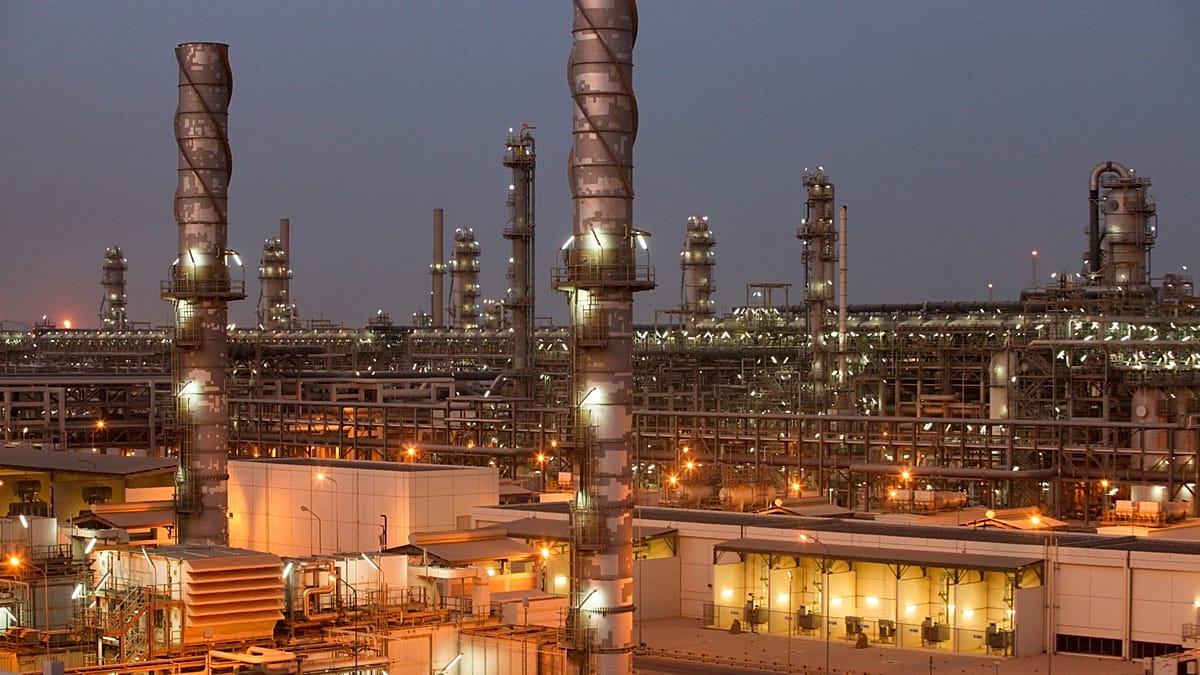
State-owned enterprise QatarEnergy is aiming for early 2027 to achieve first liquefied natural gas production from its ongoing expansion initiatives, even as regional conflict, physical war damage, and maritime security threats continue to restrict current export capacity. The project timeline comes alongside reports that the Qatari energy giant has secured a $3 billion (€2.68 billion) financing facility from Chinese banking institutions. Although commercial shipping through the strategic Strait of Hormuz bottleneck has begun a partial recovery, overall transit volumes remain far below pre-conflict baselines, highlighting the persistent operational and logistical friction burdening energy markets across the Middle East and beyond.
Key facts
What happened
QatarEnergy is moving forward with its capital-intensive expansion plans while adjusting to severe operational disruptions caused by regional hostilities. According to reporting by Mohamed Elashi, the state-backed producer has secured a $3 billion loan—equivalent to approximately €2.68 billion—from Chinese financial institutions. The injection of capital comes at a critical juncture when war-related damage to facilities and heightened maritime risks have constricted energy outflow from the Persian Gulf.
At the same time, QatarEnergy has established an operational target of early 2027 for first LNG production from its expansion works. This deadline represents a pivotal benchmark for global natural gas balances, as international buyers seek long-term supply stability following years of price volatility and supply chain shocks.
The reporting indicates that export logistics through the Strait of Hormuz—the narrow waterway separating the Persian Gulf from the Gulf of Oman—have begun to show signs of recovery. Maritime traffic and LNG carrier departures are gradually resuming after severe wartime cutbacks. However, flow rates remain significantly depressed when measured against pre-war norms. War damage to onshore facilities and elevated threats to commercial shipping continue to hamper the full restoration of normal supply chains, forcing energy operators and maritime carriers to maintain strict security precautions and navigate volatile freight environments.
Why it matters
The convergence of a $3 billion credit arrangement with Chinese banks and an early 2027 production target underscores the structural shifts occurring within global energy finance and trade corridors. The Strait of Hormuz serves as the world's most vital energy choke point, historically facilitating the passage of roughly twenty percent of global liquefied natural gas trade alongside millions of barrels of crude oil daily. When transit through this narrow passage is compromised, the immediate consequence is a systemic reduction in available global supply, driving up spot prices for natural gas across both European and Asian import hubs.
For global gas consumers, QatarEnergy's commitment to an early 2027 timeline offers a concrete horizon for when significant new supply volumes will enter the international market. LNG markets have operated under tight structural conditions since major trade flows were re-routed in the wake of European supply shocks. Any delays or accelerations in Qatari production capacity directly influence long-term contract pricing, global storage fill rates ahead of winter heating seasons, and national energy security strategies.
Furthermore, the reported involvement of Chinese banks highlights the deepening financial and strategic integration between Gulf energy exporters and Asian demand centers. China has established itself as one of the primary importers of Qatari natural gas, signing multi-decade purchase agreements with QatarEnergy in recent years. Securing $3 billion in Chinese bank financing allows QatarEnergy to maintain capital expenditure momentum for its expansion projects despite localized war damage and disrupted cash flows from current spot sales. This arrangement also reflects a broader trend wherein non-Western financial institutions play an increasingly prominent role in funding critical energy infrastructure across the Middle East.
The background
Qatar has built its national economy around the development of the North Field, the world's largest non-associated natural gas reservoir, located off the northeastern coast of the Qatari peninsula. Shared offshore with Iran—which refers to its section as South Pars—the North Field was first discovered in 1971. Commercial development accelerated dramatically in the late 1990s and early 2000s under the stewardship of Qatar Petroleum, which rebranded as QatarEnergy in October 2021 to signal its broader commitment to sustainable resource extraction and global energy management.
Prior to its current multi-phase expansion programs, Qatar's LNG export capacity stood at approximately 77 million tonnes per annum (mtpa). The state initiated the massive North Field East (NFE) and North Field South (NFS) projects to elevate total production capacity first to 110 mtpa and eventually toward 126 mtpa, with subsequent announcements targeting up to 142 mtpa by the end of the decade. These expansion schemes involve constructing massive offshore wellhead platforms, subsea pipelines, and new megatrains at the industrial site of Ras Laffan.
Historically, Qatari LNG exports relied heavily on long-term oil-indexed contracts, primarily servicing buyers in Japan, South Korea, India, and Taiwan. Over the past decade, however, European nations seeking to diversify away from pipeline imports increasingly turned to Qatari supplies, while Chinese state energy majors—including China National Petroleum Corporation (CNPC) and Sinopec—signed historic 27-year supply deals and acquired equity stakes in the expansion projects.
The current shipping crisis in the Strait of Hormuz recalls previous periods of geopolitical friction in the Gulf, such as the Tanker War of the 1980s, during which commercial shipping lanes faced asymmetric attacks and naval escorts were required to ensure raw energy movements. Navigating the Strait of Hormuz requires vessels to pass through designated traffic separation schemes that fall within narrow territorial waters, leaving large LNG carriers vulnerable to military actions, naval mines, and drone or missile strikes during times of regional war.
Reaction
Official reactions from international energy bodies, financial markets, and sovereign governments reflect a mixture of relief over the planned early 2027 production timeline and ongoing concern regarding near-term transit security. While QatarEnergy and Chinese banking representatives have not publicly detailed the specific terms of the $3 billion credit package, market analysts view the deal as a clear signal that Asian capital remains committed to securing long-term fossil fuel infrastructure despite immediate security risks.
Maritime trade groups and marine insurance syndicates have maintained a cautious stance regarding transit through the Strait of Hormuz. War risk insurance premiums for vessels operating in the Persian Gulf rose sharply during the height of recent conflict, and underwriters continue to assess day-to-day safety conditions before granting coverage for LNG carriers operating out of Qatari ports. European utility companies, which rely on flexible LNG cargoes to manage seasonal demand peaks, are closely monitoring the pace of shipping recovery through Hormuz, as any prolonged restriction threatens to heighten price volatility on European natural gas exchanges.
What we don't know yet
Several critical details regarding QatarEnergy's operational status and financing structure remain unverified or undisclosed in available reports. The specific composition of the Chinese banking syndicate providing the $3 billion (€2.68 billion) facility has not been publicly identified, nor have the precise interest rates, maturity schedules, or collateral terms associated with the loan package been made public.
Furthermore, the exact extent of war-related physical damage to Qatari energy infrastructure, processing plants, or loading terminals remains unclear. While reporting confirms that export flows are recovering from constrained levels, the precise capacity loss caused by war damage versus operational cutbacks driven by shipping risks has not been quantified. Finally, it remains uncertain whether the early 2027 target for first production represents a slight recalibration of original engineering timelines caused by war-related logistics slowdowns, or if construction schedules at Ras Laffan remain entirely on track despite external pressures.
What to watch
In the coming months, several key operational indicators will determine the trajectory of QatarEnergy's expansion and global market stabilization:
This report is based on original reporting by Mohamed Elashi.
How this story was produced
This report was written by The Global Wire newsroom from reporting first published by Mohamed Elashi. We verify the core facts against the original report, write our own account, and add the background and consequences a short wire item leaves out. Drafting is AI-assisted inside an editor-supervised pipeline, and every story is checked for accuracy of attribution, structure and duplication before it appears — full detail in our AI and funding disclosure.
Spotted an error? Tell us at corrections@horizonglobalnews.com and read our corrections policy or editorial standards.




Reader comments
Loading comments…