

Psychology Explains the Blame Cycle in Relationships and Clinical Strategies to Stop It
An analysis of psychological research highlights how chronic criticism and defensiveness erode relationships, offering evidence-based strategies for conflict resolution.
By The Global Wire Newsroom · Reported from Mukesh Thapliyal
Link preview · horizonglobalnews.com
Psychology Explains the Blame Cycle in Relationships and Clinical Strategies to Stop It
An analysis of psychological research highlights how chronic criticism and defensiveness erode relationships, offering evidence-based strategies for conflict resolution.
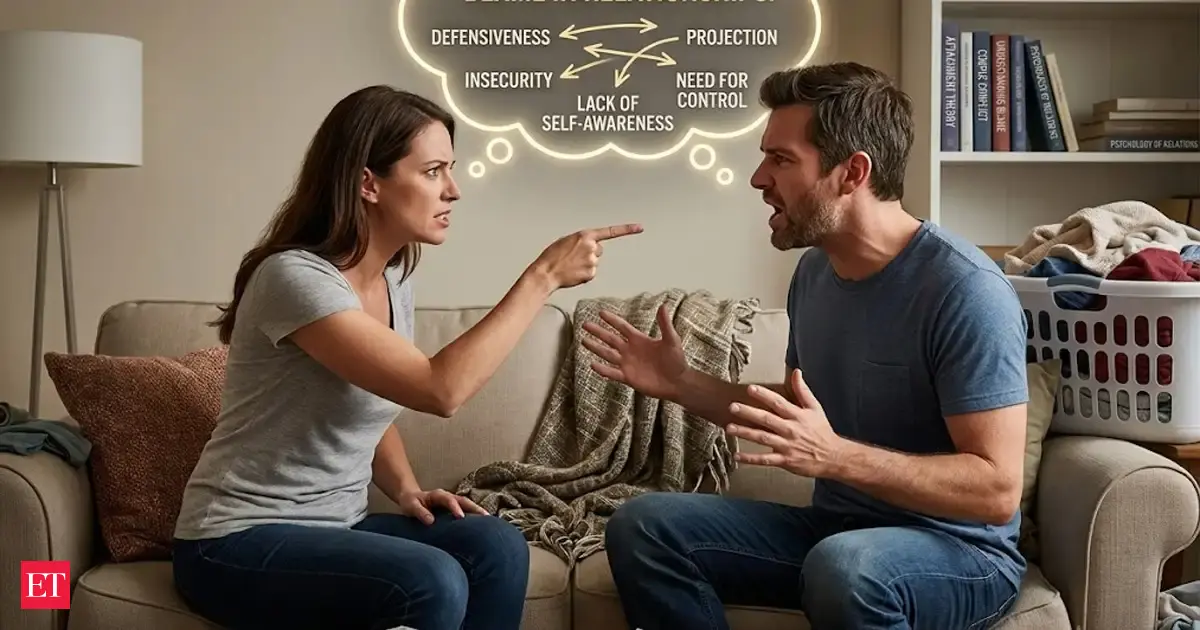
Psychological research and clinical frameworks examining interpersonal dynamics continue to illuminate why romantic partners frequently engage in repetitive cycles of mutual blame. According to an analysis published by Mukesh Thapliyal, persistent scapegoating and chronic criticism within relationships are rarely random occurrences; rather, they stem from unaddressed personal frustrations, emotional exhaustion, and dysfunctional communication patterns. Drawing on empirical research established by relational psychologist Dr. John Gottman alongside contemporary clinical paradigms, experts note that failure to interrupt these destructive cycles leads directly to severe declines in relationship satisfaction, heightened emotional distress, and eventual partnership dissolution.
Key facts
What happened
The mechanism of inter-partner blame operates as a psychological feedback loop that typically begins with unexpressed personal frustration. As detailed by Thapliyal, when individuals experience stress, disappointment, or unmet emotional expectations, they frequently struggle to articulate these internal states constructively. Instead, the emotional burden is projected outward toward a romantic partner in the form of generalized criticism.
Psychological frameworks, particularly those developed at the Gottman Institute, draw a sharp distinction between a healthy complaint and destructive criticism. A complaint targets a specific action or event—such as expressing frustration over an unperformed household task on a given afternoon. In contrast, criticism attacks the partner's character, global traits, or fundamental personality. When a partner framing an issue shifts from "this action caused a problem" to "you are inherently irresponsible or careless," the nature of the interaction fundamentally changes from conflict management to character attack.
In response to perceived character attacks, the targeted partner almost universally adopts defensiveness. Rather than absorbing the feedback or reflecting on the underlying issue, the defensive partner constructs excuses, denies responsibility, or launches a counter-attack. This response triggers what clinicians describe as a self-reinforcing blame loop: Partner A criticizes Partner B's character, Partner B defensively counter-attacks Partner A, and the original issue remains completely unaddressed while emotional injury compounds.
This dynamic is further exacerbated by well-documented cognitive biases, such as the fundamental attribution error. In interpersonal conflict, individuals tend to attribute their own missteps to external, situational circumstances—such as work fatigue or overwhelming scheduling demands—while attributing their partner's identical missteps to internal personality defects. Over time, this cognitive asymmetry leads both partners to view themselves as victims of the other's systemic flaws.
To break this pattern, psychological literature outlines a deliberate transition from reactive blaming to collaborative problem-solving. Clinical protocols instruct couples to reframe conflict entirely: rather than viewing disagreement as an adversarial contest between Partner A and Partner B, partners must align themselves jointly against the external problem. This shift requires both individuals to practice emotional self-regulation, identify their own unexpressed needs, and utilize direct, non-accusatory communication techniques.
Why it matters
The psychological impact of chronic relational blame extends far beyond subjective unhappiness, carrying profound implications for mental health, physiological well-being, and social stability. Longitudinal psychological studies have consistently linked persistent relationship distress to elevated risks of clinical depression, chronic anxiety disorders, and heightened psychological strain. When conflict remains unresolved and escalates into perpetual criticism, the resulting elevated levels of stress hormones—such as cortisol and adrenaline—can induce systemic physiological wear, contributing to cardiovascular strain, weakened immune function, and disrupted sleep architecture.
For households with children, the presence of ongoing parental hostility and blame dynamics poses significant developmental risks. Children exposed to chronic, unstructured parental conflict frequently exhibit higher rates of emotional dysregulation, academic difficulties, and behavioral problems. Furthermore, observing perpetual blame models unhealthy conflict resolution patterns that children often replicate in their own future peer and romantic relationships.
From an economic and public health perspective, relationship breakdown and divorce generate substantial societal costs, including litigation expenses, household fragmentation, and reduced workplace productivity resulting from severe emotional distress. By providing individuals and clinicians with actionable, science-based methodologies to identify and neutralize blame dynamics early, psychological research serves as a vital preventive health measure. Enhancing relational communication directly fosters healthier domestic environments, mitigates mental health crises, and reduces the broader societal burdens associated with family instability.
The background
The formal study of marital stability and conflict resolution underwent a significant paradigm shift beginning in the 1970s and 1980s, primarily spearheaded by Dr. John Gottman and Dr. Robert Levenson at the University of Washington. Prior to this empirical era, couples therapy relied heavily on self-reported questionnaires and theoretical psychoanalysis, which often failed to predict relationship longevity accurately. In 1986, Gottman established the Family Research Laboratory—popularly known as the "Love Lab"—where researchers began systematically recording and analyzing the video, audio, and physiological data of thousands of couples interacting in real time.
From this decades-long corpus of empirical observational data, Gottman formulated the concept of the "Four Horsemen of the Apocalypse," identifying four specific communication styles that extraordinarily predict relationship dissolution: Criticism, Defensiveness, Contempt, and Stonewalling. Among these, Gottman's research identified Contempt—the expression of moral superiority, sarcasm, or dismissal—as the single strongest predictor of divorce. Chronic criticism and defensiveness were shown to serve as the gateway behaviors that inevitably lead to contempt if left uncorrected.
Parallel developments in relational psychology introduced complementary models, such as Dr. Sue Johnson's Emotionally Focused Therapy (EFT), developed in the 1980s, which grounds relationship distress in adult attachment theory. EFT posits that beneath the surface of anger and blame lies a deep-seated fear of abandonment or emotional detachment. Concurrently, Integrative Behavioral Couple Therapy (IBCT), developed in the 1990s by Neil Jacobson and Andrew Christensen, emphasized emotional acceptance and the reframing of chronic differences.
Modern relationship therapy synthesizes these empirical traditions, moving away from simple communication scripts toward deep cognitive and emotional restructuring. Contemporary practice emphasizes that sustainable conflict resolution requires partners to cultivate emotional attunement, recognize their own internal triggers, and actively construct a shared system of relational meaning.
Reaction
Mental health professionals, licensed marriage and family therapists, and clinical psychologists have long echoed the necessity of addressing blame dynamics early in therapeutic interventions. Clinical consensus highlights that couples frequently seek professional help years after destructive communication habits have become deeply ingrained, making the deconstruction of blame loops significantly more challenging.
Therapists note that a common obstacle in clinical practice is the expectation from partners that a practitioner will act as a referee or validate one person's blame over the other. Clinical protocols require practitioners to immediately neutralize this expectation, redirecting the couple's focus toward systemic interactions rather than individual fault. Practitioners widely endorse the integration of structured communication exercises—such as the "soft start-up," where a partner introduces a concern gently without character attack—as fundamental tools for restoring safety in therapeutic and domestic settings.
Public health advocates and educational institutions have increasingly called for integrating relationship literacy and emotional regulation training into secondary and post-secondary curricula. Proponents argue that teaching young adults to distinguish between healthy complaints and character criticism before entering cohabitating partnerships could drastically reduce rates of relationship distress and domestic instability.
What we don't know yet
Despite extensive empirical literature on relational dynamics, several significant research gaps remain. The rapid evolution of digital communication—including texting, instant messaging, and social media interactions—has fundamentally altered how couples negotiate conflict. Limited longitudinal data exists on how asynchronous text-based communication impacts the frequency and intensity of blame cycles compared to face-to-face interactions, particularly regarding the absence of vocal tone and physical non-verbal cues.
Additionally, much of the foundational research on relationship communication patterns, including the Gottman Method, was historically developed using predominantly Western, educated, industrialized, rich, and democratic demographics. Psychological researchers continue to investigate the degree to which non-confrontational communication models, such as explicit "I" statements, translate effectively across diverse cultural frameworks that emphasize indirect communication, collectivist family structures, or distinct emotional expression norms.
Further study is also required to evaluate how neurodivergence—such as Attention Deficit Hyperactivity Disorder or Autism Spectrum Disorder within a relationship—alters the efficacy of standard conflict resolution protocols, as traditional indicators of defensiveness or stonewalling may manifest differently in neurodiverse partnerships.
What to watch
Researchers and mental health organizations are tracking several upcoming milestones in relational psychology and clinical technology. The American Psychological Association and the International Association for Relationship Research are scheduled to host academic conferences focused on modern relationship interventions, where new data on digital-era relationship dynamics will be presented.
In the clinical space, developers are expanding AI-assisted digital mental health tools and relationship coaching applications designed to monitor communication patterns in real time. Observers will be watching whether these digital interventions can successfully detect elevated linguistic indicators of criticism or defensiveness in text exchanges and offer real-time de-escalation prompts to users.
Furthermore, ongoing longitudinal studies evaluating the long-term comparative efficacy of remote tele-therapy versus traditional in-person couples counseling will provide crucial data on the accessibility and affordability of evidence-based marriage and family therapy over the coming years.
This report is based on psychological analysis and reporting originally detailed by Mukesh Thapliyal.
How this story was produced
This report was written by The Global Wire newsroom from reporting first published by Mukesh Thapliyal. We verify the core facts against the original report, write our own account, and add the background and consequences a short wire item leaves out. Drafting is AI-assisted inside an editor-supervised pipeline, and every story is checked for accuracy of attribution, structure and duplication before it appears — full detail in our AI and funding disclosure.
Spotted an error? Tell us at corrections@horizonglobalnews.com and read our corrections policy or editorial standards.





Reader comments
Loading comments…