

Proposed AI Data Center Threatens Rare Surviving American Chestnut Grove
A rare surviving chestnut grove in the United States faces destruction under plans for a hyperscale artificial intelligence facility, highlighting land-use trade-offs.
By The Global Wire Newsroom · Reported from Joe Wilkins
Link preview · horizonglobalnews.com
Proposed AI Data Center Threatens Rare Surviving American Chestnut Grove
A rare surviving chestnut grove in the United States faces destruction under plans for a hyperscale artificial intelligence facility, highlighting land-use trade-offs.
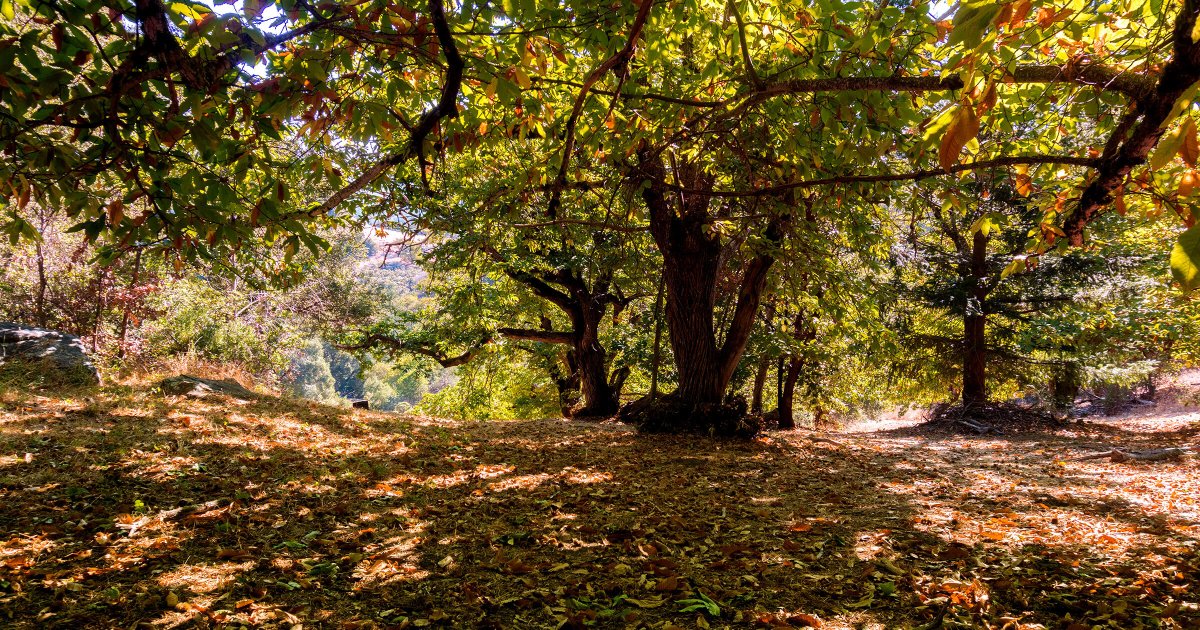
Plans to clear one of the few remaining chestnut groves in the United States to accommodate a massive hyperscale artificial intelligence data center have drawn attention to the environmental trade-offs accompanying the rapid expansion of digital infrastructure. According to reporting by journalist Joe Wilkins on Oct. 10, 2026, the proposed industrial development threatens a rare stand of chestnut trees, a botanical resource that has become exceptionally scarce across North America following a catastrophic fungal blight in the twentieth century. The proposal highlights intensifying competition between high-density technology infrastructure and vulnerable ecological sites across the American landscape.
Key facts
What happened
The proposal involves clearing a stand of surviving chestnut trees to build a hyperscale facility dedicated to artificial intelligence processing, as reported by Joe Wilkins. Hyperscale data centers are centralized facilities operated by major technology corporations or specialized real estate developers designed to house tens of thousands of server racks running continuous, computationally intensive applications.
The site under consideration contains a mature chestnut grove, a landscape feature that has largely vanished from North American forests. Land developers seeking locations for computing facilities regularly target rural and semi-rural parcels that offer favorable conditions for heavy industrial zoning, high-voltage electrical grid interconnects, and proximity to regional telecommunications networks.
While specific local zoning filings and municipal permits remain under review, the preliminary development plan calls for bulldozing the grove to grade the terrain, construct warehouse-scale server buildings, and install ancillary utility equipment including backup generators, electric substations, and industrial cooling towers. The report by Wilkins underscores how the growing footprint of artificial intelligence infrastructure is expanding into sensitive natural habitats and historically significant forest patches.
Why it matters
The potential loss of a surviving chestnut grove highlights a direct conflict between the accelerating physical demands of the technology sector and long-term conservation priorities. Hyperscale data centers built for artificial intelligence tasks consume significantly more physical space, electricity, and water than traditional cloud computing facilities. A single hyperscale complex often spans scores of acres and requires electrical capacity ranging from 50 megawatts to upwards of several gigawatts.
From an ecological perspective, any remaining stand of mature chestnut trees possesses unique scientific and biological value. Because the vast majority of original American chestnuts were wiped out by disease, isolated surviving groves serve as vital natural laboratories. Geneticists, foresters, and restoration ecologists rely on such sites to study potential blight resistance, sample native genetic material, and collect seeds for selective breeding programs. Eradicating a mature grove eliminates an irreplaceable genetic reservoir that cannot be quickly or easily replicated.
Economically, the issue reflects broader friction in rural and suburban communities where industrial technology developments intersect with local environmental preservation. While municipal governments often welcome data centers for their contributions to commercial property tax bases, residents and conservation groups frequently express concerns over land clearing, lost canopy cover, noise pollution from cooling systems, and strains on local power and water supplies.
The background
To understand the ecological gravity of losing a chestnut grove, it is necessary to examine the history of the American chestnut (*Castanea dentata*). Prior to the early twentieth century, the species was a dominant hardwood tree in eastern North American forests, extending from Maine south to Georgia and west to the Mississippi River valley. Estimates by forestry historians suggest that American chestnuts once accounted for up to 25 percent of all hardwood trees in their native range, growing to heights exceeding 100 feet and trunks measuring over 10 feet in diameter.
The trajectory of the species changed dramatically in 1904, when an invasive fungal pathogen, *Cryphonectria parasitica* (historically known as *Endothia parasitica*), was discovered on chestnut trees at the New York Zoological Park in the Bronx. Native to East Asia, the fungus spread rapidly through windborne spores, insects, and human activity. By the 1950s, an estimated three to four billion American chestnut trees had been killed, functionally eliminating the species as a canopy tree and drastically altering forest ecosystems that depended on its heavy annual nut crops for wildlife forage and human timber.
Today, while millions of chestnut root sprouts continue to emerge from existing root systems across eastern forests, almost all succumb to the blight before reaching maturity or producing seeds. Intact, mature groves are extraordinarily rare in North America, existing primarily in isolated pockets where the blight has not taken hold or where trees exhibit unusual environmental or genetic resilience. Organizations such as The American Chestnut Foundation have spent decades attempting to backcross American chestnuts with blight-resistant Asian species or utilize genetic engineering to restore the tree to native woodlands.
Concurrently, the growth of artificial intelligence since 2022 has created unprecedented demand for data center infrastructure. Tech developers in North America have acquired hundreds of thousands of acres of land to construct facilities capable of supporting high-density graphics processing units (GPUs). Northern Virginia, southeastern states, and various Midwestern corridors have seen intense competition for industrial land with direct access to power lines and municipal utilities, bringing industrial development into frequent contact with agricultural, forestry, and historical sites.
Reaction
Following the report by Joe Wilkins, environmental advocates and conservation groups are expected to scrutinize the development plans. Land preservation organizations and local forestry experts routinely press municipal boards and state environmental protection agencies to require comprehensive environmental impact assessments before granting land-disturbing permits for hyperscale facilities.
Industry representatives and site developers typically emphasize the economic benefits of hyperscale data centers, including capital investment, infrastructure upgrades, and local tax revenues, while noting that project designs often incorporate environmental mitigation measures or off-site land preservation commitments. Local planning commissions and county boards of supervisors in the jurisdiction where the project is situated will serve as the primary venues where public comments, environmental petitions, and corporate presentations are submitted and debated.
What we don't know yet
Several critical details regarding the project remain unconfirmed in the available reporting. The precise geographic location of the chestnut grove—including the state, county, and municipal jurisdiction—has not been publicly specified in the report by Joe Wilkins. Furthermore, the identity of the data center developer and the specific technology tenant or hyperscaler behind the project have not been disclosed.
It is also unclear whether the trees in the grove are pure wild American chestnuts (*Castanea dentata*), introduced Asian varieties (*Castanea mollissima*), or hybrid specimens planted as part of ongoing ecological restoration trials. The exact total acreage of the grove, its ownership structure, and whether local planning authorities have formally received or voted on rezoning applications and building permits also remain to be detailed.
What to watch
In the coming months, several key indicators will determine the outcome of the site:
This report relies on original reporting published by Joe Wilkins on Oct. 10, 2026.
How this story was produced
This report was written by The Global Wire newsroom from reporting first published by Joe Wilkins. We verify the core facts against the original report, write our own account, and add the background and consequences a short wire item leaves out. Drafting is AI-assisted inside an editor-supervised pipeline, and every story is checked for accuracy of attribution, structure and duplication before it appears — full detail in our AI and funding disclosure.
Spotted an error? Tell us at corrections@horizonglobalnews.com and read our corrections policy or editorial standards.





Reader comments
Loading comments…