

Peak Energy Raises $108M to Scale US Sodium-Ion Grid and Data Center Batteries
With backing from General Motors, the company aims to undercut lithium battery costs by 20 percent while delivering passively cooled energy storage for power-hungry computing facilities.
By The Global Wire Newsroom · Reported from Atharva Gosavi
Link preview · horizonglobalnews.com
Peak Energy Raises $108M to Scale US Sodium-Ion Grid and Data Center Batteries
With backing from General Motors, the company aims to undercut lithium battery costs by 20 percent while delivering passively cooled energy storage for power-hungry computing facilities.
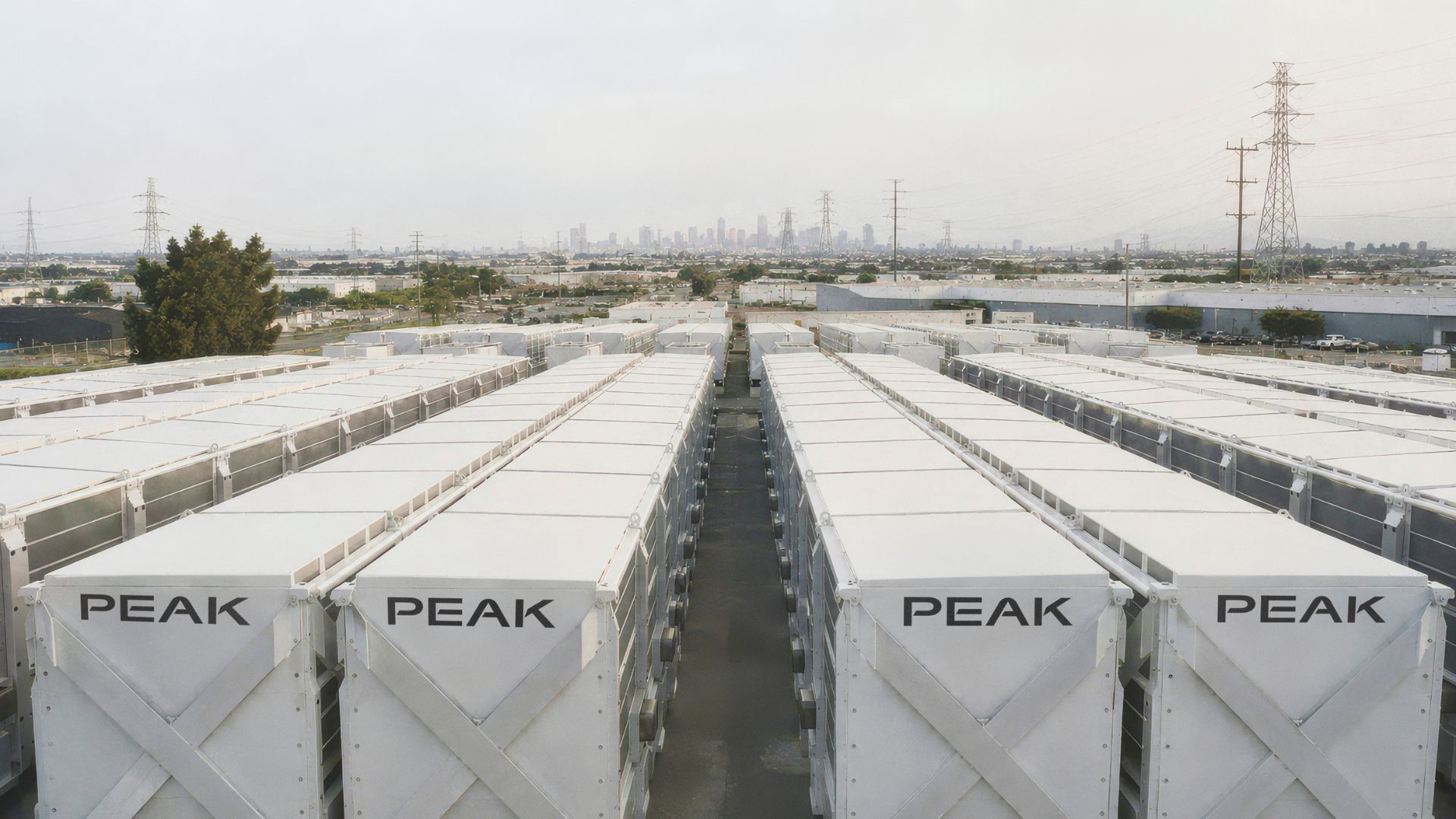
United States-based energy storage developer Peak Energy has completed a $108 million financing round to expand domestic manufacturing capacity for sodium-ion batteries, seeking to establish an alternative to lithium-dependent grid storage systems and supply cooling-efficient power infrastructure for commercial data centers. The capital injection, backed by automotive manufacturer General Motors, positions the company to deploy stationary storage units that leverage lower-cost chemical inputs and passive thermal management architectures to compete directly with dominant lithium iron phosphate technology.
Key facts
What happened
Peak Energy finalized the $108 million investment to accelerate its transition from technology development to commercial-scale domestic production. The round features strategic capital from General Motors, reflecting an expanding push by automotive and industrial incumbents into stationary energy storage supply chains. Peak Energy is directing the proceeds toward the establishment of utility-grade battery production lines in the United States and the final engineering of modular storage hardware tailored to high-density electrical installations.
Central to the company's technical roadmap is the introduction of battery enclosures engineered for passive cooling. Unlike conventional utility storage containers, which rely heavily on active heating, ventilation, and air conditioning (HVAC) systems or complex liquid-coolant piping to prevent thermal runaway, Peak Energy's design exploits the wider thermal operating threshold inherent to sodium-ion chemistry. By minimizing or removing forced cooling systems, the company intends to supply data center operators with modular reserve power units that demand less maintenance, consume less auxiliary energy, and integrate directly into space-constrained facilities.
According to reporting by Atharva Gosavi, the company intends to leverage this simplified mechanical design alongside basic raw material advantages to lower the total equipment and operational expense of stationary battery energy storage systems (BESS) by roughly one-fifth relative to prevailing market rates.
Why it matters
The economic and structural constraints of modern power grids have intensified dramatically over the past three years, driven by the electrification of transportation and the explosive expansion of artificial intelligence clusters. Hyperscale data centers require continuous, non-intermittent gigawatt-scale power, creating extensive multi-year interconnection backlogs with transmission operators. To maintain uptime and navigate interconnection delays, technology infrastructure operators are increasingly turning to on-site microgrids, large-scale battery reserves, and behind-the-meter generation.
Until now, lithium iron phosphate (LFP) has served as the default chemistry for stationary storage deployments due to its balance of cycle durability and thermal stability relative to nickel-rich chemistries. However, LFP remains exposed to lithium price volatility and global refining bottlenecks. A battery chemistry that reduces storage system costs by 20 percent provides grid operators, industrial energy consumers, and independent power producers with a faster capital payback period, accelerating the deployment of four-hour and eight-hour duration storage capacity.
Furthermore, parasitic loads represent a persistent operational drain on large-scale battery installations. Active liquid-chilling loops and commercial air handlers can consume between 4 and 10 percent of the total electrical energy stored in a conventional containerized BESS. In a data center environment, where every megawatt-hour of facility consumption directly impacts computational output and power usage effectiveness (PUE) ratings, adopting passively cooled energy storage reduces auxiliary power consumption while removing mechanical failure points associated with pumps, valves, and coolant fluid degradation.
The background
Sodium-ion electrochemistry is not fundamentally new; research into sodium intercalation began alongside initial investigations into lithium in the 1970s and 1980s. However, because sodium atoms are larger and heavier than lithium atoms, early iterations suffered from inferior gravimetric energy density and shorter cycle life. As a consequence, commercial research prioritized lithium-ion technology to support consumer electronics and electric mobility, where spatial footprint and battery weight dictate performance.
Stationary grid storage operates under an entirely different optimization matrix. Weight is rarely a limiting factor when installing battery containers in utility substations, solar parks, or adjacent to industrial warehouses. Instead, developers prioritize levelized cost of storage, calendar lifespan, cycling degradation, fire safety, and supply chain security.
Over the past five years, standard sodium-ion cell densities have advanced from sub-100 watt-hours per kilogram (Wh/kg) to parity with entry-level LFP, frequently surpassing 150 Wh/kg in pre-commercial testing. Mechanically, sodium-ion cells provide critical structural advantages. Unlike lithium-ion cells, which must employ expensive copper foil for the negative current collector, sodium does not form alloys with aluminum, permitting manufacturers to replace copper with aluminum on both cathode and anode. Aluminum is cheaper, lighter, and far more accessible domestically.
Additionally, sodium-ion batteries can be fully discharged to absolute zero volts for shipping and extended storage without incurring structural degradation to the copper current collectors, which dissolve into the electrolyte in lithium cells if deep discharge occurs. This characteristic drastically lowers the fire risk during international transport and domestic freight, enabling regulatory freight classifications that circumvent costly hazardous materials compliance protocols.
While Asian battery manufacturers, led by Chinese conglomerates such as CATL and HiNa Battery, have previously commercialized initial sodium-ion platforms, the United States has maintained virtually no domestic supply chain for the chemistry. The expansion of Peak Energy reflects federal and private efforts to localize battery cell manufacturing under the incentives structured by the Inflation Reduction Act of 2022, which offers production tax credits under Section 45X for cells and battery modules manufactured inside US territory.
Reaction
Industrial power developers and clean technology venture markets have increasingly signaled that reliance on a single battery chemistry represents a strategic vulnerability for national decarbonization initiatives. Clean energy economists and infrastructure analysts have noted that the rapid commercialization of non-lithium chemistries is necessary to dampen market price shocks whenever electric vehicle production spikes lithium carbonate demand.
Data center infrastructure designers have historically taken a conservative approach toward deploying stationary lithium batteries within indoor facility footprints due to concerns regarding thermal runaway and fire safety compliance under standards such as NFPA 855 and UL 9540. The prospect of inherently safer thermal envelopes offered by sodium-ion architecture has generated interest among engineering teams seeking to install high-capacity uninterrupted power supply (UPS) banks closer to server halls.
Automotive manufacturers, including General Motors, have continued to diversify venture allocations across adjacent electrification verticals. Strategic equity investments in stationary storage allow vehicle manufacturers to secure supply chain insights, test next-generation materials at scale, and evaluate secondary applications for emerging chemistries that may later mature into affordable, entry-level automotive platforms.
What we don't know yet
Despite the scale of the funding commitment, several core technical and operational variables remain undisclosed in the initial announcements. Peak Energy has not yet released the definitive geographic location, nameplate gigawatt-hour capacity, or groundbreaking timeline for its planned US manufacturing facility.
Crucially, long-term degradation data in commercial operating conditions remains an open engineering question. While modern LFP systems regularly market warranted cycle lifespans between 6,000 and 10,000 full charge-discharge cycles, early-generation sodium-ion systems have typically exhibited shorter lifespans before degrading to 80 percent of initial capacity. Whether Peak Energy's cathode formulations and cell chemistries match standard LFP longevity over a projected 15-to-20-year operational life has not been verified via public third-party field validation reports.
Additionally, the exact terms, equity structure, and total composition of the investor syndicate alongside General Motors were not fully delineated, leaving unclear the proportion of the $108 million dedicated strictly to physical capital expenditure versus continued research and corporate overhead.
What to watch
The immediate milestones to monitor include site selection for the company's domestic manufacturing plant and the timeline for facility permitting under local jurisdictions. Securing equipment supply agreements for high-speed electrode coating, cell assembly, and formation cycling machinery will indicate how rapidly Peak Energy can transition from pilot prototypes to volume output.
Observers should also track whether the company secures formal certification under safety and grid performance standards, specifically UL 1973 for battery cells and modules and UL 9540A for thermal runaway fire propagation. Obtaining clear UL 9540A test results verifying passive thermal stability without container-level runaway will be the critical gating item required for municipal fire marshal approvals and insurance underwriting across commercial data centers.
Finally, the formalization of commercial offtake contracts or pilot demonstration projects with named utility providers and enterprise data center hyperscalers over the coming quarters will serve as the true measure of whether sodium-ion can displace incumbent LFP deployments in practice.
Reporting for this dispatch was developed from original reporting by Atharva Gosavi.
How this story was produced
This report was written by The Global Wire newsroom from reporting first published by Atharva Gosavi. We verify the core facts against the original report, write our own account, and add the background and consequences a short wire item leaves out. Drafting is AI-assisted inside an editor-supervised pipeline, and every story is checked for accuracy of attribution, structure and duplication before it appears — full detail in our AI and funding disclosure.
Spotted an error? Tell us at corrections@horizonglobalnews.com and read our corrections policy or editorial standards.





Reader comments
Loading comments…