

Orbit Resources Resumes Drilling at Lewis Ponds Following Step-Out Assay Success
Orbit Resources has resumed drilling at its 1.7-million-ounce gold equivalent Lewis Ponds project in New South Wales after new assays expanded the mineralised footprint.
By The Global Wire Newsroom · Reported from Murray Ward
Link preview · horizonglobalnews.com
Orbit Resources Resumes Drilling at Lewis Ponds Following Step-Out Assay Success
Orbit Resources has resumed drilling at its 1.7-million-ounce gold equivalent Lewis Ponds project in New South Wales after new assays expanded the mineralised footprint.
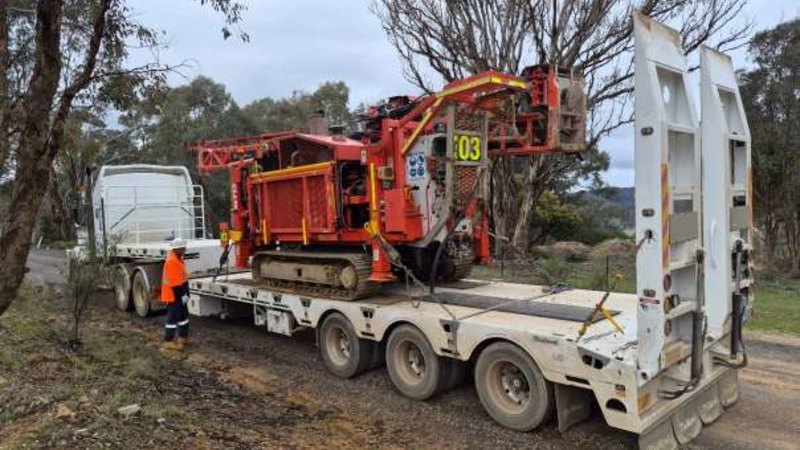
Australian exploration company Orbit Resources has recommenced drilling operations at its flagship Lewis Ponds polymetallic project in New South Wales after recent laboratory assay results confirmed high-grade mineralisation extending beyond the boundaries of the existing resource estimate. The deposit, which holds a reported mineral resource of 1.7 million ounces of gold equivalent, is being targeted in a fresh exploratory program aimed at expanding its known tonnage and testing potential strike extensions. The decision to remobilize drilling rigs follows analytical returns from previous drill holes that intersected mineralised zones outside the modeled geological envelope, signaling potential resource growth across the property.
Key facts
What happened
Orbit Resources initiated a new phase of diamond and reverse circulation drilling at its Lewis Ponds property in regional New South Wales following the receipt of encouraging assay data from previous exploration activities. According to reporting by Murray Ward, the company's decision to deploy drilling equipment back to the site was triggered by laboratory returns that demonstrated economic-grade mineralisation lying beyond the parameters of the project's current 1.7 million ounce gold equivalent mineral resource estimate.
The previously completed drill holes intersected extensions of the core mineralised structure, challenging earlier assumptions regarding the spatial limits of the ore deposit. Rather than pinching out or terminating at the edges of the documented resource footprint, the geological structures carrying precious and base metal content were found to continue into untested surrounding zones.
To capitalize on these analytical findings, the newly launched drilling effort focuses on stepping out systematically from the known mineralisation boundaries. Rigs positioned on site are targeting both lateral strike continuations and down-dip projections of the main lodes. Geologists on the project are collecting continuous core and drill cuttings to map structural controls, evaluate vein density, and map alteration halos associated with the polymetallic mineralisation. Samples generated from the current drill program are being dispatched to certified laboratory facilities for multi-element assay analysis, including fire assay for gold and inductively coupled plasma spectroscopy for base metals such as zinc, lead, and copper.
Why it matters
An expansion of the resource base at Lewis Ponds holds significant commercial implications for Orbit Resources and the broader regional mining landscape in New South Wales. Polymetallic deposits offering gold equivalent exposure provide valuable operational hedging against single-commodity price volatility, as revenues can be drawn from a combination of precious metals (gold and silver) and industrial base metals (zinc, lead, and copper). Demonstrating that a deposit can grow beyond its initial 1.7 million ounce benchmark enhances the overall economic viability of potential future mine development by spreading potential capital expenditure over a larger tonnage base and extending the potential mine life.
Furthermore, successful step-out drilling that opens up additional mineralised domains can alter the conceptual mine design, potentially shifting project economics from a constrained underground operation to a larger-scale, lower-cost open-pit scenario or a hybrid development model. For equity investors and market analysts covering junior exploration companies, ongoing resource growth serves as a crucial metric for evaluating corporate valuation and project advancement toward pre-feasibility and definitive feasibility studies. Within regional New South Wales, expanded resource inventories contribute to long-term mining infrastructure utilization and foster regional economic development across local supply chains, contractor networks, and employment markets.
The background
The Lewis Ponds project is located within the Lachlan Fold Belt of central-western New South Wales, one of Australia's premier mineral provinces. The Lachlan Fold Belt is historically renowned for hosting world-class volcanic-hosted massive sulphide (VMS) deposits, epithermal gold systems, and large-scale copper-gold porphyry complexes. Notable regional deposits in the broader province include Cadia-Ridgeway, Cowal, and Northparkes, which collectively underscore the deep-seated fertility of the regional crustal structures.
Exploration at Lewis Ponds has historically targeted polymetallic mineralisation characterized by lens-shaped bodies of massive and semi-massive sulphides enriched in zinc, lead, silver, and gold. Over past exploration cycles, successive operators completed surface geological mapping, soil geochemistry, electrical geophysical surveys, and multi-phase drilling programs to delineate the deposit's core geometry.
In accordance with standard industry practices, resource figures reported in gold equivalent metrics consolidate the market value of contained secondary metals—such as silver, lead, zinc, and copper—into a single standardized gold equivalent figure based on assumed long-term commodity pricing and processing recovery factors. In Australian exploration reporting, mineral resource estimates must comply with the guidelines established by the Joint Ore Reserves Committee (JORC) Code, which categorizes mineralisation into Inferred, Indicated, and Measured status based on geological confidence and sampling density. Orbit Resources' baseline resource of 1.7 million ounces of gold equivalent provides the foundational platform upon which current expansion drilling is anchored.
Reaction
While formal market reactions and third-party analyst notes remain limited in the immediate aftermath of the announcement, industry stakeholders typically view step-out drilling programs backed by positive step-out assays as positive indicators of asset quality. Management teams at junior exploration firms are under continuous pressure from shareholders to demonstrate capital efficiency by translating drilling expenditure into tangible resource growth.
Local government bodies in New South Wales regional councils generally support responsible exploration activities that comply with environmental protection framework regulations managed by the New South Wales Department of Primary Industries and Regional Development and the Resources Regulator. Environmental groups and community stakeholders near the project area are expected to monitor the progression of drilling activities closely, ensuring compliance with noise regulations, water management protocols, and land rehabilitation commitments as exploration density increases across the license area.
What we don't know yet
Several critical technical details remain unspecified in the initial reporting by Murray Ward. The exact parameters of the newly launched drilling campaign—including total planned meterage, the specific number of drill holes, and the proportion of diamond core versus reverse circulation drilling—have not been disclosed. Additionally, specific assay intervals from the step-out holes that triggered the mobilization—such as intercept widths, gold equivalent grades, individual metal breakdowns, and true thickness calculations—were omitted from the summary report.
It is also currently unclear what commodity price assumptions and metallurgical recovery rates were utilized by Orbit Resources to calculate the baseline 1.7 million ounce gold equivalent resource figure. Metallurgical recoveries can vary substantially across polymetallic sulphide lodes, impacting the final convertibility of base metals into gold equivalent figures. Finally, the target timeline for delivering complete assay results from the active drilling campaign and the scheduled date for an updated JORC-compliant Mineral Resource Estimate have yet to be publicly confirmed by the company.
What to watch
In the coming weeks and months, several key operational milestones will determine the trajectory of the Lewis Ponds project:
This report is based on original news coverage published by Murray Ward on August 24, 2026.
How this story was produced
This report was written by The Global Wire newsroom from reporting first published by Murray Ward. We verify the core facts against the original report, write our own account, and add the background and consequences a short wire item leaves out. Drafting is AI-assisted inside an editor-supervised pipeline, and every story is checked for accuracy of attribution, structure and duplication before it appears — full detail in our AI and funding disclosure.
Spotted an error? Tell us at corrections@horizonglobalnews.com and read our corrections policy or editorial standards.





Reader comments
Loading comments…