

Nomura Warns Stalling AI Rally Exposes Broader Vulnerabilities in US Markets
Japanese investment bank Nomura warns that a slowing artificial intelligence boom is exposing structural risks in US equities, threatening the dominance of dollar-denominated assets.
By The Global Wire Newsroom · Reported from Yulu Ao
Link preview · horizonglobalnews.com
Nomura Warns Stalling AI Rally Exposes Broader Vulnerabilities in US Markets
Japanese investment bank Nomura warns that a slowing artificial intelligence boom is exposing structural risks in US equities, threatening the dominance of dollar-denominated assets.
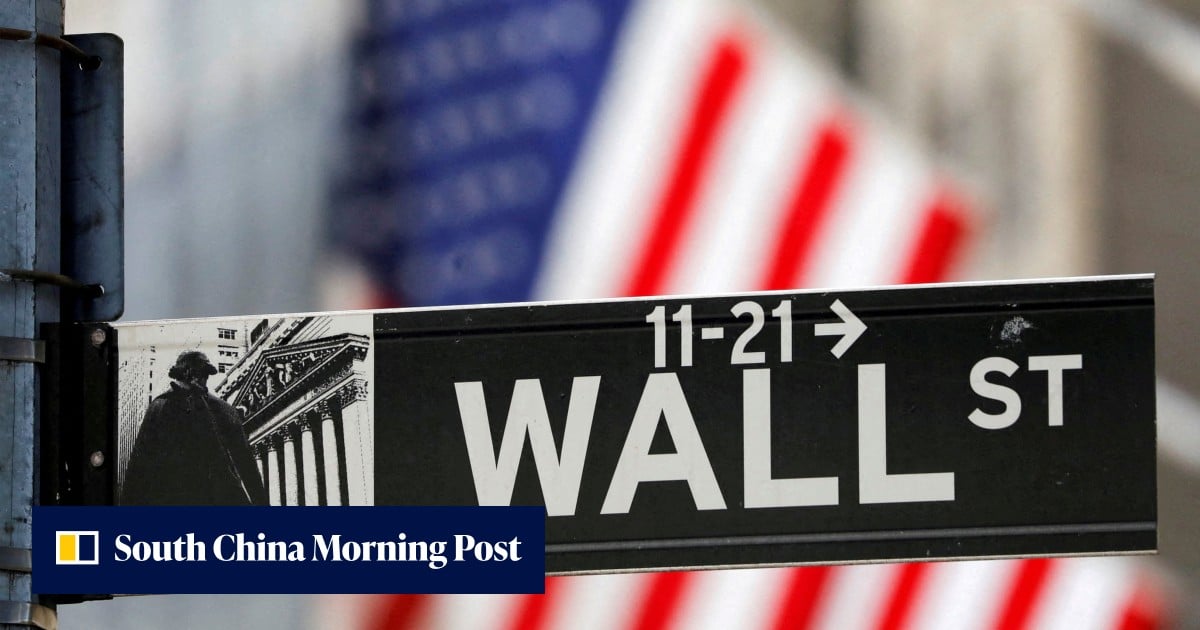
Tokyo-based financial services group Nomura has issued a broad warning regarding American financial markets, cautioning that a multi-year surge in artificial intelligence valuations has concealed deep-seated vulnerabilities across the United States economy. According to reporting by Yulu Ao on September 4, 2026, the Japanese investment bank stated that as the rapid momentum of the AI equity rally shows signs of slowing, global market participants are increasingly confronting an expanding US risk premium. This shift directly undermines the long-standing market doctrine known as "TINA"—the premise that "there is no alternative" to American dollar assets—and raises the prospect of a fundamental re-evaluation of international capital allocation.
Key facts
What happened
Nomura's research team highlighted a growing divergence between high equity market valuations and underlying macroeconomic indicators in the United States. For several years, global capital flows have been dominated by intense demand for American technology stocks, driven by breakthroughs in hardware, cloud computing, and generative artificial intelligence applications. This concentration of capital created an umbrella effect across American financial markets, lifting broad equity indices like the S&P 500 and the Nasdaq Composite to repeated record highs.
However, Nomura pointed out that this mega-cap technology surge effectively papered over rising headwinds in the broader financial system. These vulnerabilities include elevated corporate borrowing costs, mounting federal debt obligations, persistent commercial real estate stress, and signs of slowing consumer demand in lower-income demographics. As long as technology equities delivered double-digit annual returns, foreign and domestic allocators remained content to overlook these systemic frictions.
As the growth rate of AI-driven market returns begins to moderate, the protective shield provided by tech outperformance is thinning. According to Nomura's assessment, market participants are now reassessing the risk premium required to hold US assets. An equity risk premium represents the excess return an investor expects to receive over a risk-free benchmark, such as US Treasury bonds, to compensate for the higher uncertainty of holding stocks. When this premium expands, asset prices must adjust downward or yield expectations must rise, challenging the longstanding foreign appetite for dollar-denominated instruments.
Why it matters
This shift in institutional sentiment carries significant implications for global investors, corporate treasuries, and macroeconomic stability. Over the past decade, the "TINA" narrative was a primary engine of American financial dominance. Foreign pension funds, sovereign wealth managers, and private financial institutions continuously funneled capital into US stock markets because no other geographic region offered comparable liquidity, earnings growth, or innovation scale.
If the AI rally falters or settles into a period of lower returns, the justification for maintaining historically high foreign overweights in American equities weakens. A rotation out of US markets would affect not only stock indices but also the value of the US dollar. Global capital inflows into Wall Street have consistently supported the greenback, helping offset large US trade deficits and expanding government fiscal shortfalls. If foreign allocators decide that international equities in Europe, Japan, or emerging markets offer superior risk-adjusted returns, the resulting capital flight could apply downward pressure on the dollar while raising borrowing costs across American fixed-income markets.
Furthermore, the US equity market has reached historic levels of concentration. A small cohort of technology companies represents an unusually large percentage of total market capitalization in major benchmark indices. If investment thesis fatigue surrounding AI monetization triggers a sustained valuation drawdown in these heavyweights, broad market index funds held by millions of retail and institutional investors worldwide will absorb direct losses, regardless of how well non-technology sectors perform.
The background
The phrase "there is no alternative" (TINA) originated in political philosophy but was adopted by Wall Street strategists during the post-2008 global financial crisis. As central banks slashed benchmark interest rates to zero and engaged in large-scale quantitative easing, traditional yields on sovereign debt and cash equivalents vanished. Equity markets—particularly US large-cap stocks—became the default destination for capital seeking growth.
Following the economic disruptions of the COVID-19 pandemic and the subsequent global inflation surge, central banks, led by the US Federal Reserve, raised benchmark interest rates sharply between 2022 and 2024. While higher yields revived fixed-income alternatives, the rapid commercial emergence of generative AI software in late 2022 sparked a fresh wave of equity market enthusiasm. Investors rushed into semiconductor manufacturers, cloud infrastructure providers, and software platforms capable of deploying large language models.
Between 2023 and mid-2026, technology hardware and software companies committed hundreds of billions of dollars toward capital expenditures, constructing massive data center facilities and purchasing specialized processors. While this capital spending generated immense short-term revenue for chip Designers and equipment suppliers, questions gradually emerged regarding the timeline for end-user enterprise applications to generate proportional cash flows. Market analysts began noting that major technology corporations were expanding capital budgets faster than clear software monetization channels were opening.
As a prominent Asia-headquartered investment bank, Nomura occupies a critical vantage point in tracking cross-border capital flows. Asian institutional investors—including Japanese life insurers and government pension funds—are among the largest global holders of US debt and equity securities. Warnings from major Asian brokerages often signal shifting asset-allocation preferences among non-US sovereign and private funds.
Reaction
The debate over AI market valuations has split Wall Street and international asset managers into distinct camps. Proponents of the technology sector maintain that the current buildout phase parallels early investments in telecommunications and internet infrastructure during the late 1990s. Market bulls argue that while early capital expenditures are heavy, the eventual productivity gains across healthcare, manufacturing, finance, and logistics will justify current price-to-earnings multiples.
Conversely, market skeptics and macro strategists have increasingly echoed the concerns outlined in Nomura's research. Critics emphasize that high valuation multiples leave little margin for operational error or macroeconomic delays. Analysts in Europe and Asia have noted that international markets offer significantly lower valuation multiples alongside high dividend yields, making them increasingly attractive if American earnings growth decelerates.
Global central banks and regulatory agencies are also monitoring these equity dynamics. Financial stability reports published by monetary authorities have repeatedly cautioned that elevated equity market concentration increases systemic vulnerability to sudden shifts in investor sentiment or unexpected corporate earnings disappointments.
What we don't know yet
Several key variables remain unresolved regarding the trajectory of American asset markets and global capital flows:
What to watch
Market participants tracking this structural shift will need to evaluate several specific indicators and upcoming milestones over the coming months:
This article is based on original news reporting published by Yulu Ao.
How this story was produced
This report was written by The Global Wire newsroom from reporting first published by Yulu Ao. We verify the core facts against the original report, write our own account, and add the background and consequences a short wire item leaves out. Drafting is AI-assisted inside an editor-supervised pipeline, and every story is checked for accuracy of attribution, structure and duplication before it appears — full detail in our AI and funding disclosure.
Spotted an error? Tell us at corrections@horizonglobalnews.com and read our corrections policy or editorial standards.





Reader comments
Loading comments…