

Nafplion Highlighted as Key Maritime Destination with Rich Capital History
A port assessment highlights the historic Peloponnese coastal town of Nafplion, emphasizing its former status as Greece's first modern capital and its enduring maritime appeal.
By The Global Wire Newsroom · Reported from Brian Johnston
Link preview · horizonglobalnews.com
Nafplion Highlighted as Key Maritime Destination with Rich Capital History
A port assessment highlights the historic Peloponnese coastal town of Nafplion, emphasizing its former status as Greece's first modern capital and its enduring maritime appeal.
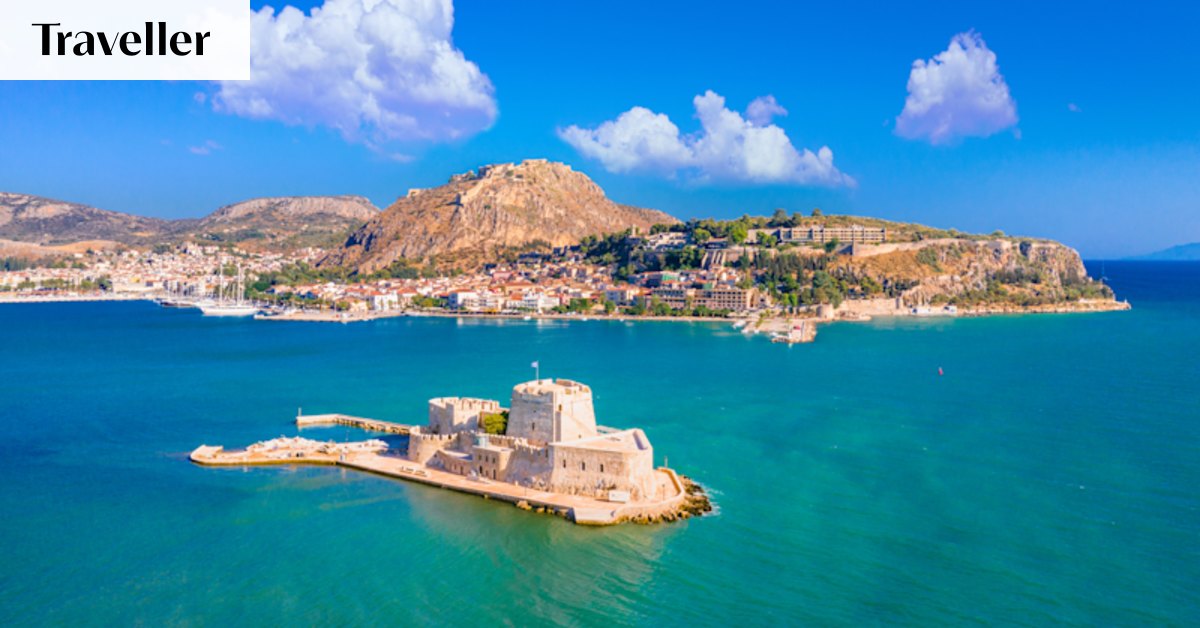
The coastal municipality of Nafplion, situated on the eastern shore of the Peloponnese peninsula, has been featured in a detailed port assessment as one of the Greek mainland’s most significant maritime and cultural destinations. According to reporting by travel writer Brian Johnston, the former capital of modern Greece presents a distinct urban and historical profile within the nation’s broader travel network. While the town’s administrative role as the national seat of government was brief during the nineteenth century, its preserved architectural framework and strategic coastal position continue to make it a primary destination for regional maritime traffic and international visitors. The reporting underscores how the town balances its deep political history with contemporary appeal as a key port of call for travelers arriving by sea and land.
Historical significance as early capital
Nafplion’s contemporary profile is closely tied to its pivotal role in the establishment of the modern Greek state. Following the outbreak of the Greek War of Independence in the early nineteenth century, the town served as a primary stronghold and provisional seat of government. It was formally designated as the first capital of the Hellenic Republic in the late 1820s, serving as the central hub where early national administrative structures were established under Ioannis Kapodistrias, the first head of state of independent Greece.
The town remained the national capital until 1834, when King Otto officially relocated the seat of government to Athens to align the newly established monarchy with the symbolic heritage of classical antiquity. Although Nafplion's tenure as the political center lasted less than a decade, the administrative era left a permanent mark on the town’s layout. Street plans, public buildings, and civic spaces established during the capital period remain central to the modern municipality, serving as primary points of interest for visitors exploring the historic district.
Geographic position and maritime access
Located along the Argolic Gulf, Nafplion occupies a sheltered strategic position on the eastern coast of the Peloponnese peninsula. Its natural harbor has historically functioned as a key maritime gateway connecting the southern Greek mainland with trade and travel routes across the Aegean Sea. The modern port facilities accommodate a variety of vessel types, ranging from private yachts and local fishing fleets to mid-sized cruise ships operating along eastern Mediterranean routes.
The harbor’s geography offers protection from regional wind patterns, making it a consistent anchorage point for maritime operators throughout the navigation season. Cruise ships calling at Nafplion frequently utilize tender operations or direct pier dockage, allowing passengers immediate access to the town’s waterfront promenade and adjacent historic center. This close proximity between port infrastructure and urban attractions distinguishes Nafplion from larger industrial ports where passenger terminals are situated far from historic cores.
Architectural heritage and urban environment
The architectural character of Nafplion reflects successive eras of foreign influence and regional control prior to and following Greek independence. The town’s skyline and defensive geography are dominated by Venetian and Ottoman fortification systems built to secure the harbor and surrounding trade routes. Among the most prominent structural landmarks is the Palamidi Fortress, an expansive eighteenth-century military complex constructed by the Republic of Venice atop a high crest overlooking the town and the Argolic Gulf.
In the bay directly facing the port, the islet fortress of Bourtzi stands as another key element of the region’s maritime defensive heritage. Constructed by Venetian engineers in the late fifteenth century, the sea fort historically controlled access to the inner harbor basin. Within the lower town, pedestrian pathways connect Neoclassical townhouses, Ottoman-era fountains, and historic public squares such as Syntagma Square. According to the port analysis by Brian Johnston, this multi-layered architectural backdrop creates a compelling physical environment that defines the town’s standing as a premier mainland port.
Role in Peloponnese tourism and commerce
While much of Greece's international tourism sector is concentrated across the Aegean and Ionian island archipelagos, Nafplion serves as a major anchor for mainland travel on the Peloponnese peninsula. The local economy relies on a combination of seasonal travel, maritime visitor activity, and regional commercial trade. Its location relative to major ancient archaeological sites—including the ancient theater of Epidaurus, the Bronze Age citadel of Mycenae, and the ruins of Tiryns—positions the port town as a key logistical base for regional land excursions.
The town’s commercial sector has adapted to support both year-round domestic tourism and seasonal international visitor arrivals. Hotel accommodations, dining establishments, and local retail shops cluster around the waterfront and pedestrianized historic quarter, deriving substantial economic output from passenger disembarkations. Regional stakeholders continue to prioritize the preservation of the town's historic character while maintaining the infrastructure required to support contemporary maritime visitor flows.
Strategic context in Mediterranean cruising
As Mediterranean cruise operators continually seek to diversify itineraries, mainland ports offering direct access to historical and cultural assets have seen steady interest. Port evaluations of destinations like Nafplion reflect a broader trend in regional maritime travel toward combining scenic coastal access with accessible historical context.
The analysis of Nafplion highlights the town's ability to offer port visitors an accessible destination that incorporates classical heritage, Venetian military engineering, and nineteenth-century Greek history within a compact geographic footpruint. This combination reinforces its status as a notable mainland alternative to island-dominated cruise itineraries in the region.
Source attribution
This article was prepared using reporting published by Brian Johnston, whose original port guide evaluated the historical background, geographic features, and maritime travel profile of Nafplion, Greece.
How this story was produced
This report was written by The Global Wire newsroom from reporting first published by Brian Johnston. We verify the core facts against the original report, write our own account, and add the background and consequences a short wire item leaves out. Drafting is AI-assisted inside an editor-supervised pipeline, and every story is checked for accuracy of attribution, structure and duplication before it appears — full detail in our AI and funding disclosure.
Spotted an error? Tell us at corrections@horizonglobalnews.com and read our corrections policy or editorial standards.





Reader comments
Loading comments…