

Migrant Vessel Carrying 60 People Lands on Busy Spanish Tourist Shore
A boat with 60 migrants arrived on a crowded beach in Spain during peak summer, prompting emergency responses and highlighting maritime border challenges.
By The Global Wire Newsroom · Reported from smh.com.au
Link preview · horizonglobalnews.com
Migrant Vessel Carrying 60 People Lands on Busy Spanish Tourist Shore
A boat with 60 migrants arrived on a crowded beach in Spain during peak summer, prompting emergency responses and highlighting maritime border challenges.
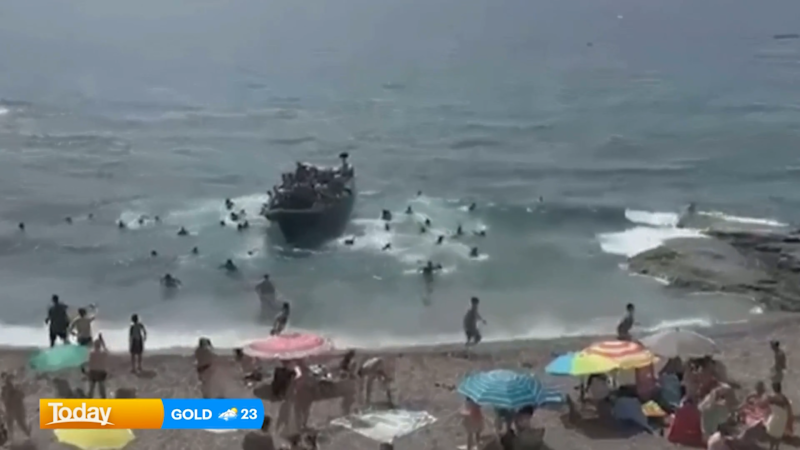
On August 20, 2026, a vessel carrying approximately 60 migrants arrived directly on a crowded Spanish tourist beach, according to reporting by the Sydney Morning Herald. The landing occurred during the peak of the European summer holiday season, bringing the vessel ashore in full view of public beachgoers. Local emergency services and national security personnel were dispatched to secure the area, provide immediate medical evaluation, and transfer the individuals into state immigration processing channels.
Key facts
What happened
On August 20, 2026, a small vessel carrying around 60 migrants navigated into shallow waters and reached the shoreline of a populated Spanish tourist beach, as reported by the Sydney Morning Herald. The arrival took place while the beach was filled with holidaymakers, drawing immediate attention from onlookers on the sand.
Under standard emergency procedures established along Spanish coasts, the arrival of irregular maritime vessels triggers a coordinated multi-agency response. Once a vessel makes landfall, local authorities notify national security agencies and medical relief organizations. Emergency teams, including the Spanish Red Cross (Cruz Roja Española) and the Civil Guard (Guardia Civil), establish a reception perimeter on the shore.
First responders conduct rapid health assessments to identify individuals suffering from acute dehydration, hypothermia, physical injuries, or exhaustion resulting from extended sea travel. Following on-scene stabilization and the distribution of basic necessities such as food, water, and dry clothing, the passengers are taken into police custody. They are transported to designated temporary reception centers, known as Centros de Atención Temporal de Extranjeros (CATE), where authorities initiate official registration, biometric logging, and medical processing.
Why it matters
The direct arrival of a migrant boat onto a active public beach underscores the immediate practical challenges confronting southern European nations along the Mediterranean border. When vessels bypass offshore detection and land in heavily populated areas, local municipal infrastructure and frontline emergency services must respond instantly without prior warning.
From an institutional perspective, beach landings highlight the ongoing complexities of European Union border policy. Frontline member states such as Spain, Italy, and Greece manage the primary administrative burden of receiving, housing, and processing irregular maritime arrivals under European asylum rules. Direct coastal landings demonstrate that despite extensive maritime surveillance networks, small craft remain capable of penetrating coastal perimeters.
For the migrants aboard, direct beach landings reflect the high hazards inherent in maritime crossings. Transits across the Mediterranean or Atlantic are frequently conducted in unseaworthy vessels lacking navigation aids, safety equipment, or adequate fuel. While landing on a shore populated by bystanders ensures rapid emergency aid, navigating surf zones in crowded boats presents significant risks of capsizing. Politically, high-profile arrivals on tourist beaches re-energize public debate within Spain regarding regional resource distribution, municipal funding for emergency services, and broader European cooperation on border management.
The background
Spain has historically functioned as one of the primary entry points for irregular migration into continental Europe due to its geographical proximity to North and West Africa. Maritime transit into Spanish territory generally follows three main sea routes: the Western Mediterranean route (connecting Morocco and Algeria to mainland regions such as Andalusia, Murcia, and Valencia), the Strait of Gibraltar route, and the longer Atlantic route from West Africa to the Canary Islands.
To manage maritime arrivals, Spain operates the Integrated External Surveillance System (Sistema Integrado de Vigilancia Exterior, or SIVE). Deployed across coastal sectors and island boundaries, SIVE uses fixed and mobile radar stations, thermal sensors, and optical cameras to track small craft miles offshore. However, small vessels traveling close to the water line or navigating during favorable weather conditions can occasionally avoid radar detection and reach mainland shores directly.
Legal management of arriving individuals is governed by Spain's Organic Law on the Rights and Freedoms of Foreigners in Spain (Ley de Extranjería). Under this statute, individuals entering the country without legal authorization may be held in initial processing facilities for a maximum of 72 hours for identification and health checks. Following this window, individuals may be transferred to humanitarian reception programs or dedicated detention centers (Centros de Internamiento de Extranjeros, or CIE) while authorities process asylum claims or initiate return procedures.
Spain also maintains bilateral security and diplomatic agreements with key North and West African transit nations, including Morocco, Mauritania, and Senegal. These partnerships focus on joint maritime patrols, intelligence sharing, and targeted economic development aimed at deterring human smuggling operations at their point of origin.
Reaction
Public shore landings typically generate responses across national, regional, and municipal governance levels. While specific statements regarding this particular landing were not detailed in the original reporting by the Sydney Morning Herald, standard administrative procedures call for official communications from regional government delegations (Delegación del Gobierno).
Municipal leaders in affected coastal areas frequently call for reinforced security personnel, expanded Red Cross humanitarian resources, and direct federal assistance to manage seasonal increases in arrivals. Political parties in the Spanish Congress of Deputies (Congreso de los Diputados) regularly evaluate such events within parliamentary debate, with opposition groups typically advocating for enhanced maritime patrols and swift return agreements, while governing coalitions and humanitarian organizations emphasize legal international protection obligations and humane reception standards.
Within the broader European context, frontline incidents consistently prompt calls from southern member states for greater financial support, logistical aid, and burden-sharing mechanisms managed through European Union migration frameworks.
What we don't know yet
Several details concerning the arrival remain unconfirmed based on the initial report from the Sydney Morning Herald. The specific location of the landing—including the particular Spanish province, municipality, or beach—has not been specified in available accounts.
Furthermore, the exact point of departure, the number of days spent at sea, and the specific nationalities of the 60 passengers have not been released. The demographic breakdown of those on board, including whether the group includes women or minors, remains unknown. Authorities have also not clarified whether any individuals required urgent hospitalization or whether law enforcement identified suspects responsible for operating the vessel.
What to watch
Key developments following this event include:
This report is based on original reporting published by the Sydney Morning Herald.
How this story was produced
This report was written by The Global Wire newsroom from reporting first published by smh.com.au. We verify the core facts against the original report, write our own account, and add the background and consequences a short wire item leaves out. Drafting is AI-assisted inside an editor-supervised pipeline, and every story is checked for accuracy of attribution, structure and duplication before it appears — full detail in our AI and funding disclosure.
Spotted an error? Tell us at corrections@horizonglobalnews.com and read our corrections policy or editorial standards.





Reader comments
Loading comments…