

Maharashtra Election Authority Launches Campus Voter Registration and Roll Cleanup Drive
Electoral officials across Maharashtra are deploying to colleges and universities to enroll young voters while clearing pending claims and objections to state voter lists.
By The Global Wire Newsroom · Reported from SECTIONS Maharashtra CEO announces measures; Dispose; Objections Pti
Link preview · horizonglobalnews.com
Maharashtra Election Authority Launches Campus Voter Registration and Roll Cleanup Drive
Electoral officials across Maharashtra are deploying to colleges and universities to enroll young voters while clearing pending claims and objections to state voter lists.
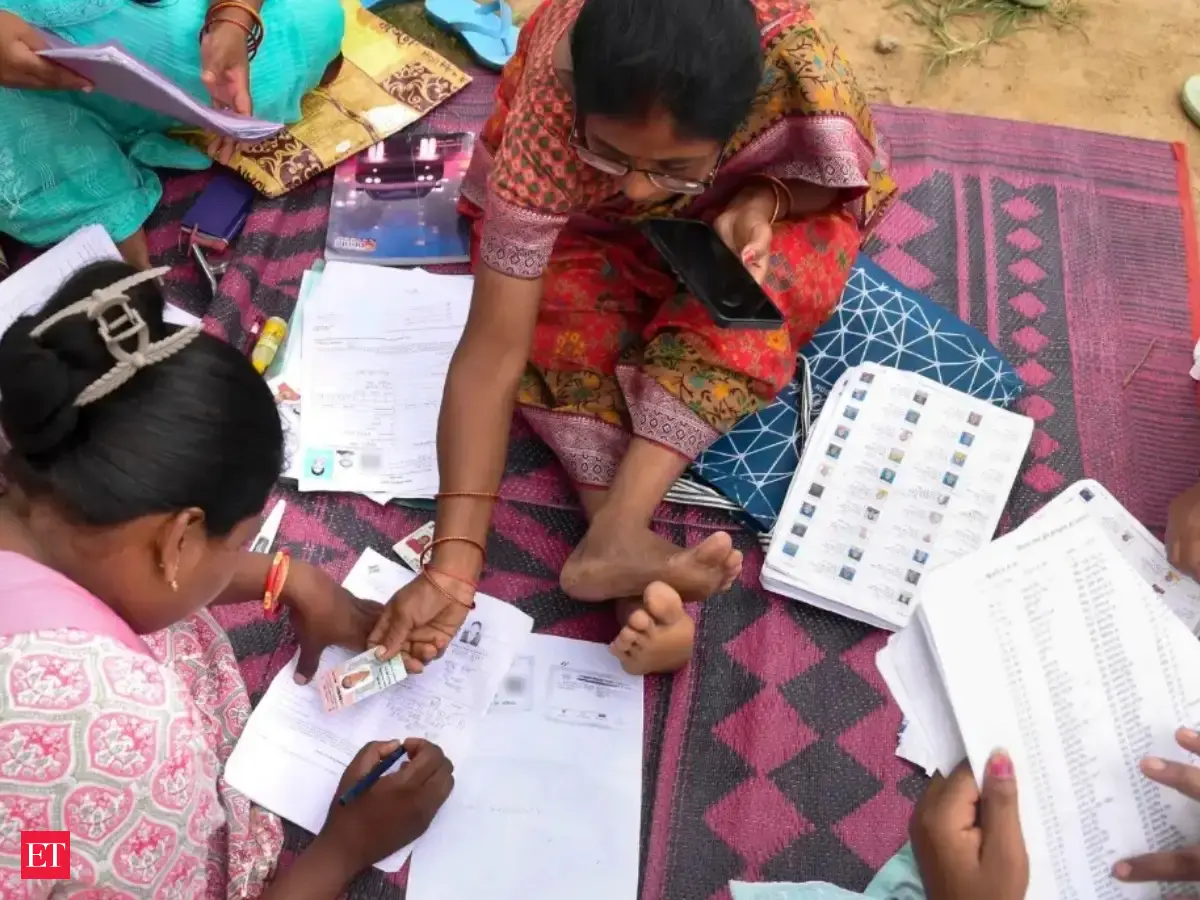
MUMBAI — Electoral authorities in Maharashtra have launched a targeted drive to enroll new voters and clean up the state's electoral rolls, deploying polling officials to higher education campuses and initiating a systematic clearance of outstanding claims and objections. According to reporting by Press Trust of India, the office of Maharashtra's Chief Electoral Officer announced a series of specialized administrative interventions aimed primarily at young citizens reaching voting age. As part of the initiative, Booth Level Officers are setting up dedicated assistance desks at colleges and university campuses across the state to guide students through the registration process, while local election machinery works to resolve existing challenges to voter lists ahead of upcoming electoral exercises.
Key facts
What happened
According to reporting by Press Trust of India, the Chief Electoral Officer of Maharashtra announced an intensified campaign to update the state's electoral register, focusing on two main operational tracks: enrolling young electors and processing administrative claims and objections.
To address historical under-registration among young adults, the election authority is establishing dedicated registration camps directly on campus grounds at colleges and universities throughout the state. Rather than relying solely on online portals or visits to government offices, polling staff are bringing the registration apparatus directly to student populations. Booth Level Officers, the frontline personnel of India's electoral administration, have been assigned to these academic institutions to provide hands-on assistance. These officers are helping students complete their application paperwork, verify required identity and address documentation, and submit their forms for formal processing.
Simultaneously, the Chief Electoral Officer's office has directed local electoral authorities across Maharashtra to expedite the disposal of pending claims and objections. This administrative process involves evaluating applications from individuals seeking to add their names to the voter list, correct existing personal details, delete duplicate entries, or challenge the eligibility of currently listed voters. Field officers are executing door-to-door checks and documentary reviews to ensure that every entry on the roll corresponds to a qualified elector currently residing at the declared address.
Why it matters
The integrity and completeness of electoral rolls are fundamental to the operational legitimacy of democratic elections. In a state as populous and economically significant as Maharashtra—home to more than 110 million residents and major urban conglomerates like Mumbai and Pune—maintaining an accurate voter register presents considerable logistical challenges due to high population mobility, rapid urbanization, and continuous demographic turnover.
Directing registration efforts toward higher education institutions targets a persistent structural gap in election participation: the under-representation of citizens aged 18 to 21. Young adults frequently face administrative hurdles when registering for the first time, particularly if they have relocated from rural districts to urban centers for tertiary education. By deploying Booth Level Officers directly to educational campuses, the electoral authority reduces friction in the application pipeline, ensuring that eligible citizens enter the voter database at the earliest opportunity.
Furthermore, the systematic resolution of claims and objections directly impacts electoral credibility. Uncleaned rolls containing duplicate entries, deceased individuals, or relocated voters can distort turnout figures and create vulnerabilities in voter verification on polling days. Timely processing of objections ensures that political parties and individual citizens have confidence in the accuracy of voter tallies prior to election cycles. For administrative bodies, maintaining an up-to-date roll is also essential for calculating constituency polling requirements, allocating voting machines, and stationing adequate polling personnel.
The background
Under the legal framework of India's Representation of the People Act, 1950, and the Conduct of Elections Rules, 1961, the superintendence, direction, and control of electoral rolls fall under the Election Commission of India. At the state level, these operations are managed by the Chief Electoral Officer, an official designated by the Election Commission in consultation with the state government.
Below the state Chief Electoral Officer, the administrative structure relies on Electoral Registration Officers at the constituency level and Booth Level Officers at the polling station level. Booth Level Officers are typically local public servants, such as schoolteachers or municipal workers, assigned to oversee a specific geographic area containing roughly 1,000 to 1,500 voters. Their duties include conducting physical verification of households, collecting voter forms, and maintaining field-level accuracy of the rolls.
Historically, electoral roll updates in India were centered around annual Special Summary Revisions conducted in the final months of the calendar year, with January 1 serving as the single qualifying date for eligibility. However, legislative amendments enacted by the Indian Parliament expanded the number of qualifying dates to four per year—January 1, April 1, July 1, and October 1. This statutory change was designed to prevent young citizens who turn 18 later in the year from having to wait up to twelve months to register.
Standard registration procedures utilize specific statutory forms: Form 6 for new voter inclusion, Form 7 for objecting to an entry or seeking deletion, and Form 8 for correction of particulars or shifting of residence. Campus drives leverage these standard instruments while streamlining document verification through on-site inspection by authorized personnel.
Maharashtra represents one of the largest electoral jurisdictions in India, comprising 288 State Legislative Assembly constituencies and 48 Lok Sabha parliamentary constituencies. Managing its voter lists requires continuous coordination across 36 distinct districts, balancing the dense, highly mobile urban populations of the Mumbai Metropolitan Region and Pune with expansive agricultural zones in Vidarbha, Marathwada, and Western Maharashtra.
Reaction
While Press Trust of India did not record specific public statements from political parties regarding the announcement, administrative drives of this nature routinely draw scrutiny and support from across the civic and political spectrum.
Educational administrators and university heads across Maharashtra are expected to facilitate space and logistical support for the campus registration booths. Student unions and youth advocacy groups generally welcome direct campus enrolment drives, having previously cited bureaucratic delays and unfamiliarity with online portals as primary barriers to youth registration.
Political parties across Maharashtra's governing coalition and opposition blocs maintain formal representatives, known as Booth Level Agents, who monitor the revision process. Parties routinely track the resolution of claims and objections to guard against the disenfranchisement of supporters or the improper inclusion of unqualified voters. Election monitoring bodies and civil society organizations are expected to watch the drive closely to assess whether campus outreach translates into measurable gains in youth voter enrolment figures.
What we don't know yet
Several practical details regarding the rollout and scale of the initiative were omitted from the initial announcement reported by Press Trust of India. The total number of colleges and universities targeted for campus camps has not been specified, nor has the election office provided a public calendar detailing the duration of the drive at individual institutions.
Additionally, official figures regarding the current backlog of claims and objections across Maharashtra's 36 districts remain unstated. It is unclear how many total new voters the Chief Electoral Officer aims to enroll during this drive, or what percentage of the state's estimated 18-to-19-year-old population is currently unregistered.
It also remains to be seen how the election authority will address registration for students living in campus housing who maintain permanent residences in different districts or states, a common point of procedural confusion during student enrolment drives.
What to watch
In the coming weeks, key indicators will demonstrate the efficacy of the Chief Electoral Officer's initiative. Observers will monitor the publication of updated draft or final electoral rolls by local district collectors to measure net additions to the voter database.
The Election Commission of India periodically releases statistical reports on voter roll demographics, providing concrete metrics on the proportion of 18-to-19-year-old voters relative to state population projections. A significant rise in this ratio will serve as the primary benchmark for the campus drive's success.
Furthermore, the timeline for resolving pending claims and objections will be critically scrutinized by local political organizations. Stakeholders will watch for formal announcements regarding statutory deadlines for public inspection of updated rolls, during which citizens can verify whether their applications or objections have been successfully processed.
Reporting for this article is based on news wire coverage provided by Press Trust of India.
How this story was produced
This report was written by The Global Wire newsroom from reporting first published by SECTIONS Maharashtra CEO announces measures; Dispose; Objections Pti. We verify the core facts against the original report, write our own account, and add the background and consequences a short wire item leaves out. Drafting is AI-assisted inside an editor-supervised pipeline, and every story is checked for accuracy of attribution, structure and duplication before it appears — full detail in our AI and funding disclosure.
Spotted an error? Tell us at corrections@horizonglobalnews.com and read our corrections policy or editorial standards.



Reader comments
Loading comments…