

Israelis Commemorate Oct. 7 Attack as Gaza War Continues to Impact Region
Memorial services mark the anniversary of the 2023 Hamas attack that killed 1,200 people and triggered an ongoing war across Gaza.
By The Global Wire Newsroom · Reported from Melanie Lidman, The Associated Press; Melanie Lidman; The Associated Press; Feedloaderapi
Link preview · horizonglobalnews.com
Israelis Commemorate Oct. 7 Attack as Gaza War Continues to Impact Region
Memorial services mark the anniversary of the 2023 Hamas attack that killed 1,200 people and triggered an ongoing war across Gaza.
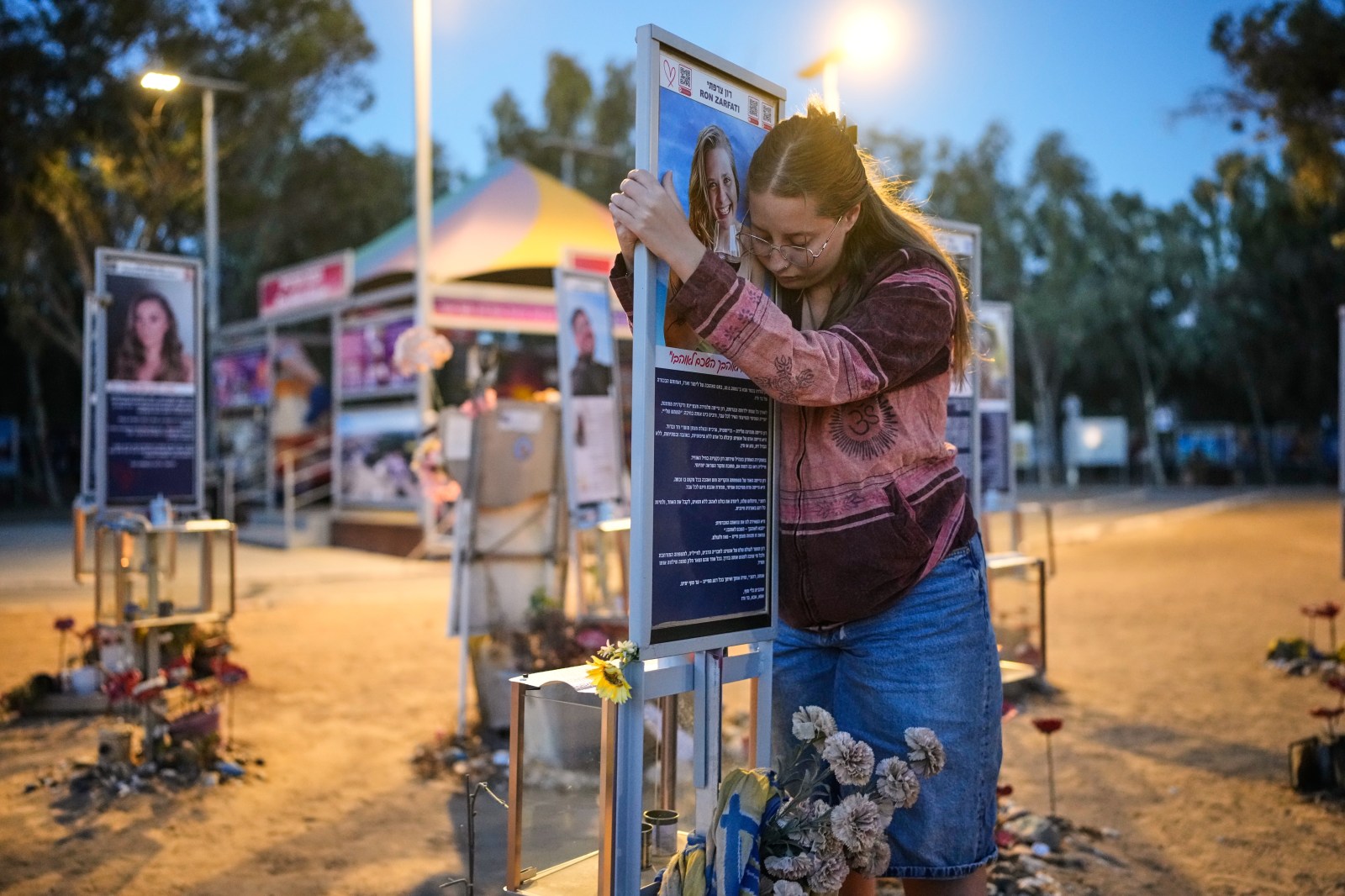
Israelis gathered across the nation on Wednesday to observe the anniversary of the Oct. 7, 2023, attack led by Hamas, which killed approximately 1,200 people and resulted in 251 individuals being taken hostage into the Gaza Strip. According to reporting by The Associated Press, memorial ceremonies took place in cities such as Netanya, providing a space for public grief in a country still profoundly shaped by the single deadliest day in its history. Concurrently, Palestinians across Gaza continue to contend with the widespread devastation of the military response sparked by that assault, dealing with ruined communities, extensive displacement, and severe humanitarian distress across the coastal enclave.
Key facts
What happened
On the morning of Oct. 7, 2023, hundreds of armed fighters belonging to Hamas and affiliated Palestinian militant factions breached the multi-layered security fence surrounding the Gaza Strip. The coordinated offensive opened with a heavy barrage of thousands of rockets directed toward Israeli towns, cities, and military installations. Simultaneously, armed groups crossed the border using motorized hang-gliders, pickup trucks, and motorcycles, attacking over two dozen civilian communities, agricultural kibbutzim such as Be'eri, Nir Oz, and Kfar Aza, and nearby military command posts. A major focal point of violence was an outdoor music festival near Kibbutz Re'im, where fleeing civilians were targeted.
The assault resulted in the deaths of approximately 1,200 people, the majority of whom were civilians. Militants also abducted 251 people, transporting them into Gaza as hostages.
Following the attack, the Israeli government declared a formal state of war and launched Operation Iron Swords. The Israeli military initiated intensive aerial strikes across Gaza, followed by a ground campaign that systematically moved through northern Gaza, including Gaza City, before expanding to southern sectors including Khan Younis and Rafah.
According to reporting by The Associated Press, as Israelis gathered on Wednesday to mourn the victims of Oct. 7, Palestinians continued to deal with the long-term impact of the war. Vast areas of Gaza remain in ruins, with residents living in temporary tent camps or damaged buildings while facing severe shortages of clean water, medical supplies, and electricity.
Why it matters
The Oct. 7 attack and the subsequent military campaign in Gaza represent a watershed moment for Middle Eastern security, international diplomacy, and humanitarian conditions in the region.
For Israel, the unexpected attack exposed significant intelligence and operational vulnerabilities in a national defense infrastructure long regarded as technologically superior. It dismantled a decade-long security framework based on containing Hamas through defensive barriers, intelligence surveillance, high-tech missile interception systems like Iron Dome, and periodic military actions. The trauma of the attack, combined with the ongoing effort to secure the release of captives held in Gaza, has reshaped Israeli political dynamics, deepened public scrutiny of political leadership, and altered the national consensus on security policy.
For Palestinians in Gaza, the military campaign has resulted in extraordinary suffering and structural devastation. International humanitarian organizations report that the destruction of residential buildings, water networks, sanitation facilities, and medical centers has disrupted essential living standards for generations. Gaza's economy has suffered near-total disruption, creating widespread dependence on foreign humanitarian aid and requiring hundreds of billions of dollars for future reconstruction.
On the international stage, the conflict reshaped regional diplomacy. It paused efforts to normalize relations between Israel and regional Arab nations, including Saudi Arabia, while fueling hostilities across the Middle East. It has also tested international legal structures, leading to active proceedings before the International Court of Justice and arrest warrant applications at the International Criminal Court. Furthermore, the war has sparked intense global debate, driving large-scale protests across major international cities and academic institutions worldwide.
The background
Understanding the Oct. 7 assault and its consequences requires examining the historic security and political dynamics between Israel and Gaza. Hamas, an Islamist political and militant organization established in 1987 during the First Intifada, took control of the Gaza Strip in 2007 following a brief conflict with the rival Fatah faction, which governs the Palestinian Authority in the West Bank. This political takeover followed Hamas's victory in the 2006 Palestinian legislative elections.
In response to Hamas taking control, Israel and Egypt instituted a blockade on Gaza, strictly controlling the flow of goods, fuel, and human transit across the borders. Israel maintained that the restrictions were necessary to prevent Hamas from securing weapons and military supplies. Human rights organizations and United Nations bodies frequently criticized the blockade, arguing that it inflicted severe hardship on Gaza's civilian populace and undermined economic development.
Between 2008 and 2023, Israel and Hamas engaged in four significant military conflicts: Operation Cast Lead in 2008–2009, Operation Pillar of Defense in 2012, Operation Protective Edge in 2014, and Operation Guardian of the Walls in 2021. Each conflict followed a pattern of rocket fire from Gaza, Israeli military strikes, and eventual international mediation, predominantly involving Egypt and Qatar, without resolving the core structural issues.
The Oct. 7 attack marked a massive escalation beyond previous clashes. Hamas named the operation "Al-Aqsa Flood," pointing to disputes over Jerusalem's Al-Aqsa Mosque compound, Israeli settlement expansion in the West Bank, and the imprisonment of Palestinian detainees.
During the war that followed, diplomatic negotiations achieved brief interruptions to the fighting. A week-long truce in late November 2023, mediated by Qatar, Egypt, and the United States, resulted in the release of 105 hostages in exchange for 240 Palestinian prisoners held by Israel. Subsequent diplomatic rounds aimed at achieving a permanent ceasefire and securing the return of remaining hostages faced repeated impasses over troop withdrawals, security guarantees, and governance arrangements.
Reaction
The anniversary of the attack elicited profound reactions across political and social sectors. In Israel, memorial gatherings provided a focal point for national mourning. Families of victims, survivors from southern kibbutzim, and residents in cities such as Netanya gathered for prayer services and memorial ceremonies. Organizations representing hostage families, such as the Hostages and Missing Families Forum, maintained active public campaigns demanding that political leaders prioritize negotiating the release of remaining captives.
Politically, the anniversary intensified debates surrounding domestic accountability. Opposition figures and civil society groups renewed calls for a formal, independent state commission of inquiry to evaluate the intelligence and political failures that preceded Oct. 7. Government officials maintained that full formal inquiries should occur after active military operations conclude.
For Palestinian communities and international relief agencies, reactions focused on the humanitarian emergency in Gaza. Human rights groups and United Nations officials reiterated urgent calls for an immediate ceasefire, unhindered access for humanitarian shipments, and concrete steps to rebuild basic civilian services.
Globally, governments expressed varied positions. Western nations reiterated support for Israel's security while emphasizing the duty to adhere to international humanitarian law and protect civilians. Officials across Arab nations and the Global South condemned the scale of destruction in Gaza, urging international pressure to establish a long-term ceasefire and work toward a two-state solution.
What we don't know yet
Several critical elements regarding the Oct. 7 attack and its aftereffects remain unconfirmed or subject to ongoing diplomatic and judicial processes.
First, the exact status and physical condition of all remaining hostages held in Gaza cannot be independently verified. While many captives were released during the November 2023 truce and others were confirmed dead or rescued during military operations, international organizations such as the International Red Cross have not been granted access to evaluate those who remain in captivity.
Second, the future administrative and security framework for post-war Gaza remains undecided. Israeli leadership, international partners, and regional states have not agreed upon a definitive governing structure, local policing apparatus, or economic restoration model for the territory once major military activities end.
Third, comprehensive casualty assessments and demographic analyses in Gaza remain difficult to verify independently due to severe damage to civil registries, healthcare networks, and local administrative bodies.
Finally, the ultimate legal outcomes of proceedings before international courts—including the International Court of Justice case alleging genocide and International Criminal Court arrest warrant applications—remain unresolved within international legal systems.
What to watch
This report is based on original news gathering provided by Melanie Lidman for The Associated Press.
How this story was produced
This report was written by The Global Wire newsroom from reporting first published by Melanie Lidman, The Associated Press; Melanie Lidman; The Associated Press; Feedloaderapi. We verify the core facts against the original report, write our own account, and add the background and consequences a short wire item leaves out. Drafting is AI-assisted inside an editor-supervised pipeline, and every story is checked for accuracy of attribution, structure and duplication before it appears — full detail in our AI and funding disclosure.
Spotted an error? Tell us at corrections@horizonglobalnews.com and read our corrections policy or editorial standards.




Reader comments
Loading comments…