

Mackay Secures Historic Test Cricket Match Following Years of Venue Upgrades
The regional Queensland city of Mackay will host international Test cricket at Great Barrier Reef Arena following a multi-year effort to upgrade local sporting infrastructure.
By The Global Wire Newsroom · Reported from Nick Wright
Link preview · horizonglobalnews.com
Mackay Secures Historic Test Cricket Match Following Years of Venue Upgrades
The regional Queensland city of Mackay will host international Test cricket at Great Barrier Reef Arena following a multi-year effort to upgrade local sporting infrastructure.
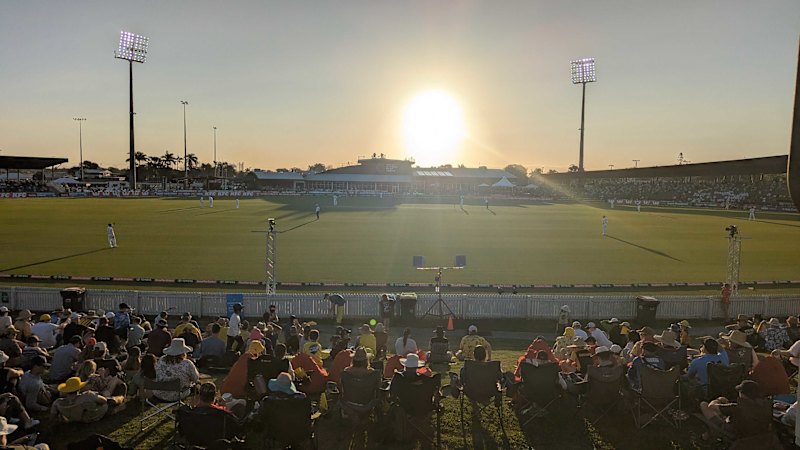
A long-running administrative and infrastructural campaign has culminated in a historic milestone for regional Australian sport, as the North Queensland city of Mackay has been selected to host an international Test cricket match. Historically known primarily as the agricultural heartland of Australia's sugarcane industry, Mackay will now serve as a venue for top-tier international red-ball cricket following years of venue redevelopments, facility upgrades, and organizational advocacy. The decision marks a notable departure from Cricket Australia's traditional reliance on capital city stadiums, elevating the regional hub into the international sports spotlight, according to reporting by Nick Wright.
Key facts
What happened
The securing of an international Test match in Mackay represents the conclusion of a complex, multi-stage initiative spanning several years. Local administrators, working alongside regional government bodies and cricket authorities, undertook extensive operational and structural work to transform the city's premier cricket venue into a site capable of hosting five-day international matches.
According to reporting by Nick Wright, the process involved overcoming significant logistical and financial hurdles. Venue operators had to prove that the facility could meet the rigorous criteria set by Cricket Australia and the International Cricket Council. These requirements encompass high-definition broadcast lighting, advanced media and commentary facilities, elite player changing rooms and recovery areas, and spectator amenities capable of handling sustained multi-day crowds.
Harrup Park's transformation gathered momentum over recent years through progressive staging of secondary international and domestic fixtures. By hosting Women's International matches, Australia A series, Sheffield Shield games, and Big Bash League encounters, local curators and event staff demonstrated their ability to prepare pitch surfaces and manage event operations under national scrutiny. That operational track record ultimately persuaded governing authorities to grant the venue host status for full men's Test cricket, establishing a new precedent for regional hosting in Queensland.
Why it matters
The allocation of a Test match to Mackay carries substantial implications for cricket governance, regional economic development, and venue scheduling in Australia. For decades, men's Test cricket in the country has been concentrated almost exclusively in capital cities, with venues such as the Melbourne Cricket Ground, Sydney Cricket Ground, The Gabba in Brisbane, Adelaide Oval, and Optus Stadium in Perth forming the backbone of the international summer calendar. By introducing Mackay to this elite group, Cricket Australia demonstrates a willingness to decentralize the sport's marquee format.
For residents of North and Central Queensland, the decision eliminates the necessity of traveling nearly 1,000 kilometers south to Brisbane to watch live five-day international cricket. Access to elite fixtures in regional centers fosters grassroots participation, encourages youth development, and deepens community engagement with the sport across non-metropolitan areas.
From an economic perspective, hosting an international Test match delivers a concentrated financial boost to Mackay's hospitality, retail, and accommodation sectors. A five-day sporting event draws interstate visitors, broadcast crews, team delegations, and media personnel, generating thousands of room nights and significant consumer spending. Furthermore, national and international television coverage provides global exposure for Mackay and the surrounding Whitsunday region, showcasing the area beyond its traditional identity as an agricultural and mining logistics hub.
For Cricket Australia, developing high-specification regional venues like Great Barrier Reef Arena creates operational flexibility. It offers alternative options for early-season international series, warm-up matches, or fixtures scheduled when major metropolitan venues undergo redevelopment or host competing cultural and sporting events.
The background
Mackay, situated on the Coral Sea coast of Queensland approximately 950 kilometers north of Brisbane, earned its nickname "Sugar City" due to its historic position as the center of one of Australia's largest sugarcane-producing regions. The local economy has long been anchored by agriculture, sugar milling, and servicing the nearby Bowen Basin coal mining sector. However, civic leaders have spent the past decade actively seeking to diversify the region's economy through sports tourism and major events.
Central to this effort has been the redevelopment of Harrup Park, a comprehensive community sporting complex in East Mackay. Through combined funding from local, state, and federal governments, as well as private and sporting sector investments, the venue underwent extensive modernization to become the Great Barrier Reef Arena. Upgrades focused on constructing multi-story grandstands, installing modern player and referee facilities, enhancing corporate hospitality suites, and installing broadcast-quality floodlighting suitable for day-night matches.
Regional hosting of top-level cricket in Australia has precedent, though full men's Test matches outside capital cities remain rare. Venues such as Bellerive Oval in Hobart and Manuka Oval in Canberra eventually secured regular or semi-regular international status after years of hosting domestic fixtures. In Northern Australia, Kazaly's Stadium in Cairns and Marrara Oval in Darwin previously hosted international Test matches in the early 2000s during winter international series against Bangladesh and Sri Lanka. However, maintaining consistent Test status required sustained venue investment and proven spectator demand.
Over the past decade, Great Barrier Reef Arena systematically built its credentials by successfully hosting Australian women's national team fixtures, including One Day Internationals and Twenty20 matches against top-ranked opposition. The venue also became a regular site for Queensland Bulls Sheffield Shield matches and Brisbane Heat Big Bash League fixtures. This incremental progression laid the logistical groundwork for securing a full Test match fixture.
Reaction
The decision to bring Test cricket to Mackay has drawn strong interest across the sporting and political spectrum in Queensland. While formal public statements following the announcement were not detailed in the initial report, regional leaders and sports advocates in North Queensland have historically lobbied for greater inclusion in Australia's major event calendar.
Queensland Cricket officials have consistently emphasized the importance of expanding the sport's footprint beyond Southeast Queensland, pointing to high participation rates across regional leagues. Local business groups and tourism operators in Mackay have similarly expressed enthusiasm for major sports hosting, citing the commercial benefits for regional hotels, restaurants, and transport services.
Within the broader Australian cricket community, commentators and venue managers will be closely assessing how Mackay executes the event. Success in hosting the match could encourage other regional municipalities with upgraded venues—such as Geelong in Victoria or Coffs Harbour in New South Wales—to push for higher-profile international fixtures in future seasons.
What we don't know yet
Despite the confirmation of Mackay as a Test venue, several key details regarding the event remain undisclosed in available reporting by Nick Wright. The specific international opponent scheduled to face Australia at Great Barrier Reef Arena has not yet been detailed, nor have the precise dates within the international cricket season been announced.
It also remains unconfirmed what specific spectator capacity the venue will operate under for the fixture, and whether temporary grandstand structures will be erected to accommodate additional fans. Details regarding pitch preparation—specifically whether the match will be played on a traditionally prepared natural turf pitch or a drop-in pitch block—have not been detailed.
Additionally, financial arrangements regarding ticketing pricing, local transport coordination, and long-term hosting guarantees from Cricket Australia beyond this initial Test match remain open questions that will determine the ultimate sustainability of Test cricket in regional Queensland.
What to watch
In the coming months, several key developments will indicate how preparations for Mackay's inaugural Test match are progressing. The primary landmark to watch will be Cricket Australia's official announcement of the upcoming international summer schedule, which will confirm the visiting nation, exact match dates, and broadcast rights allocations.
Subsequent markers include the release of ticket packages to the public, which will provide a direct test of regional fan demand and attendance projections. Local council and transport authorities are expected to outline traffic management and accommodation strategies to handle the influx of interstate and regional visitors.
On the field, observers will watch pitch trial matches and turf maintenance reports from Great Barrier Reef Arena head curators during domestic fixtures preceding the Test match. The performance of the pitch and outfield during these preliminary matches will offer critical indicators of how the surface will behave over five days of Test competition.
This report is based on original news reporting by Nick Wright.
How this story was produced
This report was written by The Global Wire newsroom from reporting first published by Nick Wright. We verify the core facts against the original report, write our own account, and add the background and consequences a short wire item leaves out. Drafting is AI-assisted inside an editor-supervised pipeline, and every story is checked for accuracy of attribution, structure and duplication before it appears — full detail in our AI and funding disclosure.
Spotted an error? Tell us at corrections@horizonglobalnews.com and read our corrections policy or editorial standards.





Reader comments
Loading comments…