

Loudoun County's Data Center Boom Offers Lessons and Warnings for Global Tech Expansion
As 70 percent of global internet traffic passes through Loudoun County, Virginia, its economic gains and power grid strains present a crucial case study for countries expanding digital infrastructure.
By The Global Wire Newsroom · Reported from Michael Koziol
Link preview · horizonglobalnews.com
Loudoun County's Data Center Boom Offers Lessons and Warnings for Global Tech Expansion
As 70 percent of global internet traffic passes through Loudoun County, Virginia, its economic gains and power grid strains present a crucial case study for countries expanding digital infrastructure.
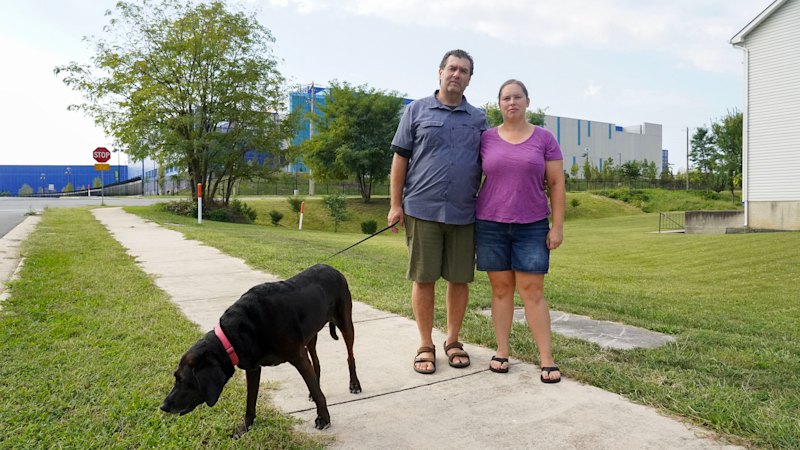
LOUDOUN COUNTY, Va. — A growing global debate over the rapid expansion of digital infrastructure has centered on Loudoun County, Virginia, where an estimated 70 percent of global internet traffic currently flows through a dense network of hyper-scale server facilities. According to reporting by journalist Michael Koziol, Northern Virginia’s status as the world’s data center capital is increasingly viewed around the world as both an economic roadmap and a cautionary tale. As sovereign governments and private corporations race to construct massive computing hubs to power artificial intelligence models and cloud computing platforms, the physical realities of data center clusters—including immense electrical grid strain, high water consumption, land use conflicts, and noise pollution—are forcing municipal leaders and international observers to re-evaluate the true cost of housing the modern digital economy.
Key facts
What happened
In recent years, Northern Virginia has seen an unprecedented concentration of data center development, centered primarily around Ashburn in Loudoun County. Driven by proximity to major trans-Atlantic fiber optic lines and federal government networks, hyper-scale cloud providers—including Amazon Web Services, Microsoft, Google, and Equinix—have constructed hundreds of massive, warehouse-like buildings dedicated to hosting servers.
However, as reported by Michael Koziol, local sentiment in the region has increasingly fractured. While municipal leaders originally welcomed data centers for their minimal demand on public services like public schooling alongside their substantial tax contributions, the sheer scale of recent construction has triggered a growing local backlash.
Residents across Loudoun County and neighbouring Prince William County have raised alarms over the changing physical landscape. New facilities, often standing several stories high and consuming dozens of acres, are increasingly being built near residential subdivisions, historical battlefields, and environmentally sensitive watersheds. Community groups have organized against the expansion of high-voltage overhead power lines required to supply gigawatts of electricity to these complexes, pointing to degraded property values, visual blight, and continuous low-frequency noise generated by industrial HVAC units and back-up diesel generators.
Furthermore, the shift from traditional cloud storage to compute-heavy generative artificial intelligence has drastically escalated the energy and water footprints of these facilities. Local governments, which once granted swift approvals and tax abatements, are now facing intense political pressure from constituents to tighten zoning laws, mandate noise mitigation, restrict development near residential zones, and require transparent reporting on utility consumption. This evolving local friction provides a real-time test case for other regions around the globe attempting to navigate the balance between digital economy growth and community livability.
Why it matters
The dilemmas unfolding in Loudoun County carry profound implications for urban planners, energy markets, tech companies, and national governments worldwide. As artificial intelligence models demand exponentially more computational power, data centers are shifting from low-density storage facilities to energy-intensive industrial complexes. For utility providers, accommodating this growth requires billions of dollars in new electrical generation and transmission infrastructure, raising critical questions about who bears the financial burden—tech conglomerates or residential ratepayers.
Environmentally, the immense appetite of hyper-scale data centers for electricity threatens to derail clean energy transitions. In regions relying on fossil fuels for baseline power generation, sudden surges in data center demand can delay the retirement of coal and natural gas plants. Furthermore, water-cooled facilities can withdraw millions of gallons of water daily, creating competition for resources in drought-prone or heavily populated regions.
For countries like Australia, which are currently expanding their own digital infrastructure footprint in metropolitan centers such as Sydney and Melbourne, the Northern Virginia experience serves as a vital blueprint. Policymakers must decide whether to centralize data centers in dedicated industrial corridors with robust grid access or permit decentralized construction closer to urban zones. Without proactive zoning rules, grid planning, and community engagement, expanding markets risk repeating the local friction, utility cost spikes, and environmental strain now seen in Virginia.
The background
Loudoun County's emergence as the world’s data center epicenter traces back to the late 20th century. In 1992, the Metropolitan Area Exchange, East (MAE-East)—one of the first major Internet Exchange Points—was established in Northern Virginia. This early interconnection point attracted major telecommunications firms and early internet service providers, including America Online (AOL), which established its corporate headquarters in Ashburn in the mid-1990s.
The presence of foundational fiber-optic trunk lines created a compounding network effect. Technology companies recognized that locating servers in close physical proximity to MAE-East minimized latency, the fraction of a second required for data to travel across a network. Over the next two decades, Loudoun County capitalized on this geographic advantage by offering favorable tax structures, streamlined permitting processes, and abundant land.
By the 2010s, Northern Virginia had solidified its position as "Data Center Alley," hosting more server capacity than the next several largest markets combined. Today, an estimated 70 percent of daily global internet traffic moves through infrastructure located within the county. The resulting tax revenue transformed Loudoun County from a semi-rural suburban jurisdiction into one of the wealthiest counties in the United States by median household income, allowing local authorities to fund modern public infrastructure without raising personal property or residential real estate tax rates significantly.
However, the rapid arrival of artificial intelligence workloads starting around 2022 fundamentally altered the scale of data center requirements. AI processing requires dense server configurations that consume significantly more electricity per square foot than traditional cloud applications. This acceleration has pushed existing regional energy networks to their physical limits, prompting electric utilities such as Dominion Energy to warn of grid capacity constraints and forcing planners to seek new transmission lines across state lines.
Reaction
The evolving situation in Loudoun County has drawn varied responses from industry leaders, government officials, civic advocates, and international observers. Tech industry trade organizations, such as the Data Center Coalition, maintain that hyper-scale facilities are essential engines of economic development, providing high-paying construction and tech support jobs while pouring hundreds of millions of dollars into local municipal coffers. Industry representatives emphasize their investments in renewable energy contracts and advanced closed-loop cooling technologies designed to reduce resource usage.
Conversely, community coalition groups and environmental advocacy organizations in Northern Virginia have mounted organized opposition to new projects. Groups such as the Piedmont Environmental Council have repeatedly voiced concern over the industrialization of rural lands, the clear-cutting of forests, and the unbridled growth of fossil-fuel-backed power infrastructure to feed server demand.
Local political representatives are increasingly caught between economic incentives and constituent unrest. Members of the Loudoun County Board of Supervisors and neighboring county councils have begun proposing stricter performance standards, including mandatory noise limits, set-backs from residential property lines, and restrictions on diesel generator test schedules. Externally, international policy analysts and Australian state officials are closely studying Virginia’s administrative responses, seeking to draft planning guidelines that protect residential communities and local electricity grids before similar hyper-scale clusters take root in their own jurisdictions.
What we don't know yet
Despite extensive public debate, several key variables regarding the future of data center development remain uncertain. It is unclear how regional utility providers, including Dominion Energy and PJM Interconnection, will balance the massive power demands of next-generation AI data centers against state-mandated carbon reduction timelines. The exact proportion of future infrastructure costs that will be passed on to residential electricity customers versus commercial tech operators remains a subject of ongoing regulatory scrutiny.
Additionally, data regarding long-term local environmental impacts—such as ambient noise effects on resident health and micro-climate temperature increases around dense clusters—is still being compiled. From an international perspective, it remains to be seen whether Australian federal and state planning bodies will mandate localized power generation, such as on-site solar or battery storage, for new facilities, or if they will adopt Virginia's model of centralized grid reliance.
What to watch
This report is based on coverage by journalist Michael Koziol.
How this story was produced
This report was written by The Global Wire newsroom from reporting first published by Michael Koziol. We verify the core facts against the original report, write our own account, and add the background and consequences a short wire item leaves out. Drafting is AI-assisted inside an editor-supervised pipeline, and every story is checked for accuracy of attribution, structure and duplication before it appears — full detail in our AI and funding disclosure.
Spotted an error? Tell us at corrections@horizonglobalnews.com and read our corrections policy or editorial standards.






Reader comments
Loading comments…