

Lindsay Clancy Jury Foreperson Details Deliberation Impasse Following Mistrial
Jury foreperson Roni Carlson revealed that a holdout juror harbored reasonable doubt but refused to acquit, causing a mistrial in the trial of Lindsay Clancy.
By The Global Wire Newsroom · Reported from Uwa Ede-Osifo
Link preview · horizonglobalnews.com
Lindsay Clancy Jury Foreperson Details Deliberation Impasse Following Mistrial
Jury foreperson Roni Carlson revealed that a holdout juror harbored reasonable doubt but refused to acquit, causing a mistrial in the trial of Lindsay Clancy.
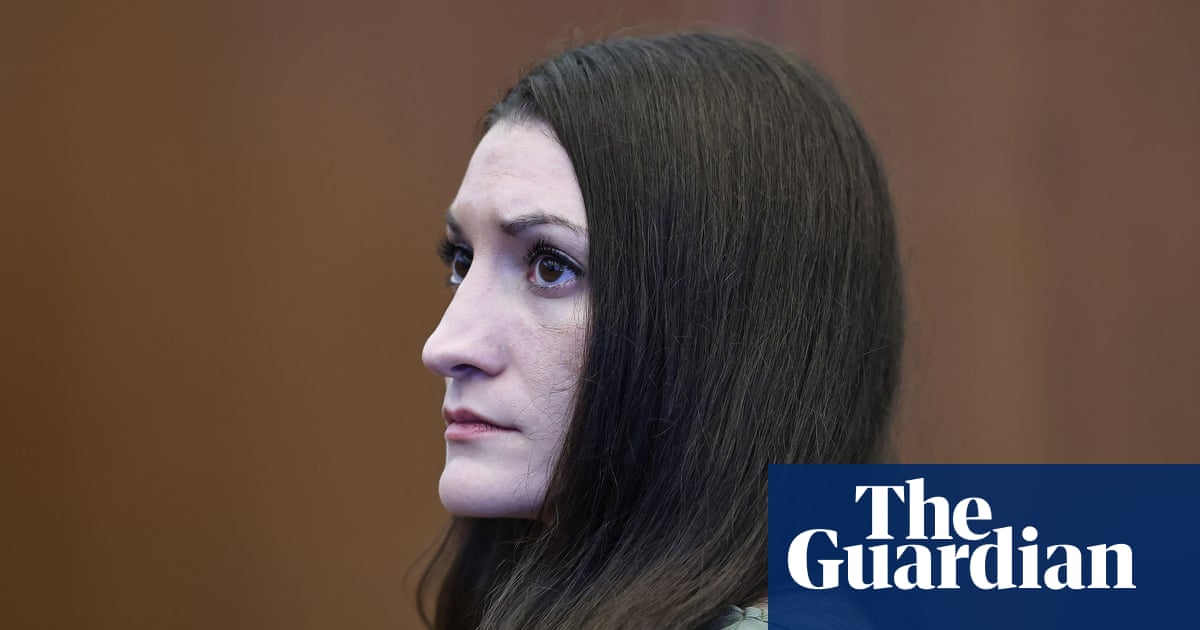
Following the declaration of a mistrial in the prosecution of Lindsay Clancy, jury foreperson Roni Carlson and a fellow juror provided rare insight into the closed-door deliberations that ended without a verdict in Plymouth County, Massachusetts. According to reporting by Uwa Ede-Osifo, Carlson disclosed that a persistent holdout juror acknowledged harboring reasonable doubt about Clancy’s legal culpability yet repeatedly refused to sign onto an acquittal. The impasse left the panel unable to reach the unanimous consensus required under state law, prompting the trial judge to dismiss the jury after extensive deliberations failed to break the deadlock.
Key facts
What happened
The criminal trial of Lindsay Clancy concluded without a formal resolution when the trial judge declared a mistrial due to an irreconcilable jury split. In the aftermath of the court's order discharging the jury, foreperson Roni Carlson spoke out regarding the internal friction that crippled the panel's ability to render a decision. According to reporting by Uwa Ede-Osifo, Carlson explained that the primary obstacle during multi-day discussions was a single juror who appeared intellectually conflicted yet functionally unmovable.
Carlson noted that while the holdout juror explicitly voiced having reasonable doubt concerning whether Clancy possessed the requisite legal sanity at the time of the offenses, the individual nevertheless steadfastly resisted casting a vote to acquit her. This stance created an insurmountable procedural stalemate inside the deliberation room. Another juror confirmed the breakdown in communications, describing the holdout panelist as "very arrogant" and unwilling to engage in a collaborative review of the trial evidence, expert witness testimonies, or judicial instructions.
Throughout the trial, jurors were presented with vast quantities of medical records, psychiatric evaluations, digital forensics, and emotional testimony regarding Clancy's mental state. Despite prolonged efforts by Carlson and other panel members to walk through the statutory definitions of legal sanity and criminal intent under Massachusetts jurisprudence, the holdout juror held firm, ensuring that the necessary twelve-vote consensus could not be attained on any of the indictment counts.
Why it matters
The disclosure of jury room dynamics in the Clancy trial underscores the immense challenge that psychiatric defenses present within the American legal system. When a criminal defense centers on severe mental illness, such as postpartum psychosis, jurors are tasked not merely with determining factual actions—which were largely undisputed in this case—but with evaluating a defendant's subjective psychological state at a precise moment in time. The presence of a holdout juror who acknowledged reasonable doubt yet declined to acquit highlights how abstract legal concepts like "reasonable doubt" and "lack of substantial capacity" can divide lay jurors when applied to tragic, emotionally charged facts.
From a judicial perspective, a mistrial represents a costly and emotionally draining outcome for all parties involved. The prosecution, defense, victim advocates, and the surrounding community are left without legal closure, while the state faces the prospect of expending substantial judicial resources on a potential retrial. Furthermore, the case sits at the intersection of maternal mental health advocacy and criminal justice, influencing national discourse on how law enforcement and judicial systems handle postpartum psychiatric crises. A deadlock of this nature demonstrates that societal views on criminal responsibility versus severe psychiatric illness remain deeply fractured, even when guided by formal jury instructions.
The background
The criminal charges against Lindsay Clancy stem from an event on January 24, 2023, at her family’s home in Duxbury, a suburban community southeast of Boston, Massachusetts. On that evening, emergency responders were called to the residence after Clancy's husband, Patrick Clancy, returned from a brief trip to pick up takeout food and prescription medication to find his wife severely injured outside the house. Upon entering the home, first responders discovered the couple's three children—five-year-old Cora, three-year-old Dawson, and eight-month-old Callan—unresponsive in the basement. All three children subsequently died from exercise-band strangulation.
Lindsay Clancy survived a second-story fall in an apparent suicide attempt, sustaining permanent spinal cord injuries that left her paraplegic. Prior to the tragedy, Clancy worked as a labor and delivery nurse at Massachusetts General Hospital. In the months preceding January 2023, she had sought intensive professional treatment for severe anxiety, postpartum depression, and suicidal ideation, undergoing admissions to specialized facilities and receiving prescriptions for more than a dozen different psychiatric medications, including benzodiazepines, antidepressants, and sleep aids.
Her defense team, led by attorney Kevin Reddington, argued that Clancy was suffering from severe postpartum psychosis and involuntary intoxication caused by a rapid succession of aggressively prescribed psychiatric drugs. Under the governing Massachusetts legal standard established in Commonwealth v. McHoul (1967), a defendant is not criminally responsible if, at the time of the conduct, as a result of mental disease or defect, they lacked substantial capacity either to appreciate the criminality of their conduct or to conform their conduct to the requirements of law.
Conversely, prosecutors from the Plymouth County District Attorney's Office contended that Clancy acted with deliberate premeditation. They pointed to her internet search history, her use of mapping applications to time her husband's errand, and her calm demeanor during phone conversations immediately preceding the incident as evidence that she understood the nature and wrongfulness of her actions. These diametrically opposed narratives framed a weeks-long trial in Plymouth County Superior Court that ultimately culminated in the hung jury.
Reaction
The revelations from foreperson Roni Carlson and her fellow juror triggered widespread discussion among legal observers, psychiatric clinicians, and legal experts following the court's mistrial declaration. While jurors are typically shielded from public scrutiny after proceedings conclude, post-trial interviews frequently shape public understanding of how complex evidentiary arguments resonated behind closed doors.
Neither the Plymouth County District Attorney's Office nor Clancy's defense counsel immediately issued detailed public statements regarding the specific juror dynamics revealed by Carlson, though both sides are expected to address the matter during upcoming status hearings. Legal commentators noted that a single holdout juror who admits to having reasonable doubt reflects the intense burden prosecutors face when seeking to overcome psychiatric evidence in infanticide cases. Mental health organizations and perinatal advocacy groups monitoring the trial reiterated their calls for enhanced awareness regarding postpartum psychosis, emphasizing that tragic outcomes linked to severe perinatal mental illness require nuanced legal frameworks that prioritize psychiatric evaluation over retributive punishment.
What we don't know yet
Several critical questions remain unresolved following the mistrial declaration in Plymouth County Superior Court. Most prominently, the public and the court do not yet know whether Plymouth County prosecutors will choose to mount a second trial against Clancy or seek an alternative disposition, such as a negotiated plea agreement or institutional commitment. The District Attorney's office has not publicly disclosed the timeline for making that determination.
Additionally, while Carlson provided details about the holdout juror, the exact numerical voting breakdown among the remaining eleven jurors across each of the specific indictment counts has not been formally released by the court or fully clarified by the panel members. It also remains unknown whether Clancy’s medical and psychiatric care regimen will undergo adjustments as she remains in state custody or medical supervision pending further court orders. Finally, if a retrial is pursued, it is uncertain whether defense counsel will file motions for a change of venue, arguing that extensive media coverage and juror interviews have prejudiced the local jury pool.
What to watch
In the coming weeks, attention will center on procedural filings and scheduled status conferences in Plymouth County Superior Court. The primary milestone to monitor is a formal announcement from the prosecution regarding whether it intends to empanel a new jury for a second trial. Should prosecutors decide to proceed, the court will establish a schedule for pre-trial motions, jury selection, and evidentiary hearings.
Observers will also watch for defense motions regarding Clancy’s custody status and medical confinement conditions while the case remains pending. Key dates will include upcoming calendar calls where the trial judge may address outstanding discovery matters or potential venue challenges. Furthermore, legal analysts will closely monitor any additional disclosures from former jurors that could shed light on whether the majority of the panel leaned toward conviction, acquittal, or verdict variations on lesser included offenses.
This report is based on original reporting by Uwa Ede-Osifo.
How this story was produced
This report was written by The Global Wire newsroom from reporting first published by Uwa Ede-Osifo. We verify the core facts against the original report, write our own account, and add the background and consequences a short wire item leaves out. Drafting is AI-assisted inside an editor-supervised pipeline, and every story is checked for accuracy of attribution, structure and duplication before it appears — full detail in our AI and funding disclosure.
Spotted an error? Tell us at corrections@horizonglobalnews.com and read our corrections policy or editorial standards.





Reader comments
Loading comments…