

Justin Hemmes Acquires Sackville Hotel as Balmain-Rozelle Pub Precinct Shrinks to 19 Venues
Billionaire hotelier Justin Hemmes has purchased the historic Sackville Hotel in Sydney's inner west, entering a historic pub district where venue numbers have dropped from 55 to 19.
By The Global Wire Newsroom · Reported from Garry Maddox
Link preview · horizonglobalnews.com
Justin Hemmes Acquires Sackville Hotel as Balmain-Rozelle Pub Precinct Shrinks to 19 Venues
Billionaire hotelier Justin Hemmes has purchased the historic Sackville Hotel in Sydney's inner west, entering a historic pub district where venue numbers have dropped from 55 to 19.
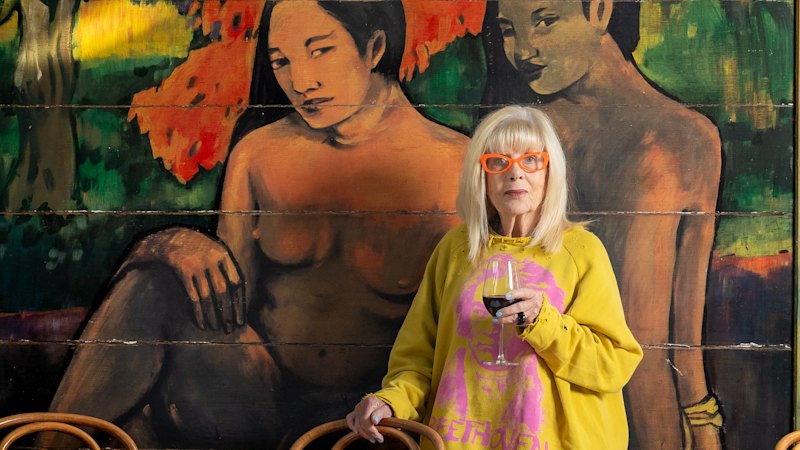
Billionaire hospitality operator Justin Hemmes has purchased the landmark Sackville Hotel in Sydney's inner west, expanding his extensive hospitality portfolio into the historic Balmain-Rozelle peninsula. The transaction, reported by journalist Garry Maddox, brings one of Australia's most prominent hotel owners into a suburban commercial enclave where the total count of operating public houses has plummeted from a peak of 55 down to just 19 active venues today. The deal highlights an ongoing wave of corporate consolidation across the New South Wales pub sector, as major hospitality groups acquire prime heritage properties in densely populated, affluent residential neighborhoods.
Key facts
What happened
Hospitality executive Justin Hemmes has completed the acquisition of the Sackville Hotel, a prominent public house located on Darling Street, the primary commercial thoroughfare running through the adjoining inner-Sydney suburbs of Rozelle and Balmain. The transaction brings the multi-story venue under the control of Merivale, the private hospitality empire owned and directed by Hemmes.
The Sackville Hotel has long served as a commercial anchor along the Darling Street retail corridor, featuring a ground-floor public bar, dining space, a retail bottle shop, and a dedicated gaming room. The venue is situated in a high-density suburban environment that has undergone extensive socio-economic transformation over recent decades.
According to reporting by Garry Maddox, the acquisition occurs within a precinct whose pub network has shrunk dramatically over time. Where the combined geographic area of Balmain and Rozelle once accommodated 55 distinct drinking establishments during its 19th and early 20th-century industrial peak, only 19 operational hotels remain open to the public today. The sale of the Sackville Hotel reflects a broader trend of large corporate entities absorbing remaining independent venues across Sydney's inner suburbs.
Why it matters
The acquisition of the Sackville Hotel by Justin Hemmes carries direct implications for commercial property valuations, local retail dynamics, and the hospitality market across Sydney's Inner West. Commercial real estate in affluent suburban pockets has become increasingly prized by major hospitality conglomerates seeking reliable cash flow from food, beverage, and gaming operations in densely settled residential catchments.
For independent publicans, the transaction highlights the mounting pressure facing smaller hospitality operators in New South Wales. Rising land taxes, increasing operational overheads, stringent regulatory compliance costs, and escalating commercial property values have made it difficult for family-run businesses to retain ownership of prime corner blocks. Consequently, large, integrated groups capable of leveraging centralized supply chains, multi-venue marketing, and professional management systems are progressively consolidating the market.
From an urban planning and cultural perspective, the transition of the Sackville Hotel represents the latest chapter in the long-term gentrification of Balmain and Rozelle. As high-income households have replaced traditional working-class populations, demand has pivoted away from basic neighborhood drinking establishments toward high-end gastropubs, specialized dining venues, and curated entertainment spaces. Merivale's entry into the peninsula is expected to accelerate this shift, raising benchmark property valuations for the remaining 18 pubs in the suburb while altering the competitive landscape for neighboring food and beverage operators.
Furthermore, the operational performance of such venues is closely linked to state-level regulatory frameworks. In New South Wales, electronic gaming machine (EGM) entitlements and liquor licensing authorizations constitute substantial elements of a hotel's total balance-sheet valuation. Corporate acquisitions often lead to venue reconfigurations that reallocate floor space between dining, bar service, and gaming facilities to maximize revenue per square meter under state gaming rules.
The background
The Balmain-Rozelle peninsula, bounded by Port Jackson, Iron Cove, and White Bay, occupies a central place in Sydney’s urban and industrial history. Settled in the early decades of the 19th century, the area evolved into a premier maritime and industrial precinct during the Victorian era. The establishment of Mort's Dock in 1855, alongside coal mining, shipbuilding, timber yards, and manufacturing plants, attracted thousands of industrial workers to the narrow streets of Balmain and Rozelle.
To service this dense, working-class population, public houses proliferated across almost every major intersection. At its peak, the peninsula hosted 55 pubs, giving it one of the highest concentrations of licensed drinking establishments per capita in Australia. These hotels served not only as social venues but as vital community hubs where trade unions organized, industrial workers collected wages, and local political factions formed. Notably, the precinct played a key role in the early history of the Australian Labor Party, which held some of its foundational meetings in local Balmain public houses during the 1890s.
Throughout the mid-to-late 20th century, the economic base of the peninsula underwent profound structural changes. Maritime modernization led to the closure of local docks and industrial facilities, prompting a protracted period of de-industrialization. Worker cottages were progressively bought and renovated by middle- and upper-income professionals drawn by the peninsula's proximity to the Sydney Central Business District.
This demographic shift triggered a steady reduction in the number of traditional pubs. Many venues closed due to falling patron numbers, while others were sold to property developers and converted into private homes, residential apartment complexes, or commercial offices. By the mid-2020s, the total count had contracted to 19 active public houses.
Simultaneously, the Sydney hospitality landscape saw the rise of major corporate operators. Merivale, originally established as a fashion house by John and Merivale Hemmes in 1959, pivoted decisively into food and beverage under the leadership of Justin Hemmes in the late 1990s. Beginning with CBD megasites such as Establishment and the Ivy complex, Merivale subsequently expanded into coastal and inner-suburban markets, acquiring heritage hotels in Coogee, Manly, Enmore, and Marrickville. The purchase of the Sackville Hotel represents the group's first major foothold on the Balmain-Rozelle peninsula.
Reaction
The acquisition has generated widespread discussion among local residents, business owners, and commercial property analysts across Sydney's Inner West. Community responses to Merivale developments routinely reflect a mix of anticipation and concern. Local patrons frequently welcome the elevated food and beverage standards, architectural restoration, and operational polish that Hemmes brings to suburban venues. Conversely, long-time neighborhood regulars often express apprehension regarding potential increases in menu prices, changes to traditional public bar layouts, and the loss of a venue's unpretentious, historic atmosphere.
Industry analysts and commercial real estate brokers view the deal as a strong vote of confidence in the long-term viability of suburban Inner West freeholds. Property observers note that despite broader economic headwinds, high land values and limited supply in tightly held heritage suburbs continue to make well-located pub assets attractive to institutional capital.
Local government authorities, including the Inner West Council, and local historical societies are expected to monitor any forthcoming redevelopment proposals closely. Heritage conservation standards in New South Wales mandate strict adherence to preservation guidelines for heritage-listed structures, requiring that any physical alterations to exterior facades or historic internal features undergo formal planning review.
What we don't know yet
Several critical details regarding the transaction and the future of the venue remain unconfirmed:
What to watch
In the coming months, several key milestones will clarify the future direction of the Sackville Hotel and the broader Balmain-Rozelle pub market:
Source credit
This report is based on original news reporting published by journalist Garry Maddox.
How this story was produced
This report was written by The Global Wire newsroom from reporting first published by Garry Maddox. We verify the core facts against the original report, write our own account, and add the background and consequences a short wire item leaves out. Drafting is AI-assisted inside an editor-supervised pipeline, and every story is checked for accuracy of attribution, structure and duplication before it appears — full detail in our AI and funding disclosure.
Spotted an error? Tell us at corrections@horizonglobalnews.com and read our corrections policy or editorial standards.




Reader comments
Loading comments…