

Jakarta Transport Network Disrupted Following Late-Night Unrest
Indonesian capital authorities suspend and divert bus and commuter rail services after street protests escalate into overnight rioting across key corridors.
By The Global Wire Newsroom · Reported from thestar.com.my
Link preview · horizonglobalnews.com
Jakarta Transport Network Disrupted Following Late-Night Unrest
Indonesian capital authorities suspend and divert bus and commuter rail services after street protests escalate into overnight rioting across key corridors.
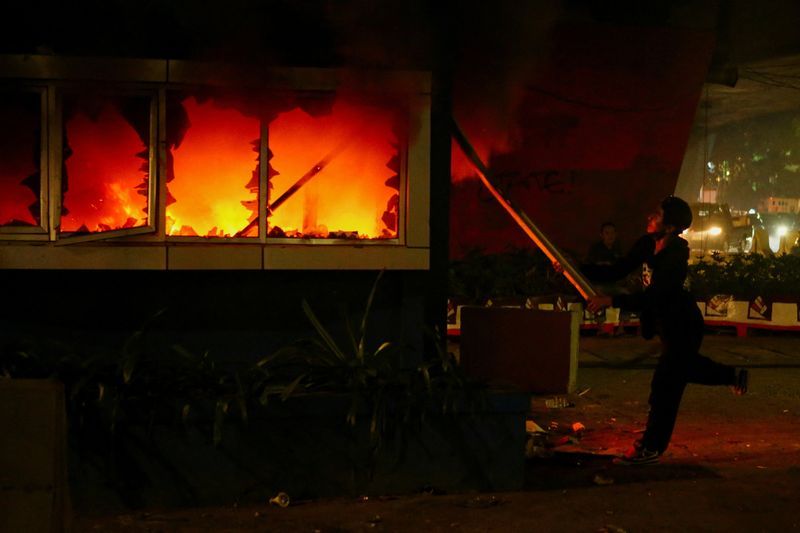
JAKARTA — Public transportation across the Indonesian capital was thrown into major disruption on Aug. 28, 2026, after local authorities suspended and rerouted multiple urban bus and commuter rail lines following late-night civil unrest. The emergency schedule alterations were implemented after daytime street demonstrations in Central Jakarta escalated into overnight clashes and rioting, according to accounts from local media and initial official notifications reported by Reuters.
Key facts
What happened
The operational disruptions began early on Aug. 28 after late-night disturbances swept through areas of Jakarta where public demonstrations had taken place earlier in the day. As crowds gathered in central thoroughfares, tensions mounted into the evening, culminating in scattered rioting that prompted security forces and transport agencies to take precautionary interventions.
According to reporting by Reuters, municipal transport authorities responded by immediately altering standard service patterns. Bus operators suspended routes passing through volatile corridors, while urban passenger rail administrators instructed trains to bypass specific stations adjacent to riot locations or temporarily halt operations along affected sections of track.
The rerouting created significant bottlenecks for early-morning commuters across the metropolitan region. Passengers attempting to reach central commercial districts, financial hubs, and government offices found major transit hubs cordoned off or operating with severe delays. Transit workers stationed at major interchanges were tasked with directing commuters toward secondary bus lines or alternative road transport options, while repair and inspection crews conducted physical assessments of stations and right-of-way infrastructure to evaluate potential damage caused during the overnight violence.
Why it matters
The suspension of core public transit services in Jakarta carries immediate economic and logistical repercussions for a metropolitan region home to more than 10 million residents, within a broader contiguous urban area known as Jabodetabek (Jakarta, Bogor, Depok, Tangerang, and Bekasi) housing over 30 million people. Millions of daily commuters rely on public transportation systems to move between suburban residential perimeter zones and the central commercial core. When primary transit veins are severed by civil unrest, the economic ripple effects are instant and widespread.
From an economic standpoint, transport diversions generate lost productivity across both formal corporate sectors and the city’s vast informal economy. Office workers, daily wage laborers, retail employees, and service sector staff face extended travel times or total inability to reach their workplaces. For low- and middle-income workers who depend heavily on subsidized public transit, unexpected route cancellations force reliance on costlier private taxis or ride-hailing services, placing a sudden financial burden on households. Furthermore, street-level disruptions impede urban freight delivery, service operations, and small-business commerce in affected retail districts.
On a civic and policy level, the vulnerability of Jakarta’s public transport infrastructure during street protests presents a persistent governance challenge. Transit networks are the backbone of modern urban mobility in Indonesia. When violence damages station platforms, overhead electrical wires, or fleet vehicles, municipal authorities are forced to balance public safety against the imperative of maintaining basic city services. The rapid transition from peaceful civic assembly to violent disorder tests the coordination between law enforcement agencies, such as the Jakarta Metropolitan Regional Police (Polda Metro Jaya), and transit management authorities responsible for protecting public infrastructure investments.
The background
Public demonstrations are a long-standing feature of political and civic life in Jakarta. As the political capital and economic heart of Indonesia, the city serves as the primary stage for national labor unions, student organizations, political movements, and activist coalitions seeking to influence government policy, legislative actions, or economic decisions. Major demonstration sites historically center around key national landmarks located along the city's central North-South axis, including the National Monument (Monas), the Hotel Indonesia Roundabout (Bundaran HI), the Constitutional Court, and the DPR/MPR Parliamentary Complex in Senayan.
Over the past two decades, Jakarta has undergone a massive transformation in its public transportation architecture designed to alleviate chronic traffic congestion. The city’s transit matrix relies on three main pillars:
Historically, major street protests in Jakarta have on several occasions spilled over into night-time property destruction targeting public transit assets. During major nationwide demonstrations against legislative acts, such as the 2020 omnibus law protests, several TransJakarta bus stops were burned or damaged, resulting in significant repair costs and prolonged service disruptions. Consequently, municipal emergency protocols empower transport authorities to proactively suspend operations and clear vehicles from central corridors at the first sign of violent escalation.
Reaction
Following the service suspensions and overnight unrest, local media and transportation agencies published alerts advising commuters to seek alternative transit arrangements and monitor real-time schedule updates.
While full formal statements from top government officials were pending in the immediate aftermath of the event, municipal leadership, including the Governor of Jakarta, and leadership at Polda Metro Jaya are expected to address the security response and assess civil order measures. Transportation operators, including TransJakarta and PT Kereta Commuter Indonesia, typically issue formal operational reports detailing the extent of service restorations, structural damages, and safety assessments.
Business associations and labor representatives are also expected to respond. Commercial chambers routinely monitor urban transport disruptions due to their impact on workplace attendance and retail revenues, while civil rights organizations and protest leaders often issue statements regarding police handling of public demonstrations and the circumstances that led to late-night friction.
What we don't know yet
Several critical details regarding the Aug. 28 events remain unconfirmed due to the early stage of official reporting:
Understanding these unknown factors is vital for evaluating whether the event represents an isolated brief disruption or the start of an extended period of civic tension and operational paralysis in the capital.
What to watch
In the days following the Aug. 28 disruptions, several key developments will indicate the broader trajectory of the situation:
This report incorporates news dispatch information originally published by The Star based on reporting from Reuters on Aug. 28, 2026.
How this story was produced
This report was written by The Global Wire newsroom from reporting first published by thestar.com.my. We verify the core facts against the original report, write our own account, and add the background and consequences a short wire item leaves out. Drafting is AI-assisted inside an editor-supervised pipeline, and every story is checked for accuracy of attribution, structure and duplication before it appears — full detail in our AI and funding disclosure.
Spotted an error? Tell us at corrections@horizonglobalnews.com and read our corrections policy or editorial standards.





Reader comments
Loading comments…