

Iran Threatens Fines, Seizures, and Transit Fees in Strait of Hormuz
Iran's maritime agency announces strict transit protocols and mandatory fees for merchant ships in the strategic chokepoint, raising international trade and security concerns.
By The Global Wire Newsroom · Reported from SECTIONS shall face fines; Detention; Confiscation Iran Ani
Link preview · horizonglobalnews.com
Iran Threatens Fines, Seizures, and Transit Fees in Strait of Hormuz
Iran's maritime agency announces strict transit protocols and mandatory fees for merchant ships in the strategic chokepoint, raising international trade and security concerns.
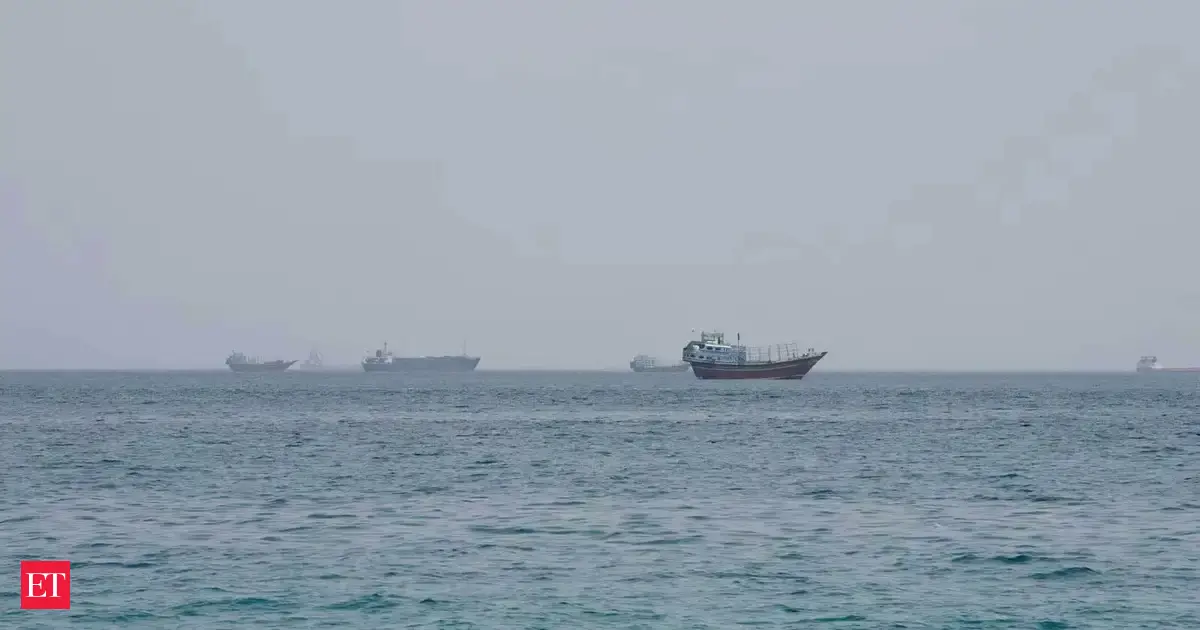
TEHRAN — Iran's maritime authority has announced strict transit restrictions, mandatory fees, and punitive enforcement measures for commercial shipping operating in the Strait of Hormuz, the world’s primary maritime chokepoint for global energy transportation. According to reporting by ANI, the Ports and Maritime Organization of Iran declared on August 24, 2026, that vessels violating Iranian maritime protocols will face monetary fines, administrative detention, or physical vessel confiscation. In addition, Tehran stated that commercial vessels from authorized foreign nations transiting the narrow waterway will now be required to pay mandatory service fees. Iranian officials claimed these fees will offset costs associated with maritime safety, environmental monitoring, and logistical support provided along shipping channels. The unilateral declaration marks a significant expansion of Tehran’s regulatory stance over international shipping passing through the Persian Gulf corridor.
Key facts
What happened
The announcement from the Ports and Maritime Organization of Iran sets a new enforcement framework for commercial traffic through the Strait of Hormuz, according to reporting by ANI citing Iranian state sources. Under the new guidelines, merchant vessels entering the waterway must comply fully with Iranian-established shipping protocols or face immediate regulatory sanctions.
The official warnings specify that non-compliant vessels could be subjected to financial penalties, impoundment within Iranian ports, or physical confiscation by state authorities. Tehran did not immediately detail the precise fine structures or publish an explicit catalog of operational infractions that would trigger vessel seizure.
Simultaneously, Iranian authorities announced that merchant ships from approved nations will be required to pay service fees to Tehran during their passage. Iranian officials framed these charges as administrative compensation for maritime services rendered to passing traffic, including marine environmental supervision, search-and-rescue coverage, and channel navigation support.
The operational mechanisms for fee collection—such as payment processing methods or clearance procedures—were not detailed in the initial public statement. Nevertheless, the policy represents Tehran's first systematic framework for levying direct service fees on foreign commercial transit through the strategic chokepoint.
Why it matters
The introduction of transit fees and threats of ship confiscation carries significant risks for international energy markets, maritime logistics, and global security. The Strait of Hormuz is the world's most critical oil transit chokepoint. At its narrowest point, the passage measures roughly 21 nautical miles wide, with commercial shipping lanes situated in territorial waters belonging to Iran and Oman.
Roughly 20 million barrels of crude oil and refined petroleum products—representing approximately 20% to 30% of global seaborne oil supply—transit the strait daily. Middle Eastern producers including Saudi Arabia, the United Arab Emirates, Iraq, Kuwait, and Qatar depend on the waterway to export oil and liquefied natural gas (LNG) to major markets in Asia and Europe.
Mandatory transit fees increase operating costs for shipping operators, who are already burdened by high war-risk insurance premiums in the region. If international shipowners comply and pay Iranian fees, it could establish a legal precedent altering the status of international transit straits. Conversely, non-compliance could lead to forced boardings, vessel seizures by the Islamic Revolutionary Guard Corps Navy, and prolonged legal detentions.
Any operational disruption or armed interdiction in the strait historically triggers immediate increases in global benchmark oil prices and shipping freight rates, threatening broader inflationary pressures across global supply chains.
The background
The governance of international straits is defined under international law primarily by the 1982 United Nations Convention on the Law of the Sea (UNCLOS). UNCLOS establishes the right of "transit passage" through straits used for international navigation. Under Article 38 of the convention, foreign ships enjoy continuous and expeditious passage that coastal states cannot hamper, suspend, or tax, except for specific services rendered at the explicit request of the ship.
However, legal interpretation in the Strait of Hormuz has long been disputed due to treaty status. While Oman ratified UNCLOS in 1989, Iran signed the agreement in 1982 but never ratified it through its legislature. Tehran has consistently taken the position that transit passage rights apply only to state parties that have fully ratified UNCLOS. Consequently, Iran asserts that non-party vessels or ships navigating its territorial waters are subject to "innocent passage," granting coastal authorities broader powers to enforce national regulations, environmental rules, and security demands.
The Strait of Hormuz has repeatedly served as a flashpoint for geopolitical confrontation. During the "Tanker War" of the 1980s, hundreds of commercial vessels were targeted by mines and missile strikes, leading to international naval escort operations. In recent years, Iranian naval forces have periodically seized foreign-flagged commercial vessels—including the Stena Impero in 2019, the Hankuk Chemi in 2021, and the Advantage Sweet in 2023—often citing regulatory, environmental, or legal disputes. Western governments have frequently condemned these actions as political retaliations.
Reaction
Following the announcement reported by ANI, commercial shipping groups and international naval coalitions are evaluating the legal validity and risk profile of the new Iranian policy. Industry representatives from organizations such as the International Chamber of Shipping (ICS) and BIMCO assess operational guidelines to advise shipowners on route safety and flag-state compliance.
Diplomatic and military responses are expected from Western nations and international partners operating in the region. The United States Naval Forces Central Command (NAVCENT), alongside regional initiatives such as the European-led Maritime Awareness in the Strait of Hormuz (EMASOH), routinely monitor traffic in the Persian Gulf. Western naval authorities maintain that unilateral transit levies and navigational restrictions violate established freedom of navigation principles.
Major Asian energy importers, including China, India, Japan, and South Korea, rely heavily on Persian Gulf energy flows. Government trade ministries in these nations are expected to seek official clarification from Iranian authorities to ensure uninterrupted maritime transit for their merchant fleets.
What we don't know yet
Several critical operational details remain unconfirmed following the initial announcement.
First, the specific rate structure and assessment criteria for the mandatory service fees have not been published. It is unclear whether fees will be based on vessel tonnage, cargo type, or fixed transit charges. Additionally, the process for remitting payments remains uncertain, creating compliance challenges for international shipping lines subject to strict financial sanctions against Iranian state institutions.
Second, the criteria defining "authorized countries" permitted to transit upon fee payment remain unspecified. The directive does not list which national flags are deemed compliant or how non-authorized vessels will be treated upon entering the strait.
Third, the exact operational violations that will trigger fines, detention, or vessel confiscation have not been defined. The lack of detailed guidelines leaves room for arbitrary enforcement by maritime authorities.
What to watch
In the coming weeks, key indicators will determine the operational impact of Iran's directive:
This report is based on original news reporting from ANI.
How this story was produced
This report was written by The Global Wire newsroom from reporting first published by SECTIONS shall face fines; Detention; Confiscation Iran Ani. We verify the core facts against the original report, write our own account, and add the background and consequences a short wire item leaves out. Drafting is AI-assisted inside an editor-supervised pipeline, and every story is checked for accuracy of attribution, structure and duplication before it appears — full detail in our AI and funding disclosure.
Spotted an error? Tell us at corrections@horizonglobalnews.com and read our corrections policy or editorial standards.





Reader comments
Loading comments…