

Iran Dismisses Trump Economic Threats as Diversion from US Domestic Politics
Tehran rejects warnings of economic pressure from Donald Trump, framing the rhetoric as a political maneuver to distract from internal American issues, according to smh.com.au.
By The Global Wire Newsroom · Reported from smh.com.au
Link preview · horizonglobalnews.com
Iran Dismisses Trump Economic Threats as Diversion from US Domestic Politics
Tehran rejects warnings of economic pressure from Donald Trump, framing the rhetoric as a political maneuver to distract from internal American issues, according to smh.com.au.
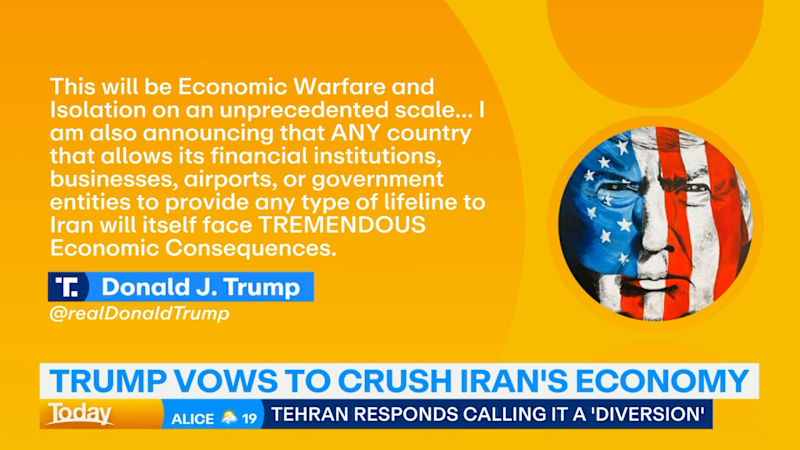
Tehran has issued a public rejection of economic warnings delivered by former US President Donald Trump, dismissing threats against the Iranian economy as a political maneuver intended to divert focus from internal issues within the United States. According to reporting by smh.com.au on August 20, 2026, Iranian officials characterized the aggressive economic rhetoric from Washington as an attempt to project domestic political challenges onto the international stage. The diplomatic pushback marks the latest exchange between Iranian authorities and American political figures over financial sanctions, trade enforcement, and foreign policy in the Middle East.
Key facts
What happened
Iranian government representatives responded directly to economic threats delivered by Donald Trump, rejecting warnings aimed at crippling the country's national economy. According to reporting by smh.com.au, Iranian authorities framed the economic rhetoric as an effort by US political figures to create external diversions from ongoing internal political debate inside the United States. Tehran asserted that the public warnings were structured primarily for an American political audience rather than representing a functional shift in international relations.
While initial summary reports did not detail the specific location or format of the Iranian statements, official responses from Tehran regarding US policy are typically issued through the Ministry of Foreign Affairs, government press briefings, or state-run communications channels. In its response, Iran maintained that hostile declarations regarding economic enforcement have become a routine feature of US political discourse. By labeling the economic threats as a political diversion, Tehran sought to minimize the perceived impact of the statements while reiterating its established stance against foreign economic coercion.
Why it matters
The verbal exchange carries significant implications for international energy markets, global supply chains, and diplomatic planning across the Middle East. When prominent US political leaders issue public warnings regarding severe economic restrictions against major oil-producing nations, financial markets and multinational corporations must reassess risk exposure across key commercial corridors.
From an economic perspective, rhetoric concerning intensified sanctions impacts global oil trading, shipping insurance, and maritime logistics. The Persian Gulf remains a vital transit zone for global commerce, with approximately 20 percent of the world's petroleum passing through the Strait of Hormuz. Declarations threatening economic pressure increase uncertainty for international buyers of energy products and maritime transport firms operating in regional waters.
From a policy standpoint, the continued reliance on economic threats highlights the enduring deadlock between Washington and Tehran. For European allies and regional powers in the Middle East, escalating rhetoric complicates efforts to establish stable diplomatic frameworks or revive structured dialogue regarding nuclear oversight. Furthermore, sustained financial pressure reinforces Iran's strategic shift toward non-Western economic partnerships, particularly deepening trade, banking, and energy connections with nations such as China and Russia to bypass Western financial networks.
The background
Understanding the context of this dispute requires examining the multi-decade history of economic sanctions imposed by the United States on Iran. Following the 1979 Iranian Revolution and the subsequent embassy hostage crisis in Tehran, Washington instituted broad trade bans and asset freezes targeting the Iranian government. Over the subsequent decades, the United States expanded these measures through executive orders and congressional legislation, creating a comprehensive sanctions framework aimed at restricting Iran's foreign trade, banking access, and energy infrastructure.
A major diplomatic shift occurred in July 2015 with the finalization of the Joint Comprehensive Plan of Action (JCPOA), negotiated between Iran and the P5+1 group of nations—comprising the United States, the United Kingdom, France, Germany, Russia, and China, alongside the European Union. Under the terms of the JCPOA, Iran agreed to strict, verifiable limitations on its nuclear enrichment activities and stockpiles in exchange for comprehensive relief from US, United Nations, and European Union economic sanctions.
However, in May 2018, during his presidential administration, Donald Trump announced the unilateral withdrawal of the United States from the JCPOA. The US subsequently initiated a policy described as a "maximum pressure" campaign, re-imposing punitive primary and secondary sanctions designed to reduce Iranian crude oil exports to zero, restrict foreign banking transactions, and target key industrial sectors including metals and shipping.
The re-imposition of sanctions produced severe economic contraction inside Iran, leading to sharp currency devaluation, high domestic inflation, and reduced state revenues. In response to the economic measures and the lack of anticipated trade benefits from European partners, Iran systematically scaled back its adherence to the technical limitations set by the JCPOA, increasing its uranium enrichment levels and expanding advanced centrifuge installation. Subsequent efforts by international diplomats to revive or renegotiate the nuclear accord encountered persistent hurdles, leaving the framework largely dormant while sanctions enforcement and evasion tactics continued.
Reaction
Following the statements reported by smh.com.au, reaction across official channels reflected established diplomatic positions. Inside Iran, state-aligned media outlets and commentary emphasized the government's stance, arguing that decades of economic restrictions have demonstrated the limits of unilateral sanctions. Iranian analysts pointed to the resilience of domestic industries and alternative trade routes as evidence that external threats would not alter national policy.
International diplomatic stakeholders, including European Union representatives and regional governments in the Persian Gulf, monitor such exchanges closely. Gulf Cooperation Council (GCC) member states have increasingly sought regional de-escalation in recent years to protect economic development projects, making them sensitive to heightened rhetoric between Washington and Tehran. European powers, which retain a commitment to diplomatic resolution and nuclear non-proliferation, routinely advocate for measured rhetoric to avoid foreclosing potential avenues for negotiation.
In Washington, reaction to economic enforcement strategy remains divided along policy lines. Congressional leaders supporting strict enforcement argue that economic pressure is essential to constrain Iranian government revenues and limit regional proxy financing. Conversely, foreign policy experts and former diplomatic officials frequently debate whether aggressive verbal threats achieve strategic goals or primarily encourage target nations to build parallel international financial institutions independent of the US dollar.
What we don't know yet
Several specific details regarding this event remain unconfirmed based on available reporting. The exact setting, precise quote, and context of Donald Trump's initial statement threatening to crush Iran's economy were not detailed in the report by smh.com.au. Consequently, it is unclear whether the threat was delivered during a public campaign event, a media interview, or a formal policy address.
Additionally, the specific diplomatic channel through which Iran issued its official response remains undisclosed. It is unknown whether Tehran communicated its position exclusively through public state media outlets or delivered a formal statement through diplomatic intermediaries such as the Swiss Embassy in Tehran, which serves as the official protective power for US interests in Iran.
Finally, open questions remain regarding whether this verbal exchange signals impending changes in policy enforcement or represents standard political messaging. Without further detailed disclosures from official sources in Washington or Tehran, the direct practical impact on sanctions enforcement protocols and diplomatic contacts cannot be fully determined.
What to watch
Several key milestones and indicators will determine how this economic dispute develops in the coming months:
This report is based on original news reporting published by smh.com.au.
How this story was produced
This report was written by The Global Wire newsroom from reporting first published by smh.com.au. We verify the core facts against the original report, write our own account, and add the background and consequences a short wire item leaves out. Drafting is AI-assisted inside an editor-supervised pipeline, and every story is checked for accuracy of attribution, structure and duplication before it appears — full detail in our AI and funding disclosure.
Spotted an error? Tell us at corrections@horizonglobalnews.com and read our corrections policy or editorial standards.



Reader comments
Loading comments…