

Iran Denies U.S. Claims of Scheduled Diplomatic Talks Amid Regional Crisis
Tehran says no diplomatic delegations are being sent or received after U.S. assertions that talks would occur today.
By The Global Wire Newsroom · Reported from Vivian Ho
Link preview · horizonglobalnews.com
Iran Denies U.S. Claims of Scheduled Diplomatic Talks Amid Regional Crisis
Tehran says no diplomatic delegations are being sent or received after U.S. assertions that talks would occur today.
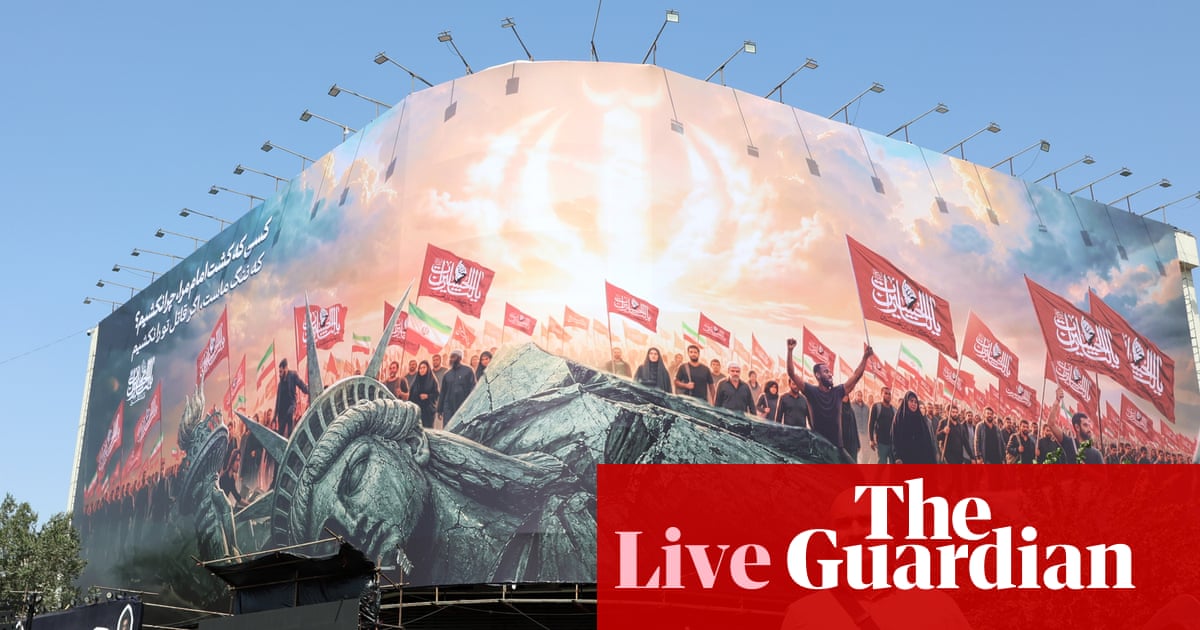
The Iranian government has publicly rejected assertions made by U.S. President Donald Trump regarding the immediate scheduling of bilateral diplomatic negotiations, stating that no arrangements have been made to host or dispatch official delegations. The formal pushback from Tehran follows statements from Washington indicating that discussions between the two nations were set to take place on Monday, highlighting persistent communication friction and conflicting narratives amidst ongoing instability across the Middle East.
What happened
According to reporting by Vivian Ho, an official spokesperson for the Iranian government stated unequivocally that there are no current plans to send an Iranian diplomatic delegation abroad or to receive an American delegation in Tehran. The statement directly counters assertions made by the U.S. president, who had publicly declared that talks between the two adversary nations were scheduled for today.
The public disagreement underlines a stark divergence in official messaging coming out of Washington and Tehran. While the U.S. executive branch signaled an imminent dialogue, Iranian foreign policy officials moved swiftly to dismantle those assertions, maintaining that formal diplomatic mechanisms for such a meeting had not been established.
Contradictory messaging and diplomatic protocol
Discrepancies over the existence and timing of international meetings are a recurring feature of high-stakes foreign policy, particularly between nations that lack formal diplomatic relations. In international statecraft, the physical exchange of an official delegation represents a significant procedural step, requiring extensive advance preparation, secure communication channels, and agreed-upon agendas.
By denying plans for delegation movements, Iranian officials signaled that any potential engagement remains far from the operational stage described by the White House. Diplomatic analysts note that public announcements regarding high-level meetings can prompt swift denials if one party perceives the statement as an attempt to shape public perception or force negotiations before terms are mutually settled.
For Tehran, agreeing to public talks without mutually established pre-conditions presents domestic political sensitivity. Conversely, Washington officials frequently utilize public statements to signal readiness for engagement to both international allies and domestic audiences.
Background of Middle East tensions
The dispute over the proposed talks occurs against a backdrop of wider regional volatile conditions in the Middle East, characterized by elevated security posture, economic friction, and strategic maneuvering. The United States and Iran have lacked direct, formal diplomatic relations for decades, communicating primarily through third-party intermediaries, protecting powers, and international forums.
Relations between the two capitals have long been defined by disagreement over regional security, economic sanction frameworks, maritime navigation safety, and nuclear oversight. Periodically, officials from both nations have indicated varying degrees of willingness to engage in dialogue, though prospects regularly stall over procedural disagreements, mutual distrust, and conflicting conditions for entering negotiations.
Previous efforts to establish durable diplomatic channels have often been complicated by shifting political dynamics. When leadership in Washington asserts that negotiations are pending, the Iranian foreign ministry frequently exercises caution to prevent perceptions of uncoordinated diplomatic concessions.
The role of mediation and backchannels
Because direct bilateral channels between the United States and Iran remain constrained, international diplomacy involving the two nations frequently relies on intermediary countries. Nations such as Switzerland, which serves as the U.S. diplomatic protective power in Iran, along with regional actors like Oman and Qatar, have historically facilitated message exchanges between Washington and Tehran.
These indirect channels allow both governments to communicate, negotiate specific logistical issues, or manage crisis points without the immediate political visibility of direct delegation visits. When public declarations bypass these quiet mechanisms, it often results in formal rebuttals from the party seeking to preserve discretion or maintain leverage over the negotiating process.
The Iranian spokesperson’s insistence that no delegations are traveling emphasizes Tehran's preference for defined parameters before committing to public engagement. Without explicit consensus achieved through confidential channels, public claims of upcoming meetings are routinely disavowed.
Implications for regional strategy
The immediate denial of talks highlights the fragile state of diplomatic efforts intended to manage regional volatility. Allies and regional partners monitor public communications between Washington and Tehran closely, as any prospect of sustained dialogue can influence economic markets and security calculations across the Middle East.
Conflicting reports regarding high-level engagement can generate uncertainty among international observers. Clear and synchronized communication is generally regarded by diplomats as essential for reducing the risk of miscalculation between military forces and diplomatic channels operating in proximity across regional hotspots.
When official statements from major capitals directly contradict each other within hours, it underscores the depth of ongoing mistrust. For international monitoring bodies attempting to gauge the trajectory of the Middle East crisis, Tehran's firm disavowal serves as a reminder that mutual agreement on diplomatic protocol remains a prerequisite for substantive dialogue.
What comes next
As the situation develops, international attention remains focused on whether secondary diplomatic channels will attempt to reconcile the opposing statements from both capitals. Washington has not immediately reconciled its assertion with Tehran's explicit denial, leaving the immediate status of potential engagement uncertain.
Diplomatic observers will continue monitoring official communications from the U.S. executive branch, the U.S. Department of State, and the Iranian Foreign Ministry to determine whether informal contact continues behind the scenes despite the public disagreement over official delegation exchanges.
This article relies on reporting originally published by Vivian Ho.
How this story was produced
This report was written by The Global Wire newsroom from reporting first published by Vivian Ho. We verify the core facts against the original report, write our own account, and add the background and consequences a short wire item leaves out. Drafting is AI-assisted inside an editor-supervised pipeline, and every story is checked for accuracy of attribution, structure and duplication before it appears — full detail in our AI and funding disclosure.
Spotted an error? Tell us at corrections@horizonglobalnews.com and read our corrections policy or editorial standards.




Reader comments
Loading comments…