

Horizon Gold Reports High-Grade Intersections Across Murchison Prospects in Western Australia
Exploration drilling in Western Australia's Murchison region has extended gold mineralisation across three prospects, pointing toward resource expansion for Horizon Gold.
By The Global Wire Newsroom · Reported from Penny Taylor
Link preview · horizonglobalnews.com
Horizon Gold Reports High-Grade Intersections Across Murchison Prospects in Western Australia
Exploration drilling in Western Australia's Murchison region has extended gold mineralisation across three prospects, pointing toward resource expansion for Horizon Gold.
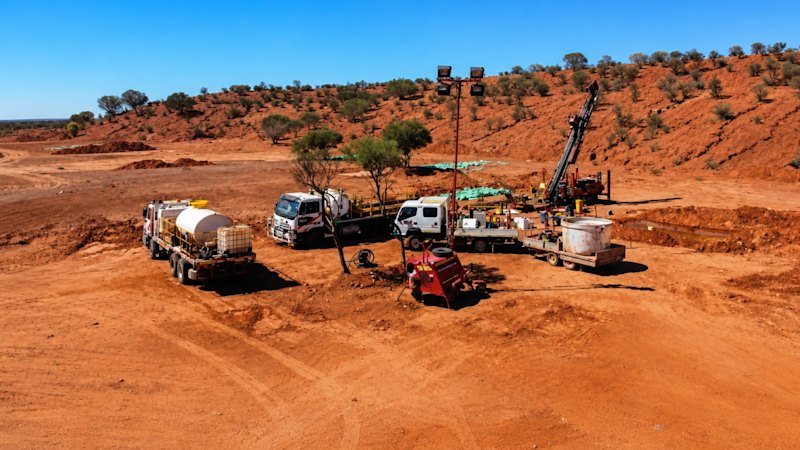
On August 25, 2026, Perth-based exploration company Horizon Gold reported high-grade gold drilling results across three separate prospects within its tenement holdings in the Murchison region of Western Australia, according to reporting by Penny Taylor. The drilling campaign successfully extended known mineralisation beyond the boundaries established in a recently completed technical study, indicating that the gold-bearing structures remain open for further expansion. The discoveries highlight broader resource growth potential across the company's regional project portfolio, paving the way for updated geological modeling and potential resource revisions.
Key facts
What happened
Horizon Gold executed a targeted reverse circulation and diamond drilling program across three primary prospect areas in the Murchison gold district of Western Australia. The campaign aimed to evaluate step-out targets, test structural extensions of known deposits, and verify the continuity of gold mineralisation outside existing geological block models.
According to reporting by Penny Taylor, assay results from the program confirmed high-grade gold intercepts across all three target zones. The drilling successfully intersected gold-bearing veins and shear structures at distances and depths that fell outside the resource boundaries utilized in the company's most recent technical evaluation.
By demonstrating that mineralisation continues beyond previously mapped envelopes, the drilling results provide crucial structural data for Horizon Gold's technical team. The newly gathered geological information is expected to be integrated into updated structural interpretations, open-pit optimization shells, and underground wireframes as the company evaluates options to expand its resource base and refine its project development strategy.
Why it matters
The discovery of high-grade gold extensions across multiple targets carries substantial implications for project economics, market valuation, and long-term development planning. In mineral exploration, hitting elevated gold grades outside current resource models represents one of the most cost-effective mechanisms for adding gold ounces to a project's inventory without requiring entirely new greenfield discoveries.
From an engineering perspective, high-grade intersections can significantly alter project metrics. Higher average gold grades increase the recoverable ounces per tonne of ore mined, which can improve prospective operating margins and reduce the overall strip ratio in open-pit scenarios. If the newly identified mineralisation proves continuous, it may allow mine planners to expand prospective pit shells or justify underground development ramps, ultimately extending the projected operating life of a future mining operation.
For capital markets and investors, consistent drilling success across multiple prospects—termed a "trifecta" in regional industry parlance—reduces single-deposit reliance and demonstrates broader systemic fertility across a company's land package. In Western Australia's competitive resource sector, demonstrated growth potential helps junior and mid-tier exploration firms maintain market liquidity, secure favorable project financing terms, and attract potential joint-venture or corporate acquisition interest from established mid-tier and major gold producers seeking reserve replacement in regional processing hubs.
The background
To fully contextualize Horizon Gold's latest results, it is necessary to examine the geological history of the Murchison region, the structure of Australian mineral resource reporting, and the prevailing economic conditions shaping gold exploration in Western Australia.
The Murchison Goldfield is part of the western Yilgarn Craton, an ancient Archaean granite-greenstone terrane that forms the backbone of Western Australia's mineral wealth. Gold was first discovered in the Murchison during the late 19th century, leading to historical mining centers such as Cue, Mount Magnet, Meekatharra, and Sandstone. The region's geology is characterized by supracrustal greenstone belts composed of mafic volcanic rocks, banded iron formations (BIF), and felsic intrusive complexes cut by major regional shear zones. These structural corridors host diverse styles of mineralisation, including quartz-vein lodes, shear-hosted deposits, and BIF-hosted gold systems.
Horizon Gold has focused its regional activities primarily on the historic Gum Creek Gold Project and surrounding exploration licenses in the Murchison province. The Gum Creek belt has a long history of production, having yielded over one million ounces of gold through historical open-pit and underground operations managed by prior owners such as Australian Consolidated Minerals and Pancontinental Mining during the late 20th century. Horizon Gold was listed on the Australian Securities Exchange (ASX) to consolidate, explore, and re-evaluate these historical deposits using modern geophysical surveys, revised structural modeling, and deep systematic drilling.
In Australia, the estimation and public disclosure of mineral exploration findings are strictly governed by the Joint Ore Reserves Committee (JORC) Code. Under JORC guidelines, exploration companies must categorize mineral resources into Inferred, Indicated, and Measured status based on geological confidence and drill-hole spacing. These resources serve as the foundation for sequential engineering studies, including Scoping Studies, Pre-Feasibility Studies (PFS), and Definitive Feasibility Studies (DFS). When exploration drilling identifies high-grade mineralisation outside the wireframes established in a previous JORC-compliant study, the company must collect sufficient drill density before incorporating those new zones into an upgraded Mineral Resource Estimate (MRE).
The broader market context also plays a critical role. Throughout 2025 and 2026, global gold prices have hovered near historically elevated levels, driven by international economic uncertainty, persistent central bank accumulation, and currency fluctuations. High commodity prices enhance the potential net present value (NPV) of prospective Australian gold projects, encouraging mineral explorers to aggressively deploy capital into brownfield drilling programs aimed at growing near-surface and underground gold inventories.
Reaction
Following the release of the drilling update, Horizon Gold characterized the results across the three prospects as a significant technical validation of its regional exploration model, noting that the intercepts support meaningful resource growth beyond the parameters of its previous project study, according to reporting by Penny Taylor.
In Western Australia's mining ecosystem, exploration updates of this nature trigger predictable workflows among market analysts, mining engineers, and regulatory bodies. Independent geological consultants and equities analysts covering the Australian mining sector typically re-evaluate prospective project valuations based on the reported grade-width profiles and spatial extensions.
At the regulatory level, ongoing drilling operations and subsequent project modifications are overseen by the Western Australian Department of Energy, Mines, Industry Regulation and Safety (DEMIRS). The department requires compliance with environmental clearing permits, heritage site surveys, and annual tenement expenditure commitments as companies transition from early-stage exploration to advanced feasibility studies.
What we don't know yet
While the initial report highlights successful high-grade hits across three prospects, several critical technical parameters remain unstated in the available summary, including:
What to watch
In the coming months, industry observers and investors will monitor several key developments to gauge the full impact of Horizon Gold's Murchison exploration success:
This report is based on original news reporting published by Penny Taylor on August 25, 2026.
How this story was produced
This report was written by The Global Wire newsroom from reporting first published by Penny Taylor. We verify the core facts against the original report, write our own account, and add the background and consequences a short wire item leaves out. Drafting is AI-assisted inside an editor-supervised pipeline, and every story is checked for accuracy of attribution, structure and duplication before it appears — full detail in our AI and funding disclosure.
Spotted an error? Tell us at corrections@horizonglobalnews.com and read our corrections policy or editorial standards.





Reader comments
Loading comments…