

Honda Explores In-Road Magnetic Induction Technology to Power Electric Cars While Driving
Automaker tests embedded wireless charging roadways that could replenish passenger vehicle batteries in motion, bypassing physical charging stalls.
By The Global Wire Newsroom · Reported from Utkarsh Sood
Link preview · horizonglobalnews.com
Honda Explores In-Road Magnetic Induction Technology to Power Electric Cars While Driving
Automaker tests embedded wireless charging roadways that could replenish passenger vehicle batteries in motion, bypassing physical charging stalls.
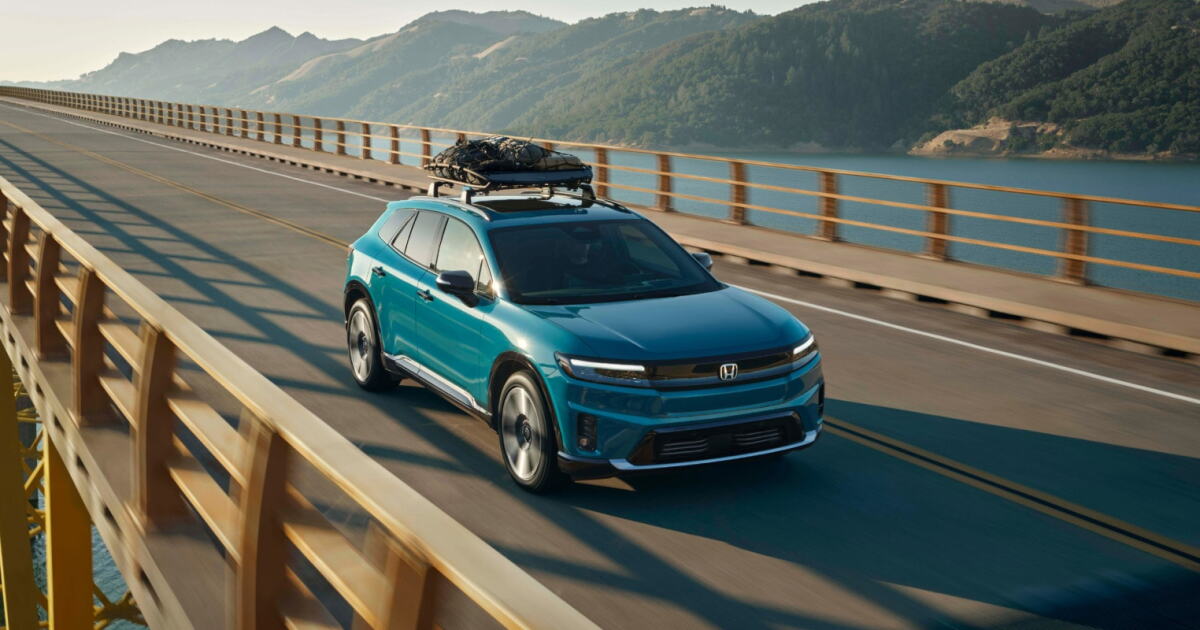
TOKYO — Honda Motor Co. is advancing research into an in-road wireless magnetic charging architecture designed to replenish electric vehicle batteries while vehicles travel at speed, according to reporting by technology journalist Utkarsh Sood. The initiative explores dynamic wireless power transfer—a system in which electromagnetic coils buried beneath road surfaces transmit energy through magnetic resonance to receiver plates mounted on vehicle undercarriages. If commercialized, the infrastructure could fundamentally alter passenger transit by diminishing reliance on stationary high-voltage plug-in plazas and allowing manufacturers to install significantly smaller, lighter battery packs.
Key facts
What happened
Details published by Utkarsh Sood indicate that Honda has expanded its engineering focus to address the persistent friction points of electric vehicle adoption through dynamic magnetic power delivery. Under the concept under development, highway lanes and select urban arteries would feature modular primary magnetic coils embedded beneath the asphalt or concrete surface layer. These underground transmitters activate selectively when an equipped vehicle passes overhead, establishing a tuned high-frequency electromagnetic field.
Vehicles outfitted with specialized secondary receiver coils convert the fluctuating magnetic flux back into direct-current electricity, routing power directly to the electric drive motors or into the on-board traction battery. The technology eliminates physical contact points, cables, and mechanical connectors, allowing passenger cars to maintain highway speeds while simultaneously taking on electrical charge.
The development comes as existing high-speed conductive charging networks approach technical and thermodynamic plateaus. While premier direct-current fast-charging stations and modern cell chemistries—including configurations deployed by Chinese electric vehicle manufacturer BYD—can bring batteries from low thresholds to 97 percent capacity in as little as nine minutes, stationary plug-in stops still demand dedicated physical parking stalls, complex liquid-cooled cables, and high-peak local grid draws. Honda’s design seeks to eliminate charging stops altogether by integrating energy delivery into standard highway transit.
Why it matters
Dynamic in-road charging addresses the two most intractable structural barriers hindering mass adoption of electric mobility: range anxiety and battery weight. In modern battery-electric vehicles, long-range capability requires energy packs weighing between 500 and 900 kilograms, composed of scarce and volatile raw materials including lithium carbonate, class-one nickel, and cobalt. These heavy battery enclosures increase overall vehicle mass, which in turn degrades tire life, increases kinetic energy during collisions, accelerates road pavement wear, and demands heavier braking systems.
If continuous or semi-continuous dynamic roadway charging becomes operational, vehicles will no longer require massive storage buffers. Commuters and commercial haulers could travel long distances equipped with battery packs half or a third of their current physical size, relying on electrified corridors to supply baseline cruising energy and reserve storage for secondary, non-electrified routes. A systemic reduction in required battery capacity would directly reduce consumer vehicle purchase prices, compress supply-chain exposure to geopolitical mineral bottlenecks, and cut total vehicle manufacturing lifecycle emissions.
For highway operators and regional utilities, dynamic wireless electrification reshapes power distribution. Rather than facing localized, intermittent power surges of 350 to 480 kilowatts when individual vehicles plug into megawatt-scale charging plazas, electricity demand along electrified highway lanes is smoothed across distance and time as a moving distributed load. However, this model shifts enormous upfront financing burdens onto government transport ministries, toll authorities, and public-private utility partnerships tasked with excavating and rewiring national highway corridors.
The background
Wireless power transmission relies on magnetic induction, a principle demonstrated by Michael Faraday in 1831 and applied to wireless resonance by Nikola Tesla in the late nineteenth century. In modern automotive applications, magnetic resonance coupling achieves high transmission efficiency across air gaps ranging between 100 and 250 millimeters, even when vehicles travel at triple-digit speeds.
Standardization bodies have spent over a decade establishing the foundational regulatory architecture for automotive wireless power. In October 2020, SAE International published standard J2954, defining interoperability, frequency bands (centered at 85 kilohertz), alignment tolerances, and safety thresholds for stationary wireless power transfer up to 11 kilowatts. Working groups under SAE J2954/2 have since engaged in standardizing dynamic wireless power transfer (DWPT) at capacities exceeding 200 kilowatts for heavy transport and passenger cars.
Honda’s internal engineering has touched dynamic induction before. In 2017, company researchers presented dynamic charging laboratory tests at international engineering symposiums, demonstrating dynamic continuous power transfer exceeding 180 kilowatts at speeds up to 156 kilometers per hour. Competitors and municipal road agencies have also tested functional segments across Europe and North America. In Sweden, the Smartroad Gotland project demonstrated dynamic charging for buses and heavy trucks, while in the United States, the Indiana Department of Transportation and Purdue University began constructing experimental magnetizable concrete test segments on Interstate 65. Similar trials in Detroit, Michigan, led by infrastructure specialist Electreon, demonstrated dynamic induction on quarter-mile municipal stretches.
Historically, Japanese automakers approached full battery electrification with institutional skepticism, favoring hybrid powertrains, compact city platforms, and hydrogen fuel-cell experiments. Honda’s research into dynamic magnetic charging aligns with its stated corporate objective of achieving full carbon neutrality across its product line and corporate operations by 2050, accompanied by a dedicated transition to zero-emission vehicle sales in major markets by 2040.
Reaction
While Honda has not issued a formal corporate press briefing accompanying the latest reporting, automotive component suppliers, transport infrastructure engineers, and clean-energy policy analysts are monitoring the project closely. Industry analysts point out that municipal infrastructure initiatives typically require deep state cooperation, suggesting that any practical implementation will depend on public road authorizations in Japan, North America, or Europe.
Civil engineering bodies and municipal road planners have maintained a cautious stance toward embedded roadway technologies. While recognizing the technical feasibility of magnetic resonance, civil contractors routinely cite road lifespan and resurfacing cycles as significant operational hurdles. Standard asphalt resurfacing occurs every 8 to 15 years, requiring high-heat asphalt milling machines that could sever or crush embedded transmitter plates unless installation enclosures are engineered to withstand extreme thermal and compressive stress.
Grid operators and state energy commissions are anticipated to evaluate the technology’s power quality profile. Although dynamic magnetic coupling operates with laboratory transmission efficiencies between 88 and 93 percent, the 7 to 12 percent energy loss across an entire national vehicle fleet represents gigawatt-hours of wasted electricity transformed into stray heat within roadbeds, an issue regulators will scrutinize before allocating public infrastructure grants.
What we don't know yet
Several fundamental specifications regarding Honda’s proprietary approach remain unverified in available accounts. The reporting does not disclose the operating kilowatt rating of Honda’s receiver architecture, leaving unclear whether the system is designed to provide modest range-extending top-ups (between 20 and 50 kilowatts) or high-volume fast replenishments (exceeding 100 kilowatts) capable of rapidly increasing state-of-charge during brief highway merges.
Furthermore, the precise commercial timeline, pilot testing locations, and supply chain partners involved in manufacturing the primary underground coils are unspecified. It is not yet known whether Honda plans to license proprietary coil geometry or conform strictly to open industry standards to ensure multi-brand interoperability. The capital expenditure required per kilometer of retrofitted roadway, the projected durability of the coils beneath heavy freeze-thaw asphalt cycles, and the safety measures protecting pedestrians or wildlife from high-frequency electromagnetic stray fields remain unanswered technical questions.
What to watch
The trajectory of Honda’s dynamic charging project will depend on clear institutional and regulatory milestones over the coming years. Observers should watch for formal patent filings and technical white papers submitted to the Society of Automotive Engineers (SAE) or the Institute of Electrical and Electronics Engineers (IEEE), which will reveal the operating frequency, magnetic shielding techniques, and power transfer efficiency of the system.
A key development will be any announcement of public-sector pilot partnerships. Dynamic charging cannot scale in isolation; Honda must inevitably partner with regional transport authorities, tollway operators, or university research corridors to build closed-circuit or public-road proving grounds. Observers should track state transport budgets in Japan, such as the Ministry of Land, Infrastructure, Transport and Tourism (MLIT), as well as grant allocations under the United States Federal Highway Administration’s research directives.
Finally, monitor progress within international standards committees working on the SAE J2954/2 dynamic power specification. Until international standards certify universal physical alignment, automated billing protocols, and vehicle-to-infrastructure communication handshakes, commercial production of consumer vehicles carrying dynamic induction receivers is likely to remain confined to bespoke municipal fleet testbeds.
Reporting for this account is based on original news coverage published by Utkarsh Sood.
How this story was produced
This report was written by The Global Wire newsroom from reporting first published by Utkarsh Sood. We verify the core facts against the original report, write our own account, and add the background and consequences a short wire item leaves out. Drafting is AI-assisted inside an editor-supervised pipeline, and every story is checked for accuracy of attribution, structure and duplication before it appears — full detail in our AI and funding disclosure.
Spotted an error? Tell us at corrections@horizonglobalnews.com and read our corrections policy or editorial standards.





Reader comments
Loading comments…