

GM Re-Energizes Small-Block V8 Lineup for 2027 Chevrolet Silverado and GMC Sierra
General Motors is introducing new 5.7-liter and 6.6-liter naturally aspirated small-block V8 engines for its 2027 light-duty pickup trucks, replacing its long-running 5.3-liter V8.
By The Global Wire Newsroom · Reported from Utkarsh Sood
Link preview · horizonglobalnews.com
GM Re-Energizes Small-Block V8 Lineup for 2027 Chevrolet Silverado and GMC Sierra
General Motors is introducing new 5.7-liter and 6.6-liter naturally aspirated small-block V8 engines for its 2027 light-duty pickup trucks, replacing its long-running 5.3-liter V8.
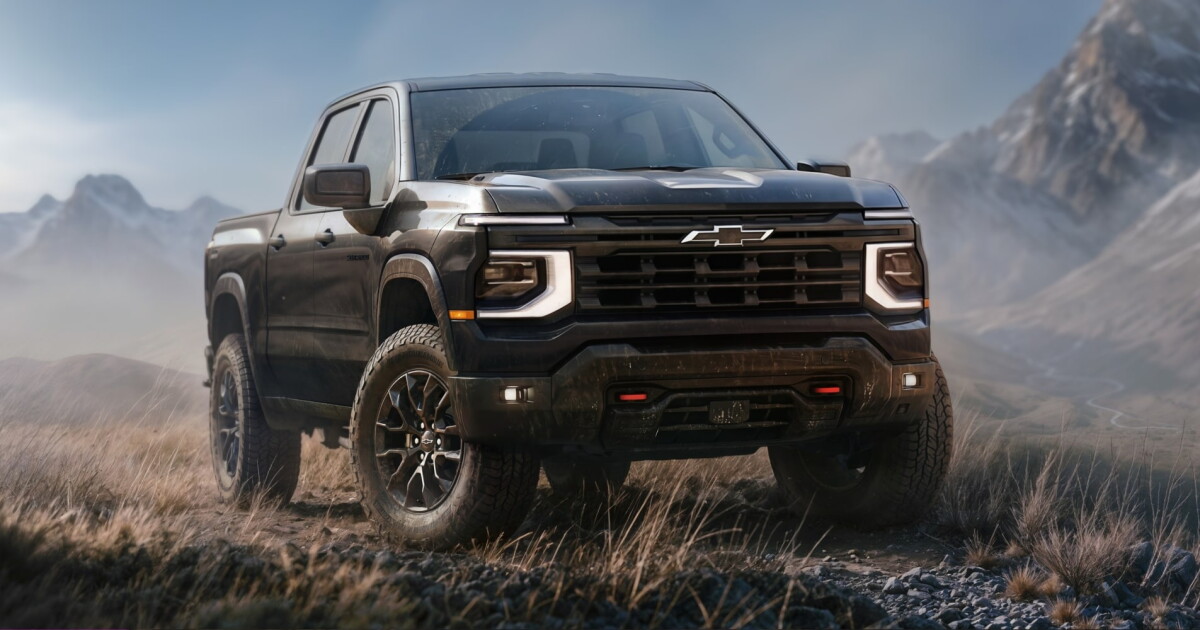
In a sharp departure from automotive industry trends toward forced induction and displacement downsizing, General Motors is expanding its reliance on large-displacement naturally aspirated engines for its full-size pickup truck fleet. According to reporting by Utkarsh Sood, GM plans to equip the upcoming 2027 Chevrolet Silverado 1500 and 2027 GMC Sierra 1500 with updated 5.7-liter and 6.6-liter naturally aspirated small-block V8 engines. The new powerplants will replace the automaker’s long-standing 5.3-liter V8 in light-duty applications, signaling a renewed commitment to pushrod V8 architecture for its flagship high-volume trucks. The move places GM in direct contrast with major North American competitors that have increasingly phased out multi-cylinder naturally aspirated engines in favor of turbocharged smaller-displacement engine configurations.
Key facts
What happened
According to reporting by Utkarsh Sood, General Motors has engineered a strategic overhaul of its light-duty pickup truck engine lineup for the 2027 model year. Rather than following the broader automotive industry's trend of downsizing displacement and adding turbochargers to compensate for reduced cylinder capacity, GM is introducing two larger-displacement small-block V8 engines to its half-ton truck series.
The updated powertrain strategy brings new 5.7-liter and 6.6-liter naturally aspirated V8 engines to both the 2027 Chevrolet Silverado 1500 and its luxury-oriented sibling, the 2027 GMC Sierra 1500. These new engines replace the 5.3-liter V8 engine, which has served as a foundational powertrain choice for GM full-size pickup buyers across multiple model generations.
By upgrading to 5.7-liter and 6.6-liter displacements within the half-ton Silverado and Sierra lineups, GM is reorganizing the core mechanical offering of its most profitable product lines. While full-size heavy-duty trucks have historically utilized larger engines, bringing naturally aspirated V8 powerplants of these capacities to the light-duty 1500 class represents a notable recalibration of GM's half-ton vehicle architecture. The naturally aspirated design means the engines rely on atmospheric pressure for air intake rather than turbocharging, preserving traditional V8 torque delivery characteristics.
Why it matters
The decision by General Motors to double down on larger-displacement naturally aspirated V8 powerplants carries major implications for the North American truck market, supplier networks, and competitive industry strategy. Full-size pickup trucks represent the primary profit center for Detroit’s legacy automakers, funding corporate capital expenditure, technology research, and electric vehicle development facilities.
For truck buyers and commercial fleet operators, engine architecture directly influences long-term vehicle operating costs, towing performance, and maintenance complexity. Naturally aspirated V8 engines are widely favored by traditional truck customers for their linear power delivery, predictable low-end torque curves, and perceived simplicity compared to complex multi-turbocharged systems. Forced-induction engines, while capable of high peak power output, can experience elevated mechanical stress and thermal loads during sustained heavy towing.
From a market competition standpoint, GM’s strategy sharply diverges from its primary rivals. Ford Motor Company has heavily promoted its EcoBoost family of twin-turbocharged V6 engines in the F-150, positioning forced induction as the superior solution for balancing low-RPM torque with highway fuel efficiency. Similarly, Stellantis retired its iconic 5.7-liter Hemi V8 from the Ram 1500 lineup for the 2025 model year, replacing it with a 3.0-liter twin-turbocharged inline-six engine known as the Hurricane. Nissan also discontinued its Titan pickup and its 5.6-liter V8 entirely. By offering modern 5.7-liter and 6.6-liter small-block V8s, GM occupies a distinct market position as the sole major manufacturer offering traditional multi-displacement V8 options in light-duty trucks.
The background
The General Motors small-block V8 engine is one of the most commercially successful and mechanically influential engine architectures in automotive history. First introduced for the 1955 model year in Chevrolet passenger cars, the original small-block was developed under the direction of Chevrolet chief engineer Ed Cole. The initial 265-cubic-inch (4.3-liter) overhead-valve V8 established a blueprint of compact dimensions, light weight relative to output, pushrod valve actuation, and high production efficiency.
Over seven decades, GM refined the small-block architecture across five distinct mechanical generations. Generation I and Generation II engines powered millions of cars and trucks through the mid-1990s. In 1997, GM introduced the Generation III "LS" engine family in the Chevrolet Corvette, featuring an all-aluminum block design and revised airflow characteristics, which subsequently adapted into iron-block variants for truck and SUV applications.
The outgoing 5.3-liter V8 engine—equivalent to 325 cubic inches—was introduced in 1999 as part of the Generation III engine family (code-named LM7) for the Chevrolet Silverado and GMC Sierra. Over subsequent generations, the 5.3-liter V8 received continuous technological updates, including active fuel management, direct fuel injection, variable valve timing, and Dynamic Fuel Management (DFM).
The 5.7-liter displacement holds significant historical resonance for GM truck enthusiasts. The 350-cubic-inch (5.7-liter) V8 was a mainstay of GM light trucks and passenger cars from the late 1960s through the late 1990s. The introduction of a modern 5.7-liter small-block effectively resurrects a classic displacement metric updated with contemporary metallurgical and digital management technologies.
Simultaneously, GM has produced a 6.6-liter gasoline V8 for its heavy-duty Silverado 2500 HD and Sierra 2500 HD trucks since the 2020 model year. Bringing a 6.6-liter small-block derivative into the light-duty 1500 pickup chassis marks a significant expansion of displacement for half-ton vehicle offerings, where 6.2-liter engines previously marked the upper displacement boundary for GM light-duty trucks.
Reaction
The news of GM's new small-block engine lineup has generated strong interest across the automotive sector, drawing reactions from truck owners, industry analysts, and environmental policy watchers.
Automotive enthusiasts and truck owners have largely welcomed the retention and enlargement of naturally aspirated V8 engines. Online automotive forums and owner groups express enthusiasm for GM’s commitment to pushrod V8 technology at a time when competing automakers are shifting exclusively to turbocharged six-cylinder or four-cylinder engines. Buyers who frequently pull heavy trailers cite thermal efficiency and mechanical simplicity as primary reasons for preferring naturally aspirated V8s.
Industry analysts note that GM's move reflects pragmatic commercial realities. Despite aggressive corporate electrification targets announced by automakers in recent years, consumer adoption rates for full-size electric pickup trucks have grown at a more measured pace than initially forecast. High acquisition costs, public charging infrastructure limitations, and reduced towing range under load have tempered immediate fleet conversion.
Environmental advocacy organizations and clean-transportation analysts are expected to monitor GM’s emissions compliance strategy closely. Industry watchers emphasize that GM will need to demonstrate how larger-displacement engines align with federal emissions schedules, anticipating that GM may employ sophisticated cylinder deactivation or fleet-wide averaging strategies.
What we don't know yet
While reporting confirms the introduction of the 5.7-liter and 6.6-liter naturally aspirated small-block V8 engines for the 2027 Chevrolet Silverado 1500 and GMC Sierra 1500, several key technical and commercial details remain unannounced:
What to watch
In the coming months leading up to the release of the 2027 model year pickup trucks, several key developments will indicate how GM’s engine strategy unfolds:
This report is based on original reporting by Utkarsh Sood.
How this story was produced
This report was written by The Global Wire newsroom from reporting first published by Utkarsh Sood. We verify the core facts against the original report, write our own account, and add the background and consequences a short wire item leaves out. Drafting is AI-assisted inside an editor-supervised pipeline, and every story is checked for accuracy of attribution, structure and duplication before it appears — full detail in our AI and funding disclosure.
Spotted an error? Tell us at corrections@horizonglobalnews.com and read our corrections policy or editorial standards.



Reader comments
Loading comments…