

French President and Vatican Align on Global Artificial Intelligence Oversight and Nuclear Risks
Emmanuel Macron and Pope Leo XIV have called for international governance of advanced technologies to prevent technological monopolization and safeguard human rights.
By The Global Wire Newsroom · Reported from Rédaction Africanews
Link preview · horizonglobalnews.com
French President and Vatican Align on Global Artificial Intelligence Oversight and Nuclear Risks
Emmanuel Macron and Pope Leo XIV have called for international governance of advanced technologies to prevent technological monopolization and safeguard human rights.
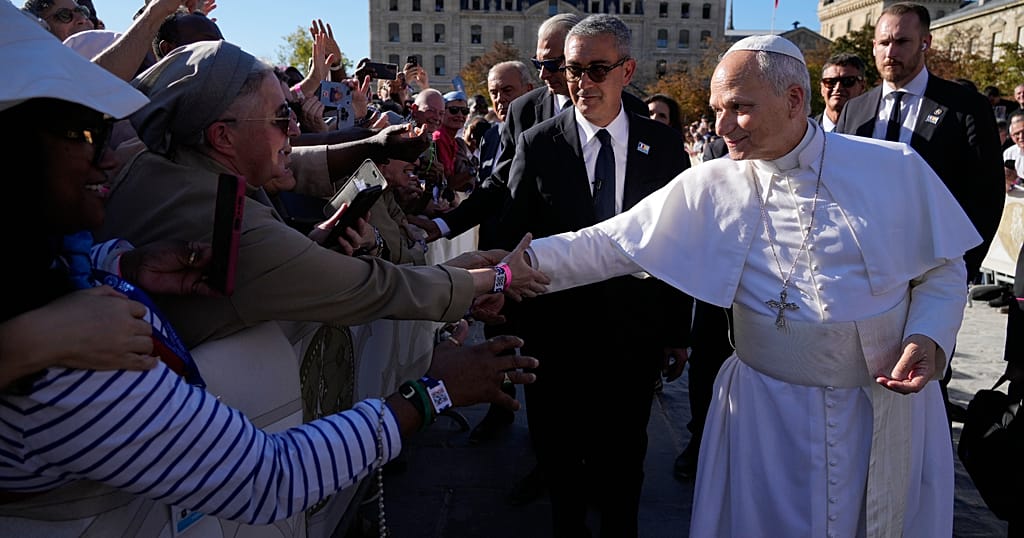
French President Emmanuel Macron and Pope Leo XIV voiced shared concerns on September 25, 2026, regarding the rapid escalation of artificial intelligence risks and nuclear weapons proliferation. Speaking in the context of broader diplomatic engagements, the French leader issued an urgent call for international oversight to govern humanity’s most advanced computational capabilities. Macron warned that in the absence of multilateral regulatory safeguards, state actors and corporate entities could consolidate control over frontier technologies, potentially transforming them into tools for human oppression, mass surveillance, and political subjugation.
Key facts
What happened
On September 25, 2026, French President Emmanuel Macron outlined a joint perspective with Pope Leo XIV concerning the emerging risks of advanced technologies and nuclear capabilities, according to reporting by Africanews. The coordination underscores escalating concern among sovereign governments and international spiritual leaders over the uncontrolled evolution of frontier technology.
In his remarks, Macron addressed the dual challenges presented by high-level artificial intelligence models and persistent nuclear security threats. He emphasized that the most powerful technical tools ever created by humanity must not be left to develop in a regulatory vacuum. Instead, he argued that robust international oversight mechanisms are essential to ensure these systems remain aligned with the public interest and fundamental human rights.
Macron expressed specific concern regarding the concentration of technological power. He warned that allowing a small group of dominant private corporations or sovereign states to hold exclusive control over advanced AI models poses systemic dangers to global stability. Without multilateral governance, he asserted, such technologies could easily be leveraged by authoritarian regimes or unchecked monopolies as instruments to suppress dissent, conduct pervasive surveillance, and restrict human freedoms.
Although detailed transcripts of the interaction between the French leader and the pontiff were not immediately made public, the alignment highlights a unified diplomatic and moral stance. Both leaders framed technology governance as an urgent priority requiring multilateral coordination rather than reliance on self-regulation by technology firms.
Why it matters
The alignment between France and the Holy See on artificial intelligence governance and nuclear risks carries significant implications for global policy, regulatory frameworks, and technological development.
By categorizing frontier artificial intelligence alongside nuclear arms, leaders are signaling that unregulated algorithms and autonomous systems pose existential risks to global stability. For technology companies developing high-capacity machine learning models, rising political pressure for international oversight suggests that future commercial operations will face stricter regulatory scrutiny. Corporations may eventually be required to adhere to international compliance standards, mandatory safety audits, and restrictions on deploying dual-use algorithms capable of cyber operations or autonomous decision-making.
In the sphere of defense and international security, the convergence of AI and strategic weapons systems represents a growing risk. As militaries incorporate artificial intelligence into battle management, automated targeting, and early-warning intelligence systems, decision-making cycles shorten drastically. Without clear international protocols, algorithmic errors or speed-driven escalation could trigger unintended military conflict between nuclear-armed powers.
Furthermore, Macron’s explicit focus on preventing technological concentration speaks directly to concerns regarding digital sovereignty, particularly in developing nations. If advanced AI infrastructure remains concentrated within a handful of technology hubs in wealthy nations, non-aligned states risk becoming dependent on foreign platforms for critical digital services, governance tools, and economic infrastructure. Establishing global oversight mechanisms could help ensure equitable access to technology while protecting populations against algorithmic bias and authoritarian surveillance.
The background
The debate over how to govern artificial intelligence has intensified over the past decade as computational power and algorithmic sophistication have advanced far faster than international legal frameworks.
Historically, global security architectures were constructed to monitor physical and identifiable assets. Treaties such as the 1968 Treaty on the Non-Proliferation of Nuclear Weapons (NPT) established formal inspection regimes under the International Atomic Energy Agency (IAEA) to monitor fissile material and prevent weaponization. Translating these traditional arms control structures to software presents severe technical challenges, as artificial intelligence algorithms are fundamentally dual-use, inherently intangible, and rapidly scalable across digital networks.
The Vatican has long maintained an active stance on technological ethics and nuclear disarmament. Through various encyclicals and diplomatic initiatives, the Holy See has advocated for human-centered technology, coining terms such as "algorethics" to emphasize that automated processing must serve human dignity rather than commercial or political domination. Religious leadership has consistently called for binding prohibitions against autonomous weapons systems that operate without meaningful human control.
France has similarly positioned itself at the center of international AI policy. As a leading member of the European Union, France played a key role in negotiating the EU Artificial Intelligence Act, a comprehensive legal framework classifying AI systems by risk level. Globally, French diplomacy has consistently promoted multilateral cooperation through the United Nations and specialized international forums, seeking to balance the promotion of domestic innovation with strict ethical guardrails.
Reaction
The calls for international AI oversight voiced by Macron and supported by Vatican leadership have drawn varied reactions across civil society, political institutions, and the technology sector.
Human rights organizations and civil liberties groups have expressed support for the emphasis on preventing algorithmic oppression. Advocates note that automated surveillance, facial recognition technology, and predictive algorithms are increasingly deployed by authoritarian governments to track dissidents and restrict civil liberties, making binding international standards urgent.
Within the technology industry, response to prospective global regulation remains divided. Large technology firms often publicly support uniform international rules to avoid facing a fragmented landscape of conflicting national laws. However, independent software developers and open-source advocates warn that overly complex global regulatory regimes could impose high compliance costs that only dominant market incumbents can afford, inadvertently exacerbating the power concentration that leaders seek to prevent.
Diplomats from non-aligned countries and developing economies are watching the developments closely, emphasizing that international governance bodies must not be used by wealthy nations to restrict technological transfer or enforce economic monopolies under the guise of security regulation.
What we don't know yet
While the high-level principles articulated by Macron and Pope Leo XIV establish a clear political orientation, several fundamental details remain unresolved in the current reporting.
It is currently unknown what specific regulatory framework or institutional structure France intends to propose at the international level. The reporting does not specify whether Paris advocates creating a new United Nations agency dedicated to AI oversight, extending the mandate of existing institutions, or relying on voluntary international accords.
Additionally, the specific content of the discussions regarding nuclear weapons remains unspecified. It is unclear whether the dialogue focused on existing strategic arms limitation treaties, regional nuclear tensions, or the specific risks posed by integrating AI into nuclear command-and-control architectures.
Finally, the reaction of major technological powers, particularly the United States and China, remains an open question. Because the vast majority of private sector capital, hardware infrastructure, and frontier AI research is concentrated within those two nations, any global oversight mechanism lacking their active participation and enforcement commitment would face severe operational limits.
What to watch
Several forthcoming developments will indicate whether this diplomatic convergence translates into concrete policy action.
First, diplomats will monitor upcoming sessions of the United Nations General Assembly and related international summits to see if France formally introduces draft resolutions establishing international AI oversight bodies or standardized compliance metrics.
Second, international observers will track discussions within the UN Convention on Certain Conventional Weapons (CCW) regarding lethal autonomous weapons systems. Concrete proposals to ban or strictly limit autonomous targeting will demonstrate whether sovereign states are willing to convert ethical principles into binding international law.
Third, the ongoing rollout and enforcement of regional policies, particularly the European Union AI Act, will serve as a key test case for whether regulatory compliance can effectively alter corporate behavior without stifling technological innovation.
This account is based on original reporting published by Africanews.
How this story was produced
This report was written by The Global Wire newsroom from reporting first published by Rédaction Africanews. We verify the core facts against the original report, write our own account, and add the background and consequences a short wire item leaves out. Drafting is AI-assisted inside an editor-supervised pipeline, and every story is checked for accuracy of attribution, structure and duplication before it appears — full detail in our AI and funding disclosure.
Spotted an error? Tell us at corrections@horizonglobalnews.com and read our corrections policy or editorial standards.


Reader comments
Loading comments…