

Five Arrested Near RAF Fairford Over Suspected Plot Targeting U.S. Bomber Airfield
British police intercepted three vehicles heading toward the strategic air base in Gloucestershire, detaining five men on suspicion of planning an explosive attack.
By The Global Wire Newsroom · Reported from Sujita Sinha
Link preview · horizonglobalnews.com
Five Arrested Near RAF Fairford Over Suspected Plot Targeting U.S. Bomber Airfield
British police intercepted three vehicles heading toward the strategic air base in Gloucestershire, detaining five men on suspicion of planning an explosive attack.
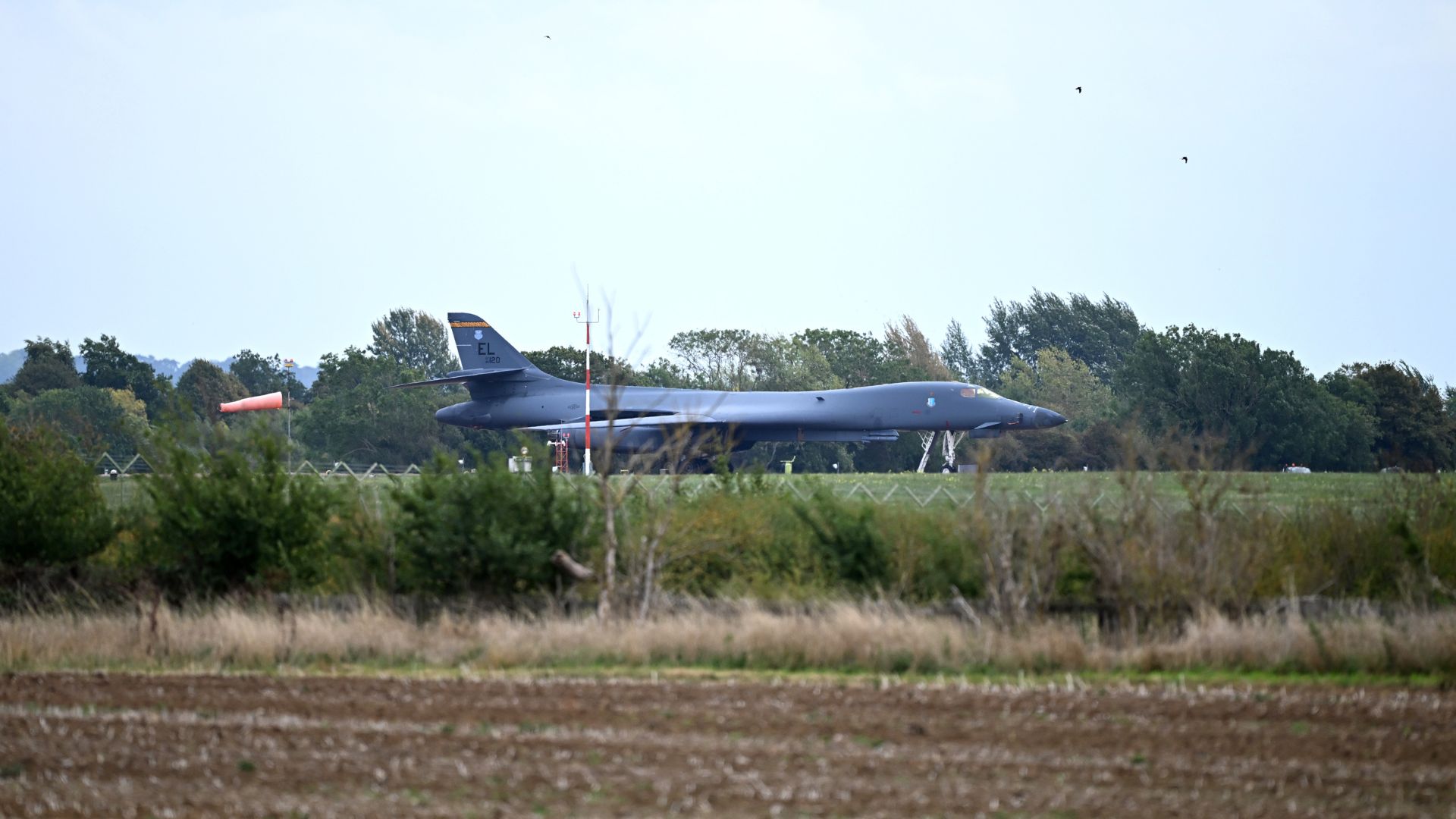
British law enforcement authorities intercepted five men near Royal Air Force Station Fairford in Gloucestershire on September 28, 2026, following reports of three suspicious vehicles traveling toward the airfield, which serves as a major European forward operating base for United States Air Force strategic bombers. Police acted after receiving an urgent tip regarding the movement of the vans, initiating a rapid security operation that resulted in the detentions under suspicion of a planned explosive attack targeting the military installation.
Key facts
What happened
According to reporting by Sujita Sinha, the security response unfolded on September 28, 2026, when law enforcement received an alert detailing three suspicious vans moving in the direction of RAF Fairford in rural Gloucestershire. The airfield, situated approximately 14 miles east of Cirencester, is heavily guarded but surrounded by public access roads and rural terrain typical of the Cotswold region.
Upon receiving the initial report, police dispatched armed units and specialized security personnel to intercept the convoy before it could reach the primary perimeter gates of the base. Officers successfully stopped the vehicles in close proximity to the facility and placed five men under arrest.
While specific details regarding the contents of the three vans have not been fully disclosed by authorities, the operation was conducted under the suspicion that the individuals were involved in a coordinated bomb plot aimed at the air base. Security forces instituted immediate perimeter sweeps and established cordons around the interception site to allow explosive ordnance disposal teams and forensic specialists to inspect the vehicles.
The prompt action by law enforcement prevented any breach of the installation's secure boundaries. Personnel inside RAF Fairford were placed on heightened security alert as armed response officers secured the surrounding roadways. The five suspects were taken into custody at a designated police station for questioning under anti-terrorism legislation, while forensic investigators began detailed examinations of the seized vehicles and surrounding locations.
Why it matters
The targeting of RAF Fairford strikes at one of the most vital strategic nodes for Western alliance military power in Western Europe. As the principal European forward operating location for United States Air Force Bomber Task Force deployments, Fairford acts as a vital staging ground for missions across Europe, North Africa, and the Middle East. Any security breach or credible attempt to detonate explosives near the base poses significant risks to high-value strategic assets, including long-range heavy bombers like the Boeing B-52H Stratofortress, the Rockwell B-1B Lancer, and the Northrop Grumman B-2 Spirit.
Beyond the immediate threat to human life and military materiel, the incident exposes operational vulnerabilities inherent in host-nation security arrangements. While the internal perimeter of RAF Fairford is secured by military guards and Ministry of Defence Police, the surrounding road network depends on civil law enforcement, specifically the Gloucestershire Constabulary. A coordinated effort involving multiple vehicles highlights potential security challenges along public access routes that abut critical defense infrastructure.
Furthermore, an attempted attack on a U.S. bomber base in the United Kingdom elevates national threat perceptions and could prompt reviews of physical security protocols at joint-use facilities across Europe. It highlights the persistent risk posed by asymmetric threats against conventional military installations, forcing defense planners to weigh open access in rural areas against the necessity of hardened defense perimeters.
The background
RAF Fairford was constructed in 1944 during World War II to support Allied troop transport and glider operations for the invasion of Normandy. Following the onset of the Cold War, the airfield was transferred to the control of the United States Air Force in 1950, undergoing extensive infrastructure upgrades—including the construction of a 3,000-metre (nearly 10,000-foot) heavy-duty runway—to accommodate strategic bombers.
Under the terms of the 1951 NATO Status of Forces Agreement and the United Kingdom’s Visiting Forces Act 1952, RAF Fairford remains an official Royal Air Force station under British sovereignty, but is operated on a standby basis primarily by USAF personnel from the 501st Combat Support Wing. The base maintains minimal permanent flying units but is capable of scaling up to full operational capacity within hours to support deployed bomber squadrons.
Historically, RAF Fairford has played a pivotal role in major Western military campaigns. During Operation Desert Storm in 1991, USAF B-52 bombers flew combat missions directly from Fairford to targets in Iraq. The facility served a similar role during NATO’s Operation Allied Force in Yugoslavia in 1999, when B-52 and B-1 bombers conducted sustained strike operations from the Cotswolds runway. During the 2003 invasion of Iraq, Fairford was again utilized as a primary launch site for strategic bomber sorties.
In recent years, the installation has hosted routine Bomber Task Force deployments, serving as a visible instrument of NATO deterrence. These missions involve rotational deployments of strategic bombers that integrate with European allies during training and operational exercises.
In the United Kingdom, counter-terrorism operations fall under the framework of the Terrorism Act 2000 and subsequent security legislation. Under these laws, police have extended powers to detain suspects without immediate formal charge for up to 48 hours, expandable to 14 days upon judicial approval. Joint security at military bases relies on coordination between local civilian police forces, the Ministry of Defence Police, and visiting force security elements.
Reaction
In the immediate aftermath of the arrests, official statements from governing bodies remained measured while investigative procedures proceeded. The Gloucestershire Constabulary, leading the local response alongside counter-terrorism officers, confirmed the detention of the five individuals and emphasized that public safety protocols were active.
The United Kingdom Ministry of Defence and the United States European Command have historically maintained strict operational confidentiality regarding active security threats, but joint defense spokespersons are expected to address the posture of the installation once preliminary sweeps are completed.
Local community leaders in Gloucestershire and the nearby town of Fairford expressed concern over the incident, given the close proximity of the air base to civilian residences and farmland. Members of Parliament representing local constituencies are likely to seek assurances regarding perimeter security and the coordination between civilian police and military authorities.
International reactions, particularly from defense officials in Washington and NATO headquarters in Brussels, will depend on the final findings of the counter-terrorism investigation and whether the plot is linked to domestic extremism or foreign state-sponsored activity.
What we don't know yet
Several critical facts regarding the incident remain unconfirmed. Reporting by Sujita Sinha notes the arrest of five men and the involvement of three suspicious vans, but official sources have not publicly disclosed the identities, nationalities, or ideological affiliations of the suspects.
It is currently unknown whether search teams recovered completed explosive devices, precursor materials, or conventional weaponry inside the vehicles. The precise tactical objective of the suspects—whether they intended to breach the base perimeter, detonate devices at an entry point, or target military personnel outside the gate—has not been clarified by investigators.
Additionally, authorities have not confirmed whether the plot was orchestrated by a localized cell or coordinated through broader international networks. The exact timeline between the initial police notification and the physical interception of the vehicles also remains unspecified, leaving open questions about how the intelligence was gathered and communicated.
What to watch
In the coming hours and days, formal announcements from the Counter Terrorism Policing network will indicate whether the five suspects face charges under the Terrorism Act 2000 or other criminal statutes. The initial statutory 48-hour detention window will dictate whether police apply to a magistrate for an extension of custody.
Observers should monitor potential adjustments to the UK national terrorism threat level, as well as specific force protection levels at military installations across Great Britain. Any changes to access rules, road closures, or external patrols around RAF Fairford will provide insight into the ongoing risk assessment.
Furthermore, upcoming statements from the U.S. Air Force Global Strike Command may reveal whether scheduled Bomber Task Force rotations or training exercises in the European theater will be modified or subjected to heightened operational security constraints following the plot.
This report is based on original news reporting by Sujita Sinha.
How this story was produced
This report was written by The Global Wire newsroom from reporting first published by Sujita Sinha. We verify the core facts against the original report, write our own account, and add the background and consequences a short wire item leaves out. Drafting is AI-assisted inside an editor-supervised pipeline, and every story is checked for accuracy of attribution, structure and duplication before it appears — full detail in our AI and funding disclosure.
Spotted an error? Tell us at corrections@horizonglobalnews.com and read our corrections policy or editorial standards.



Reader comments
Loading comments…