

Federal Health Officials and Pennsylvania Governor Clash Over Reported Measles Deaths
HHS Secretary Robert F. Kennedy Jr. and Governor Josh Shapiro are locked in a dispute after federal officials questioned state reporting on measles-associated fatalities.
By The Global Wire Newsroom · Reported from pbs.org
Link preview · horizonglobalnews.com
Federal Health Officials and Pennsylvania Governor Clash Over Reported Measles Deaths
HHS Secretary Robert F. Kennedy Jr. and Governor Josh Shapiro are locked in a dispute after federal officials questioned state reporting on measles-associated fatalities.
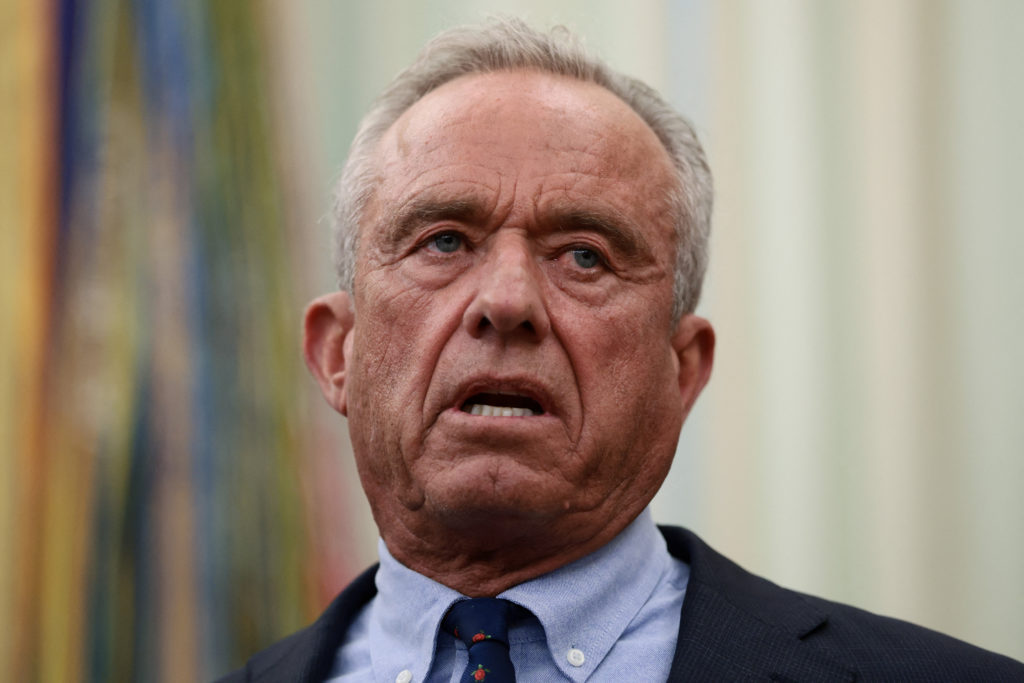
A sharp public disagreement has erupted between federal health authorities led by U.S. Health and Human Services Secretary Robert F. Kennedy Jr. and Pennsylvania Governor Josh Shapiro regarding reported measles-associated deaths in the commonwealth. The clash escalated in late August and early September 2026 following a swift reversal in federal communications, wherein top public health officials moved from expressing condolences to Pennsylvania families to publicly challenging whether the fatalities were genuinely caused by measles. According to reporting by PBS, the shift in federal tone has highlighted deep institutional tensions between state public health agencies and federal leadership over infectious disease surveillance, mortality reporting protocols, and public health communication.
Key facts
What happened
The conflict began when state health authorities in Pennsylvania registered deaths linked to measles during a localized surge in cases. In the initial days following the reports, federal health officials acknowledged the losses and extended formal expressions of sympathy to affected communities and families in Pennsylvania.
However, as reported by PBS, federal public health communications abruptly altered course shortly thereafter. Federal officials, under the leadership of Health and Human Services Secretary Robert F. Kennedy Jr., began casting doubt on the clinical conclusions reached by local medical examiners and state epidemiologists. Federal representatives questioned whether measles was the primary cause of death or merely an incidental finding in patients who suffered from unrelated severe underlying conditions.
In response to the federal pushback, Pennsylvania Governor Josh Shapiro and state public health leaders strongly defended the commonwealth's diagnostic procedures and death certification standards. State officials emphasized that cause-of-death determinations are made by licensed physicians, pathologists, and local coroners through standard clinical evaluations and laboratory confirmation. Governor Shapiro criticized the federal agency's public skepticism as unwarranted interference in established epidemiological procedures, arguing that undermining state health data damages public confidence during an active public health response.
The public back-and-forth created confusion among healthcare providers and county public health departments across Pennsylvania. Medical professionals working on the ground expressed concern that conflicting statements from state and federal authorities could erode community compliance with quarantine directives and routine childhood immunization schedules.
Why it matters
The clash between Pennsylvania executive leadership and federal health officials touches on core principles of public health governance, data integrity, and federalism in the United States. Under the U.S. constitutional framework, state governments hold primary police power over public health, which includes tracking infectious disease outbreaks, issuing isolation orders, and collecting vital statistics. When federal health agencies publicly contest state epidemiological findings without presenting formal counter-evidence, it creates a crisis of institutional trust that can hinder containment efforts during active viral outbreaks.
For medical practitioners and citizens, clear and consistent public health communication is essential. Measles is one of the most contagious human pathogens known, with a basic reproduction number (R0) ranging between 12 and 18. This means a single infected person can transmit the virus to up to 18 unvaccinated individuals. Delayed or contradictory guidance from public health leadership risks depressing local vaccination uptake, which in turn increases the risk of broader community transmission.
Furthermore, this dispute has direct financial and operational implications for municipal health departments. Local health districts rely on accurate federal data and coordinated guidance to allocate medical resources, secure therapeutic treatments, and execute contact tracing programs. Ambiguity regarding disease severity or fatal outcome counts complicates resource management and weakens state-level emergency response operations.
The background
Measles was officially declared eliminated in the United States in 2000 by the Centers for Disease Control and Prevention, following decades of widespread administration of the two-dose measles, mumps, and rubella (MMR) vaccine series. Elimination is defined as the absence of continuous disease transmission within a defined geographic area for 12 months or longer. However, the virus remains endemic in many regions globally, leading to recurring travel-associated imports into domestic communities with lower vaccination coverage.
To maintain surveillance, the U.S. public health system relies on a multi-tiered mortality tracking infrastructure operated through the National Vital Statistics System (NVSS). When an individual dies in the United States, an attending physician, medical examiner, or coroner completes a death certificate specifying the immediate cause of death, underlying causes, and contributing conditions. These certificates are submitted to state vital statistics offices before being transmitted to the federal level for compilation by the CDC.
While federal agencies review state data for national statistical aggregation, individual cause-of-death determinations historically fall under state and local jurisdiction. Over past decades, disputes over cause-of-death coding between state registries and federal statisticians have generally been resolved through private technical consultations rather than public feuds between state governors and federal cabinet secretaries.
The political context surrounding federal health management shifted significantly following the appointment of Robert F. Kennedy Jr. as HHS Secretary. Kennedy has long expressed skepticism toward established public health practices, pharmaceutical interventions, and childhood immunization schedules. His leadership at HHS has introduced new scrutinies regarding how federal health agencies analyze and validate state-level epidemiological data. Meanwhile, Governor Josh Shapiro has consistently positioned Pennsylvania as a defender of traditional, science-based public health management, setting up an inevitable policy friction between Harrisburg and Washington.
Reaction
The public dispute drew immediate commentary from medical organizations, public health advocates, and political observers across the country. Professional associations representing state and territorial health officials underscored the necessity of preserving standard, evidence-based methods for death registration and epidemiological tracking.
Public health professionals voiced worry that disputing state mortality findings in open forums, rather than through formal clinical review channels, weakens overall public faith in health institutions. Medical experts emphasized that accurate reporting of viral mortality is crucial for convincing hesitant parents of the real risks associated with preventable childhood diseases.
State lawmakers in Pennsylvania reacted along party lines, with Democratic legislators praising Governor Shapiro for standing behind local health workers and medical examiners, while some conservative lawmakers called for independent audits of the state's mortality data. At the federal level, public health policy experts noted that the dispute represents an unprecedented breakdown in the traditional collaborative relationship between the Department of Health and Human Services and state executive offices.
What we don't know yet
Several critical clinical and administrative details remain undisclosed in the ongoing dispute between federal and state authorities. Neither HHS nor the Pennsylvania Department of Health has published the full medical histories, diagnostic laboratory reports, or complete autopsy findings for the contested cases, citing patient privacy laws under HIPAA.
It remains unclear whether federal health agencies intend to formally adjust the official mortality tallies in the CDC's National Vital Statistics System or if the skepticism expressed by federal leadership represents informal questioning rather than an official statistical revision. Additionally, public health observers do not yet know whether HHS will dispatch federal epidemiologists from the Epidemic Intelligence Service to conduct a joint field investigation alongside Pennsylvania health workers to reconcile the diagnostic discrepancies.
What to watch
In the coming weeks, several key developments will indicate how this regulatory and political rift resolves. Observers should watch for the release of upcoming issues of the CDC's Morbidity and Mortality Weekly Report (MMWR), which will reveal whether federal statisticians officially record the Pennsylvania deaths as measles-related.
Congressional committees with oversight over HHS, including the Senate Health, Education, Labor, and Pensions (HELP) Committee and the House Energy and Commerce Committee, may schedule hearings to examine HHS's handling of state epidemiological reporting. Furthermore, state public health agencies across the nation will be monitoring the situation closely as school districts prepare their annual immunization compliance reports, which serve as a critical measure of herd immunity against preventable viral diseases.
This account is based on original reporting by PBS.
How this story was produced
This report was written by The Global Wire newsroom from reporting first published by pbs.org. We verify the core facts against the original report, write our own account, and add the background and consequences a short wire item leaves out. Drafting is AI-assisted inside an editor-supervised pipeline, and every story is checked for accuracy of attribution, structure and duplication before it appears — full detail in our AI and funding disclosure.
Spotted an error? Tell us at corrections@horizonglobalnews.com and read our corrections policy or editorial standards.


Reader comments
Loading comments…