

Energy Transition Mandates Shift to Whole-System Grid Investments, Analysts Report
As renewable generation expands globally, energy analysts Diego Hernandez Diaz and Humayun Tai argue that capital allocation must prioritize grid flexibility, storage, and resilience.
By The Global Wire Newsroom · Reported from Diego Hernandez Diaz; Humayun Tai
Link preview · horizonglobalnews.com
Energy Transition Mandates Shift to Whole-System Grid Investments, Analysts Report
As renewable generation expands globally, energy analysts Diego Hernandez Diaz and Humayun Tai argue that capital allocation must prioritize grid flexibility, storage, and resilience.
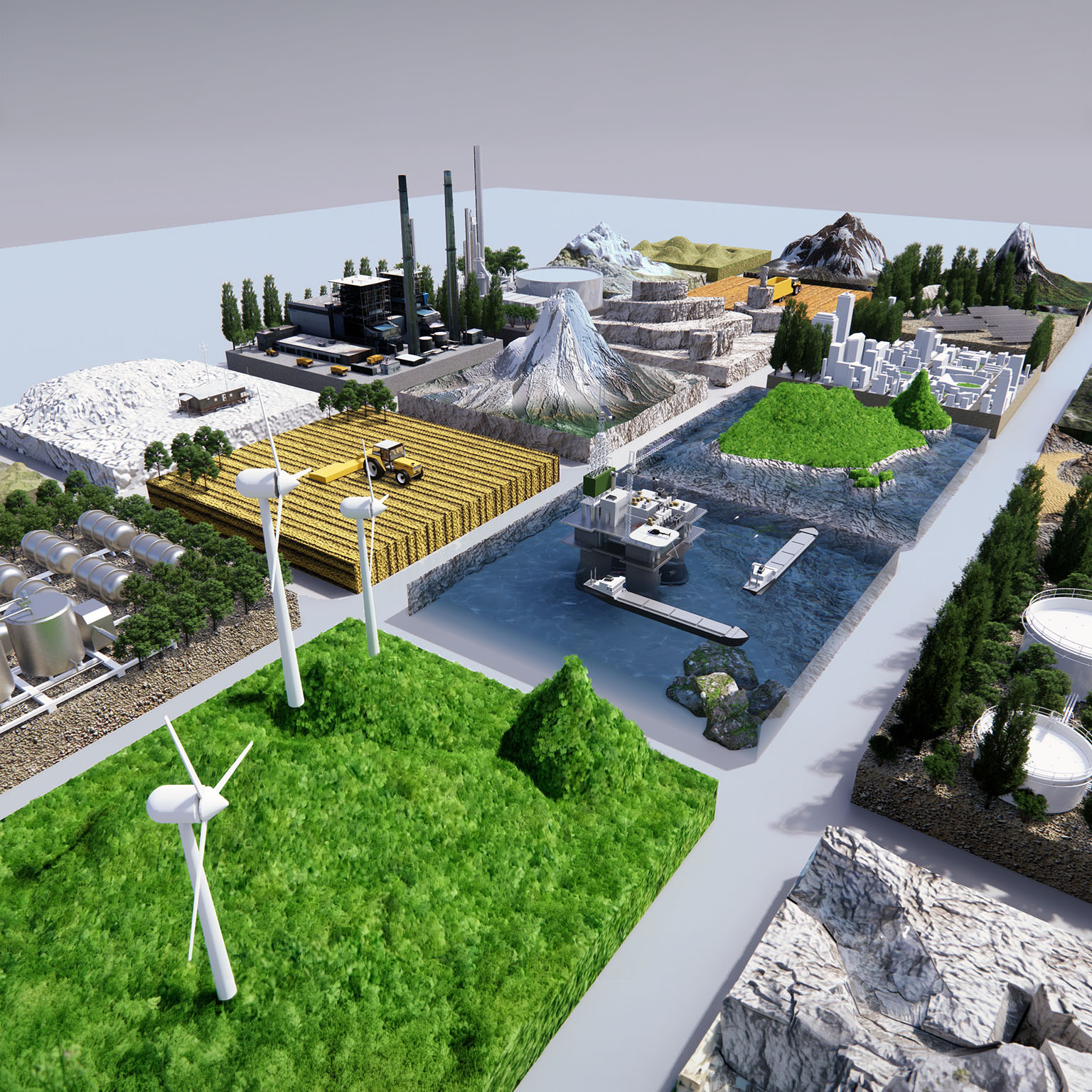
On Sept. 1, 2026, energy transition analysts Diego Hernandez Diaz and Humayun Tai published a strategic assessment advocating a fundamental paradigm shift in how energy sector investments are evaluated and deployed globally. The analysts argue that as the global energy system expands, the next phase of decarbonization cannot rely solely on scaling up low-carbon generation capacity such as wind and solar power. Instead, financial institutions, power utilities, and policy regulators must prioritize system-wide investments in flexibility, grid infrastructure, and operational resilience. As variable renewable energy sources take on a larger share of the power mix, structural bottlenecks—ranging from transmission grid congestion and rising curtailment rates to extreme weather risks—are imposing new challenges on power networks worldwide. Addressing these operational friction points requires moving beyond simple generation cost metrics toward a comprehensive assessment of whole-system value.
Key facts
What happened
In their Sept. 1, 2026 analysis, Diego Hernandez Diaz and Humayun Tai outline how the expanding global energy transition has arrived at a critical structural juncture. Over the past decade, the primary objective of renewable energy investment was driving down the levelized cost of energy for individual generation assets, particularly utility-scale solar photovoltaics and onshore and offshore wind farms. While this strategy successfully brought renewable technologies to cost parity with traditional fossil fuels in many jurisdictions, it created an imbalance in overall power system development.
The authors detail that as power grids absorb higher percentages of non-synchronous, intermittent energy, the physical and financial limits of existing transmission and distribution networks are becoming apparent. In regions with dense clean energy development, generators increasingly face power curtailment—where grid operators order renewable plants to reduce output because high-voltage transmission lines lack the capacity to carry electricity to demand centers. Furthermore, high concurrent generation from solar and wind often causes wholesale power market prices to drop sharply during peak production hours, creating a phenomenon known as price cannibalization that undermines project revenues.
To address these vulnerabilities, Hernandez Diaz and Tai propose evaluating energy transition investments through a "whole-system value" framework. Under this model, project developers, institutional investors, and utility planning boards must evaluate capital expenditure decisions based on how an asset contributes to overall power grid stability and efficiency. This approach requires factoring in the full system costs and benefits, including the need for utility-scale battery storage, high-voltage interconnectors, synchronous condensers for frequency stabilization, demand-response capabilities, and backup generation to provide clean firm capacity.
Why it matters
The transition toward a whole-system value model carries significant implications for capital markets, energy policy, and electricity consumers globally. For institutional investors and infrastructure private equity funds, traditional underwriting models based exclusively on fixed-rate power purchase agreements are facing heightened exposure to grid congestion risks and negative wholesale pricing. Project valuations must increasingly account for localized transmission capacity and grid integration costs to avoid asset devaluation.
For transmission system operators and utility regulators, whole-system planning is essential to prevent system-wide blackouts and brownouts as fossil-fuel-fired baseline generation assets, such as coal and natural gas plants, are retired. Variable generation sources require fast-acting reserve assets to balance rapid swings in supply caused by weather changes. Without proportional investment in long-duration energy storage, smart distribution grids, and flexible capacity markets, power grids face heightened vulnerability to supply deficits during periods of low renewable generation.
For retail consumers and industrial energy users, system-level investment strategies directly influence the long-term affordability and reliability of electricity. Over-indexing on generation assets while under-investing in network infrastructure increases total system costs through elevated transmission charges, congestion fees, and emergency dispatch payments—expenses ultimately passed onto consumers. Conversely, strategic investments in grid flexibility and localized resilience, such as microgrids and battery energy storage systems, help insulate regional economies from catastrophic grid failures caused by extreme weather events.
The background
The structural challenges highlighted in the analysis reflect broader historical trends in global energy markets since the adoption of the Paris Agreement in 2015. Under the landmark international climate treaty, 195 participating parties committed to limiting global average temperature increases to well below 2.0 degrees Celsius above pre-industrial levels, targeting a 1.5-degree limit. To meet these decarbonization goals, governments worldwide implemented ambitious policy incentives, including tax credits under the United States Inflation Reduction Act of 2022, feed-in tariffs in Western Europe, and state-backed renewable auctions across Asia and Latin America.
At the United Nations Climate Change Conference (COP28) in Dubai in December 2023, participating countries pledged to triple global renewable energy capacity by 2030. This policy acceleration successfully spurred record deployments of wind and solar assets. However, physical infrastructure investments in transmission lines, distribution transformers, and energy storage technology did not keep pace with generation buildout.
Regulatory hurdles and extended permitting processes contributed significantly to this gap. In the United States, data from the Federal Energy Regulatory Commission (FERC) and regional grid operators showed hundreds of gigawatts of proposed clean energy projects stuck in multi-year interconnection queues. In Europe, cross-border transmission projects frequently experienced multi-year delays due to complex multi-jurisdictional permitting and municipal opposition. Meanwhile, accelerating climate change intensified the frequency of extreme weather events—such as heatwaves, winter freezes, and severe storms—exposing the physical vulnerability of aging electrical grids in power markets including Texas, California, and South Australia.
Reaction
Following the release of the analysis by Hernandez Diaz and Tai, energy market participants and policy scholars emphasized that institutional capital strategies are already beginning to adapt to system-level realities. Asset managers and independent power producers are increasingly structuring clean energy projects as hybrid developments, co-locating battery energy storage systems with solar and wind facilities to mitigate curtailment risks and capture price arbitrage during peak demand periods.
Regulatory authorities and market operators are facing mounting pressure to reform power market rules to incentivize grid services. Energy economists note that legacy electricity market structures, which primarily compensate generators based on volumetric megawatt-hour output, fail to adequately reward key flexibility services such as voltage support, reactive power, fast frequency response, and black-start capabilities. In response, organizations such as FERC in the United States and the European Network of Transmission System Operators for Electricity (ENTSO-E) in Europe are advancing regulatory reforms aimed at accelerating grid connection processes and improving long-term transmission planning frameworks. Environmental policy advocacy groups have also echoed the call for grid modernization, stressing that massive electrification of transport and heating cannot occur without a resilient power grid foundation.
What we don't know yet
Despite growing consensus around the necessity of whole-system energy planning, several key uncertainties remain regarding how this model will be implemented at scale. First, standardized financial and regulatory metrics for defining and quantifying "whole-system value" across different geographic power markets have not yet been established. Investors lack unified benchmarks to evaluate the comparative net benefit of complex hybrid infrastructure assets versus traditional single-asset installations.
Second, the optimal long-term technological mix for providing multi-day energy storage remains uncertain. While short-duration lithium-ion batteries are widely deployed for short-term balancing, cost-effective technologies for multi-day or seasonal energy storage—such as green hydrogen, iron-air batteries, or expanded pumped-storage hydropower—have not yet achieved widespread commercial scalability under existing market designs.
Third, regulatory and political questions persist over cost-allocation frameworks for multi-jurisdictional transmission projects. Determining how capital costs for large cross-border high-voltage lines should be distributed between regional utility ratepayers, municipal authorities, and federal governments remains a point of regulatory friction, leaving open the question of whether grid investments can be executed rapidly enough to prevent further system bottlenecks.
What to watch
In the coming months and years, several specific developments will indicate whether energy markets are successfully adopting a whole-system value investment approach.
First, regulatory implementations of grid planning reforms—such as FERC Order 2023 in the United States and updated regional transmission master plans in the European Union—will provide a clear metric for whether grid interconnection backlogs are effectively shrinking.
Second, annual capital expenditure reporting from international organizations, including the International Energy Agency (IEA), will highlight whether global investment in grid infrastructure is expanding to match capital flows into renewable energy generation.
Third, the development of specialized market mechanisms—including state-level long-duration energy storage mandates, capacity market rule revisions, and expanded ancillary service markets—will test whether project developers are offered adequate revenue streams to fund flexibility assets.
Finally, corporate clean energy procurement strategies will warrant close monitoring as major technology companies and industrial consumers shift from annual renewable matching to 24/7 carbon-free energy procurement frameworks, driving direct private investment into firm, dispatchable clean energy technologies.
This report is based on strategic analysis and published reporting by Diego Hernandez Diaz and Humayun Tai released on Sept. 1, 2026.
How this story was produced
This report was written by The Global Wire newsroom from reporting first published by Diego Hernandez Diaz; Humayun Tai. We verify the core facts against the original report, write our own account, and add the background and consequences a short wire item leaves out. Drafting is AI-assisted inside an editor-supervised pipeline, and every story is checked for accuracy of attribution, structure and duplication before it appears — full detail in our AI and funding disclosure.
Spotted an error? Tell us at corrections@horizonglobalnews.com and read our corrections policy or editorial standards.




Reader comments
Loading comments…