

Darline Graham’s Senate Appointment Refocuses Scrutiny on Political Inheritance
An analysis by political scientists examines how Darline Graham's appointment to a vacant Senate seat adapts traditional patterns of family succession in American legislative politics.
By The Global Wire Newsroom · Reported from Christopher A Cooper; Gibbs Knotts
Link preview · horizonglobalnews.com
Darline Graham’s Senate Appointment Refocuses Scrutiny on Political Inheritance
An analysis by political scientists examines how Darline Graham's appointment to a vacant Senate seat adapts traditional patterns of family succession in American legislative politics.
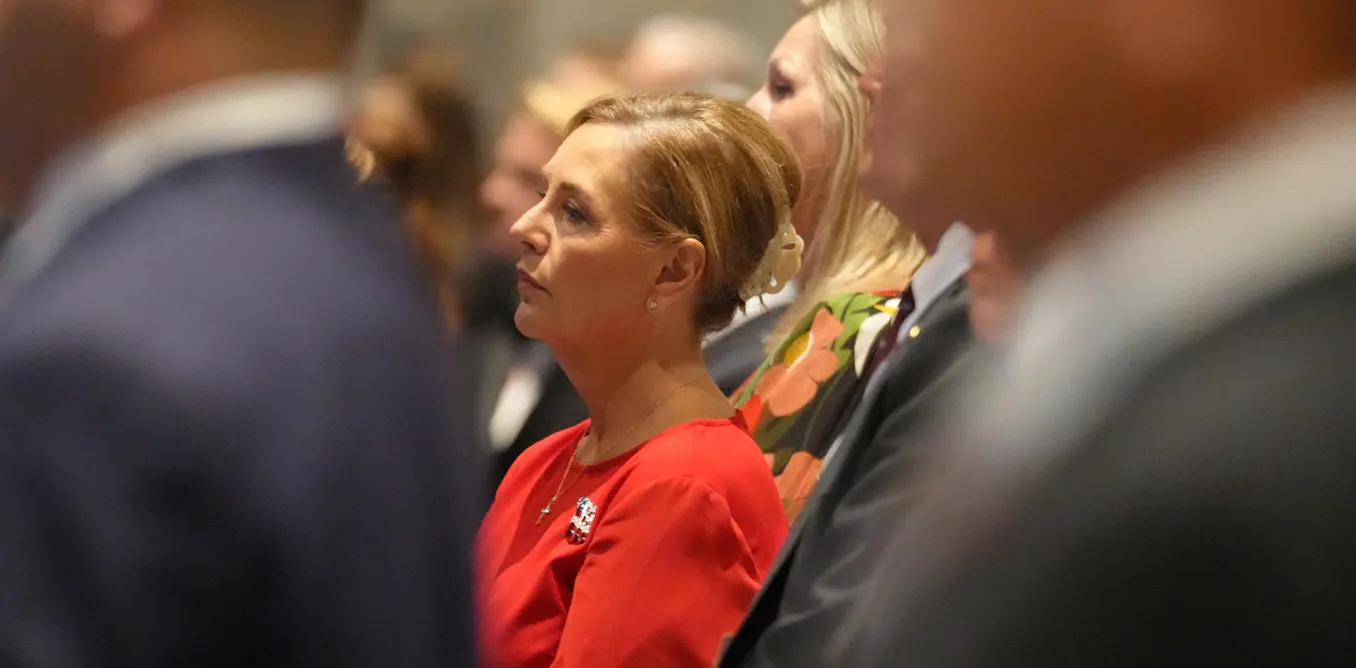
The appointment of Darline Graham to a vacant Senate seat has re-ignited national debate over the role of political inheritance and family succession within American legislative bodies. Highlighted in an analysis by political scientists Christopher A. Cooper and Gibbs Knotts on August 20, 2026, Graham’s elevation presents a variation on the historic "widow’s mandate"—a tradition wherein grieving spouses were selected to fill vacancies left by deceased lawmakers—by substituting a sibling connection for a marital one. While legislative appointments of family members are frequently viewed as unconventional in modern representative government, political scientists note that hereditary ties and familial transfers of power have remained a persistent feature of the United States political landscape since the founding of the republic.
Key facts
What happened
The transition of the Senate seat to Darline Graham follows established executive appointment procedures designed to maintain continuous legislative representation when a seat becomes vacant. According to analysis by Cooper and Knotts, Graham's appointment represents a modern adaptation of political succession mechanisms that historically relied on family continuity to fill unexpected vacancies.
Instead of a spouse stepping into a deceased or departing member's office—the classic pattern known informally in American political science as the "widow's mandate"—Graham’s appointment involves a sibling relationship. Executive branch officials charged with filling legislative vacancies often evaluate candidates based on party loyalty, policy alignment, administrative capability, and political viability. In instances involving political families, appointing authorities frequently select a relative to preserve political stability, honor the predecessor's legislative agenda, and avoid triggering immediate intra-party factional conflict among competing contenders.
While executive appointments are legally designed to serve as temporary measures until special or scheduled elections can be conducted, individuals appointed to legislative seats gain immediate advantages. An appointee acquires the formal title, access to legislative staff, committee assignments, and the elevated public profile associated with incumbency. Cooper and Knotts observe that although the public often views family succession as an anomaly in a constitutional democracy, the practice has repeatedly recurred across municipal, state, and federal offices throughout American history.
Why it matters
The appointment of a legislative relative carries major implications for electoral competition, institutional representation, and public trust in democratic institutions. When an executive appoints a family member to a high-ranking legislative post, it provides the appointee with the significant benefits of incumbency—such as established fundraising networks, media visibility, and name recognition—prior to facing voters in a competitive election.
From an institutional standpoint, family successions test the balance between democratic accountability and legislative continuity. Proponents of familial appointments contend that relatives of former officeholders often possess an intimate understanding of the constituency’s needs, established relationships with legislative staff, and shared policy commitments, ensuring a seamless transition during mid-term vacancies.
Conversely, critics and governance advocates maintain that hereditary appointments can suppress open democratic competition. By elevating a family member, executive authorities may effectively pre-empt primary contests and limit opportunities for non-dynastic candidates, including underrepresented groups or rising community leaders who lack established political lineage. Furthermore, Graham’s appointment highlights the evolving demographics of political succession. Historically, the widow’s mandate provided one of the very few avenues for women to enter legislative bodies during the mid-twentieth century. The contemporary shift toward sibling succession reflects a broader normalization of family political networks that extend beyond traditional marital ties.
The background
Political succession within families is deeply woven into the fabric of American governance. Although the United States Constitution explicitly prohibits titles of nobility, informal dynastic politics have endured across local, state, and federal levels since the early days of the republic, exemplified by political families such as the Adams, Roosevelt, Kennedy, Bush, and Long dynasties.
The specific mechanism known as the "widow’s mandate" emerged in the twentieth century as a common custom for filling sudden legislative vacancies. In 1923, Mae Ella Nolan of California became the first woman elected to the U.S. House of Representatives after winning a special election to succeed her deceased husband, John I. Nolan. In the Senate, the precedent was famously established in December 1931 when Hattie Caraway of Arkansas was appointed to fill the seat of her late husband, Thaddeus Caraway. Caraway subsequently won a special election in January 1932 and later secured a full six-year term in her own right, becoming the first woman elected to the U.S. Senate.
Throughout the mid-to-late twentieth century, dozens of women entered Congress through spousal appointment or special election succession, including Margaret Chase Smith of Maine, who succeeded her husband in the House in 1940 before being elected to the Senate in 1948, Muriel Humphrey of Minnesota in 1978, and Jean Carnahan of Missouri in 2000. While many spousal appointees served strictly as temporary placeholders who agreed not to seek full terms, others built independent legislative careers lasting decades.
Direct gubernatorial appointment of family members has also occurred outside of marital contexts. In December 2002, Alaska Governor Frank Murkowski appointed his daughter, Lisa Murkowski, to fill the U.S. Senate seat he vacated upon assuming the governorship—a move that sparked significant public debate and led Alaska voters to alter state appointment laws in 2004.
Under the Seventeenth Amendment to the U.S. Constitution, ratified in 1913, U.S. Senators are directly elected by voters. The amendment also empowers state legislatures to grant governors the authority to make temporary appointments until a regular or special election is conducted. While states maintain varying rules regarding the speed and timing of special elections, gubernatorial power to name interim senators remains a cornerstone of legislative vacancy management nationwide.
Reaction
Appointments involving political relatives consistently generate strong reactions across the political spectrum. Good-government organizations and civic watchdog groups frequently criticize familial appointments, arguing that executive authorities should avoid creating perceptions of nepotism or political favoritism. These organizations typically advocate for non-partisan interim placeholders who pledge not to seek election, thereby preserving a level playing field for future primary and general elections.
Conversely, supporters within political parties often defend familial appointments by citing institutional stability and voter familiarity. Party leadership often favors candidates who can immediately command public name recognition and unify political factions, particularly when an unexpected vacancy threatens to create intra-party divisions or jeopardize narrow legislative majorities.
While specific formal statements regarding Graham’s appointment from state and local party organizations were not detailed in the original reporting, political scholars Cooper and Knotts emphasize that public reaction to political inheritance generally depends on whether the appointee ultimately seeks election in their own right. When appointed relatives demonstrate independent legislative effectiveness and submit themselves to voter approval in subsequent elections, initial public skepticism often subsides over time.
What we don't know yet
Several critical operational and political details surrounding Darline Graham's appointment remain unconfirmed in the available reporting:
Understanding these unresolved factors is essential for evaluating whether Graham’s tenure will represent a brief transitional stewardship or the start of an extended legislative career built on inherited political capital.
What to watch
In the coming weeks and months, political observers will be monitoring several key indicators to assess the long-term impact of Graham's appointment:
This report is based on analytical commentary and reporting by Christopher A. Cooper and Gibbs Knotts.
How this story was produced
This report was written by The Global Wire newsroom from reporting first published by Christopher A Cooper; Gibbs Knotts. We verify the core facts against the original report, write our own account, and add the background and consequences a short wire item leaves out. Drafting is AI-assisted inside an editor-supervised pipeline, and every story is checked for accuracy of attribution, structure and duplication before it appears — full detail in our AI and funding disclosure.
Spotted an error? Tell us at corrections@horizonglobalnews.com and read our corrections policy or editorial standards.





Reader comments
Loading comments…