

Congo Ebola Outbreak Tops 10,000 Cases as Stalled Progress Fuels Spread Fears
The milestone underscores containment strains across central Africa as epidemiologists warn an infection plateau may precede wider transmission.
By The Global Wire Newsroom · Reported from ABC News
Link preview · horizonglobalnews.com
Congo Ebola Outbreak Tops 10,000 Cases as Stalled Progress Fuels Spread Fears
The milestone underscores containment strains across central Africa as epidemiologists warn an infection plateau may precede wider transmission.
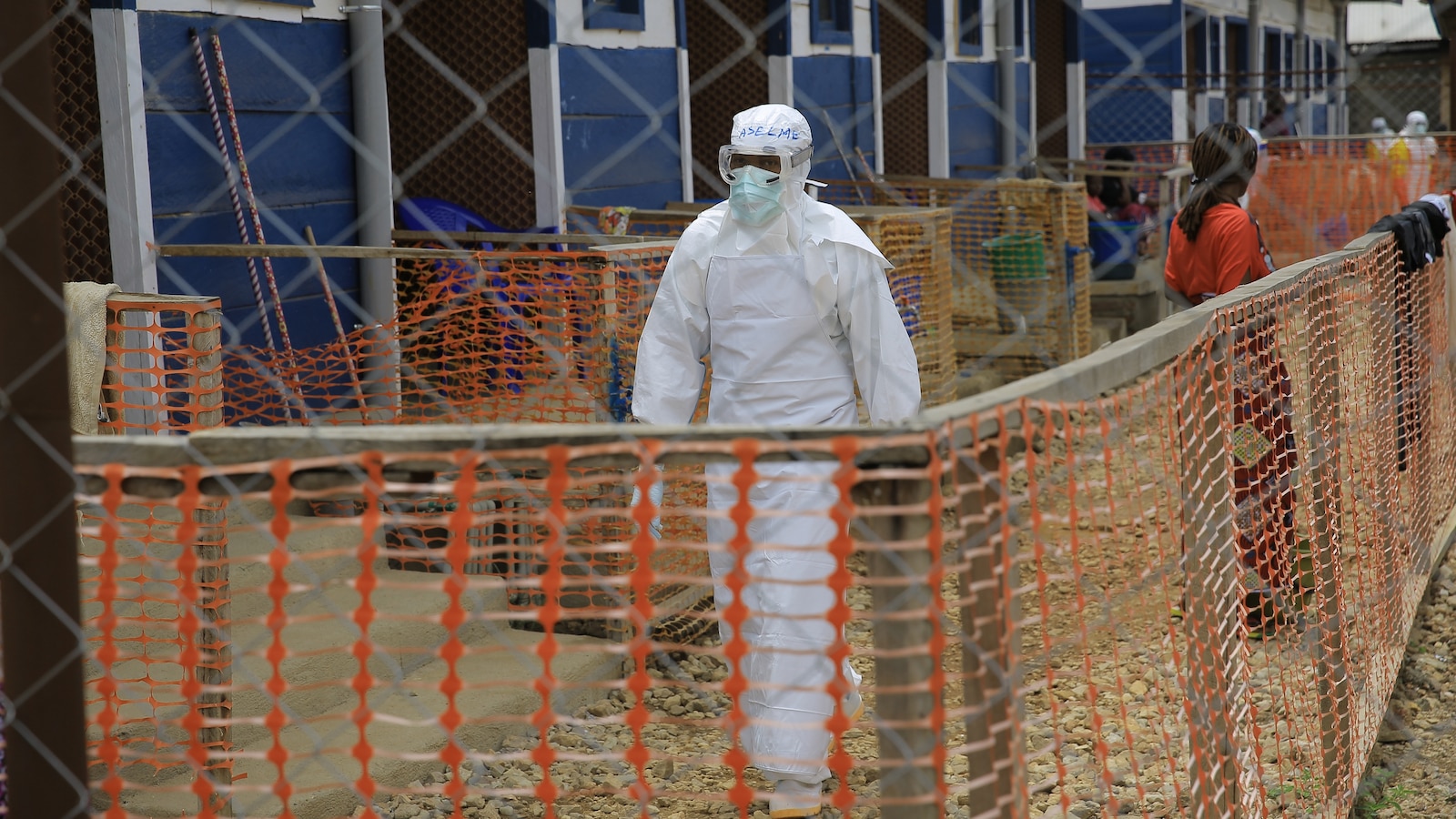
Health authorities combating Ebola virus disease in the Democratic Republic of the Congo have recorded more than 10,000 confirmed cases in the current epidemic, crossing a threshold that signals severe strain on containment operations. The milestone, reached this week according to reporting by ABC News, comes alongside warnings from public health specialists that the outbreak has settled into an epidemiological plateau rather than entering a downward trajectory. That plateau has intensified concerns among international monitors that existing response mechanisms—including contact tracing, ring vaccination, and localized quarantine measures—are failing to interrupt chains of transmission, leaving neighboring provinces and border regions vulnerable to secondary waves of infection.
Key facts
What happened
Public health agencies tracking viral hemorrhagic fevers in central Africa faced a critical juncture this week as the cumulative count of laboratory-confirmed Ebola infections in the Democratic Republic of the Congo breached the 10,000-case mark, ABC News reported. The trajectory of the outbreak has shifted from acute exponential growth into a sustained, elevated plateau. While a stabilization of daily case counts can occasionally suggest that an epidemic's peak has passed, epidemiologists monitoring the Congolese response cautioned that an extended plateau at such a high caseload frequently indicates persistent, undetected community spread and an overburdened surveillance apparatus.
Health responders on the ground face mounting logistical barriers in identifying index cases, monitoring primary contacts during the standard 21-day incubation window, and maintaining rigorous infection control protocols across distributed treatment units. According to ABC News, the stubborn persistence of high daily transmission numbers has raised urgent questions among international observers regarding whether national and multilateral response teams are losing their operational grip on the outbreak.
In standard epidemiological containment, an effective response aims to drive the effective reproduction number—the average number of secondary cases generated by a single infected individual—consistently below one. A sustained plateau implies that transmission remains near parity, with each case replacing itself in the population. In the context of filoviruses, maintaining parity at thousands of active or recent cases creates a vast reservoir of infectious individuals, drastically increasing the statistical probability that the virus will jump outward into previously unaffected urban hubs or cross international borders.
Why it matters
The expansion of an Ebola outbreak beyond 10,000 confirmed cases carries profound consequences for regional health security, clinical capacity, and global epidemic governance. In practical terms, managing an active caseload of this magnitude severely depletes finite medical countermeasures, including stockpiles of monoclonal antibody therapeutics and viral-vector vaccines. The global emergency reserves for Ebola countermeasures—coordinated internationally by the International Coordinating Group on Vaccine Provision—are designed primarily to contain localized clusters rather than sustain open-ended mass vaccination campaigns spanning tens of thousands of individuals and their contacts.
Beyond medical supplies, the strain falls heavily on healthcare infrastructure and frontline personnel. Filoviruses require strict biocontainment, including personal protective equipment, dedicated isolation wards, reliable clinical laboratory infrastructure for reverse transcription polymerase chain reaction testing, and specialized decontamination procedures. In regions where healthcare systems are already operating under severe deficits in staffing, clean water, and stable electricity, redirecting institutional capacity toward Ebola containment systematically disrupts routine care. Historical evidence from previous large-scale filovirus events demonstrates that collateral mortality from untreated malaria, maternal emergencies, tuberculosis, and routine childhood illnesses frequently matches or exceeds deaths caused directly by the virus itself.
Economically and socially, an uncontained epidemic threatens regional commerce across the Great Lakes region of Africa. When health authorities struggle to demonstrate transmission control, bordering nations often institute enhanced border screenings, travel curbs, and trade restrictions. Such disruptions disproportionately harm cross-border trade networks upon which millions of local residents depend for daily subsistence and food security.
The background
Ebola virus disease is a severe, often fatal illness caused by viruses of the genus *Orthoebolavirus*, first identified in 1976 following simultaneous outbreaks in Nzara, South Sudan, and Yambuku, DRC, near the Ebola River. Historically, the virus carries a case fatality rate averaging approximately 50%, though specific outbreaks have recorded fatality rates ranging between 25% and 90%, depending on the viral species, viral load, and the speed of clinical intervention.
Transmission occurs through direct contact with broken skin or mucous membranes exposed to blood, secretions, organs, or other bodily fluids of infected individuals, as well as surfaces and materials contaminated with these fluids. Traditional burial practices involving direct contact with deceased patients have historically served as major amplifiers of transmission. Wild animals, particularly fruit bats of the Pteropodidae family, are considered the natural reservoir host, with human introductions typically occurring through the hunting, butchering, or handling of infected wildlife.
Until the West African epidemic of 2014–2016, Ebola outbreaks were typically confined to remote, forested localities and brought under control after dozens or hundreds of cases. That West African crisis, centered in Guinea, Liberia, and Sierra Leone, fundamentally altered global perceptions of filovirus risks, resulting in more than 28,600 cases and over 11,300 deaths. The Democratic Republic of the Congo has experienced more than a dozen distinct outbreaks since 1976. Its largest prior event—the 2018–2020 Kivu outbreak in North Kivu, South Kivu, and Ituri provinces—resulted in 3,470 cases and 2,287 deaths, taking nearly two years to extinguish amid active armed conflict, deep community mistrust, and attacks on treatment centers.
Modern Ebola management relies heavily on advanced countermeasures that did not exist during early outbreaks. These include the rVSV-ZEBOV vaccine, which utilizes a ring-vaccination strategy to immunize direct contacts and contacts-of-contacts around a confirmed patient, and monoclonal antibody therapies such as ansuvimab-zykw and the combination of atoltivimab, maftivimab, and odesivimab-ebgn. However, these biological tools depend entirely on an intact field epidemiology apparatus: if field teams cannot trace contacts rapidly due to insecurity, community resistance, or geographic remoteness, pharmaceutical interventions cannot arrest viral spread.
Reaction
Public health specialists cited by ABC News have raised alarms over the trajectory of the epidemic, emphasizing that a plateau at 10,000 cases reflects an unsustainable equilibrium. The warning signals growing apprehension among technical advisors that current intervention models require fundamental structural recalibration to regain operational momentum.
Formal reviews and technical briefings are expected from the World Health Organization and the Africa Centres for Disease Control and Prevention, the primary multilateral bodies that support national governments in coordinating emergency filovirus responses. When outbreaks reach systemic plateaus, emergency committees convened under the International Health Regulations typically assess whether existing containment guidelines, cross-border coordination mechanisms, and resource allocations match the scale of operational requirements. National public health authorities in surrounding countries, including Uganda, Rwanda, Burundi, and South Sudan, routinely review their border surveillance and preparedness protocols in response to significant milestones reported in the DRC.
What we don't know yet
The initial reporting from ABC News leaves several critical operational questions unaddressed. The specific geographical distribution of the 10,000 cases remains unspecified, leaving it unclear whether transmission is concentrated in densely populated urban centers, dispersed rural health zones, or regions complicated by active civil conflict. The reporting does not provide updated figures on cumulative fatalities, recovery rates, or the proportion of healthcare workers among the infected, all of which are primary indicators of clinical efficacy and health system vulnerability.
Additionally, existing disclosures do not clarify which specific orthoebolavirus species is responsible for the current caseload, nor the degree to which existing vaccine stockpiles match the circulating strain. While established ring-vaccination protocols exist for the Zaire strain, vaccines for other species, such as the Sudan virus, remain experimental or are held in limited candidate trial supplies. The precise capacity of current supply chains for personal protective equipment, therapeutic antibodies, and diagnostic reagents in the affected zones also remains unverified in available accounts.
What to watch
In the coming weeks, several concrete benchmarks will clarify whether containment efforts are stabilizing or deteriorating further. Observers will watch for formal situation reports from the Congolese Ministry of Public Health and the World Health Organization detailing daily incident case counts, the effective reproduction rate across individual health zones, and whether new transmission clusters appear outside known response boundaries.
Another critical indicator will be whether the World Health Organization convenes an Emergency Committee under the International Health Regulations to assess the plateau and determine whether the situation warrants enhanced international coordination, emergency financing releases, or revised travel and trade advisories. Locally, health analysts will monitor field logistics: the percentage of new cases arising from known, pre-monitored contact lists versus unexpected community deaths, the security conditions surrounding healthcare workers in rural clinics, and whether cross-border health posts report imported cases in neighboring territories.
This report incorporates news reporting originally published by ABC News.
How this story was produced
This report was written by The Global Wire newsroom from reporting first published by ABC News. We verify the core facts against the original report, write our own account, and add the background and consequences a short wire item leaves out. Drafting is AI-assisted inside an editor-supervised pipeline, and every story is checked for accuracy of attribution, structure and duplication before it appears — full detail in our AI and funding disclosure.
Spotted an error? Tell us at corrections@horizonglobalnews.com and read our corrections policy or editorial standards.



Reader comments
Loading comments…