

Civil Rights Leaders Reassemble in Washington to Demand Federal Voting Protections
Decades after Martin Luther King Jr.'s historic speech, thousands gather at the National Mall for the March on Washington 2026 amid legal battles over ballot access.
By The Global Wire Newsroom · Reported from SECTIONS Washington march echoes Martin Luther King Jr
Link preview · horizonglobalnews.com
Civil Rights Leaders Reassemble in Washington to Demand Federal Voting Protections
Decades after Martin Luther King Jr.'s historic speech, thousands gather at the National Mall for the March on Washington 2026 amid legal battles over ballot access.
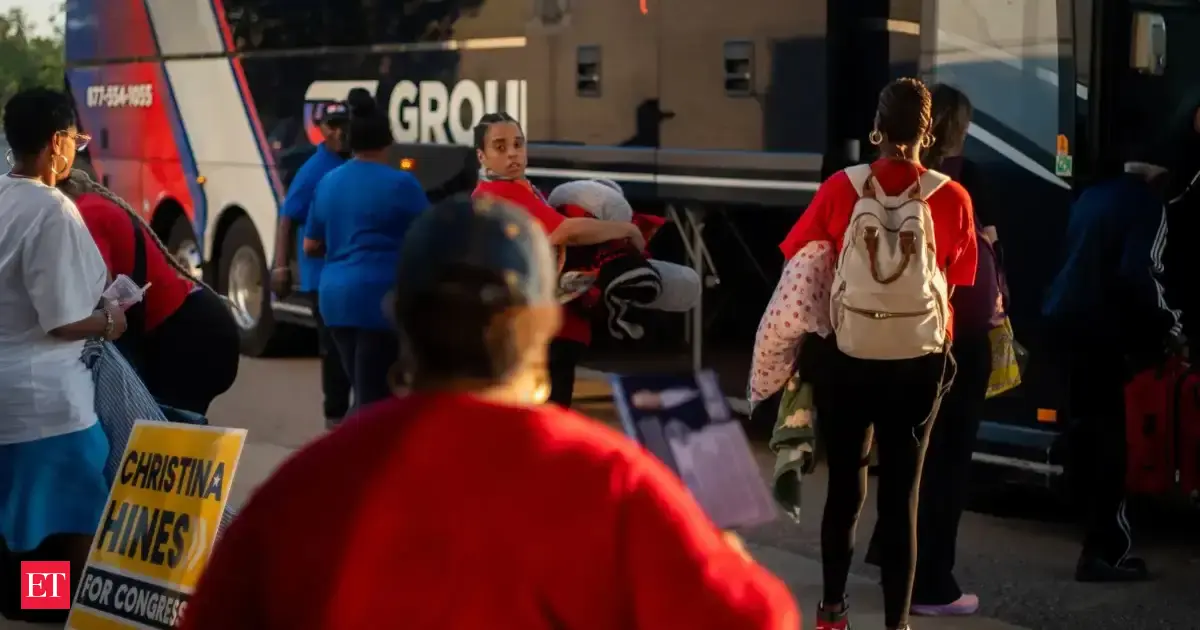
Thousands of civil rights advocates, community organizers, and voting rights defenders assembled in Washington, D.C., on Friday, August 28, 2026, for the "March on Washington 2026," a broad public rally organized to demand federal legislation restoring statutory safeguards for voters. Scheduled on the 63rd anniversary of the historic 1963 March on Washington for Jobs and Freedom—the watershed event where the Reverend Dr. Martin Luther King Jr. delivered his celebrated "I Have a Dream" address on the steps of the Lincoln Memorial—the rally focused on what leaders described as an accelerating rollback of democratic protections across the United States. Demonstrators lined the National Mall, framing ballot access as an urgent civil rights issue and urging both federal lawmakers and the judicial branch to halt measures that curtail voting rights.
Key facts
What happened
The demonstration commenced on the morning of August 28, 2026, as contingents of activists, religious leaders, labor union members, and students from across the country converged on the National Mall. Participants carried banners bearing messages emphasizing the preservation of ballot access, equal protection under the law, and the defense of constitutional rights. According to reporting by SECTIONS, the "March on Washington 2026" was designed to mobilize public support against a series of state-level statutory shifts and federal court rulings that civil rights leaders argue have systemic implications for democratic participation.
Throughout the afternoon, speakers took to stages positioned near the Lincoln Memorial, echoing the symbolic backdrop of the 1963 demonstration. Presenters detailed how recent changes to state election codes have altered the mechanics of casting a ballot, citing policies that reduce the number of physical polling sites, implement stricter photo identification rules, restrict the usage of off-site drop boxes, and narrow eligibility for absentee voting. Speaker after speaker stressed that while the explicit racial barriers of the Jim Crow era have been legally outlawed, modern administrative obstacles serve a functionally similar role by raising procedural hurdles for vulnerable populations.
The gathering featured addresses from veteran civil rights campaigners alongside younger activists, reflecting an intergenerational coalition committed to constitutional reforms. Organizers emphasized that the march was not merely a commemorative exercise marking past achievements, but an active intervention in ongoing legislative and legal disputes. As the rally progressed, attendees participated in a coordinated march along designated pathways near the Washington Monument and the United States Capitol, directing their message directly toward federal lawmakers responsible for framing federal election statutes.
Why it matters
The gathering in the nation's capital highlights a fundamental structural tension within the American system of governance: the dividing line between state authority to manage election procedures and federal authority to guarantee equal access to the ballot box. Under Article I, Section 4 of the United States Constitution, state legislatures are granted primary authority to prescribe the "Times, Places and Manner" of holding elections for federal representatives, subject to legislative intervention by Congress. For decades, federal oversight was bolstered by federal statutory law, most notably the Voting Rights Act of 1965.
However, judicial interpretations over the past decade have substantially reconfigured this balance. By eroding key enforcement mechanisms of federal voting legislation, judicial decisions have returned considerable discretionary power to individual state legislatures. Consequently, voting procedures in the United States have become increasingly fragmented. In some states, lawmakers have expanded opportunities for early voting, automatic voter registration, and universal mail-in balloting. In contrast, dozens of other state legislatures have passed laws tightening registration deadlines, purging voter rolls, and penalizing administrative errors by local election officials.
This divergence has direct consequences for the electorate. Nonpartisan policy studies demonstrate that administrative restrictions disproportionately reduce turnout among young voters, hourly workers, low-income citizens, and racial minorities who may face greater difficulty obtaining specific forms of government-issued identification or securing time off from work during designated polling hours. By gathering thousands of citizens at the nation's capital, the 2026 march underscores how ballot access policy directly influences electoral representation, party power dynamics, and public trust in democratic institutions.
The background
The historical precedent for the 2026 rally stretches back to August 28, 1963, when more than 250,000 people assembled in Washington, D.C., for the March on Washington for Jobs and Freedom. Organized by a coalition of civil rights, labor, and religious organizations led by figures such as A. Philip Randolph, Bayard Rustin, and Dr. Martin Luther King Jr., the 1963 march served as a catalyst for landmark federal legislation, including the Civil Rights Act of 1964 and the Voting Rights Act of 1965.
The Voting Rights Act of 1965 represented a historic federal intervention into state-level election administration. Under Section 4(b) and Section 5 of the Act, jurisdictions with a documented history of voting discrimination were required to obtain federal "preclearance" from the U.S. Department of Justice or a federal court before altering any voting procedure or electoral boundary. For nearly five decades, this mechanism prevented the implementation of discriminatory voting laws before they could take effect.
The legal landscape changed dramatically in June 2013, when the Supreme Court of the United States issued its landmark ruling in Shelby County v. Holder. In a 5–4 decision, the Court struck down the coverage formula in Section 4(b), rendering Section 5 ineffective until Congress enacted a revised coverage formula. Writing for the majority, Chief Justice John Roberts argued that the conditions that justified the original formula in 1965 no longer existed. Subsequent rulings, including Brnovich v. Democratic National Committee in 2021, further narrowed the scope of Section 2 of the Voting Rights Act, which prohibits voting practices that discriminate on the basis of race.
In the wake of these rulings, dozens of state legislatures enacted new statutory restrictions on ballot access, prompting civil rights organizations to push for federal legislative remedies. Measures such as the John Lewis Voting Rights Advancement Act and the Freedom to Vote Act were introduced in the U.S. Congress to restore federal preclearance mechanisms and set national standards for election administration. However, those legislative efforts faced persistent procedural obstacles, leaving federal protections uncurtailed and setting the stage for the renewed public demonstrations observed in August 2026.
Reaction
The "March on Washington 2026" drew widespread attention from civil rights organizations, legal scholars, and political leaders across the country. According to reporting by SECTIONS, prominent advocacy organizations emphasized that preserving democracy requires continuous public mobilization and legislative vigilance. Leaders from national civil rights groups reiterated their commitment to challenging restrictive state laws through concurrent federal litigation, public advocacy campaigns, and grass-roots voter mobilization drives.
In political circles, the rally highlighted long-standing ideological divisions regarding election administration. Proponents of federal voting rights legislation framed the event as a necessary demand for national standards that guarantee uniform constitutional protections for all citizens regardless of their state of residence. Conversely, conservative lawmakers and state election officials historically aligned with local election control argue that administrative regulations—such as strict voter identification requirements and limitations on drop boxes—are essential measures to maintain election security, prevent fraud, and bolster public confidence in election outcomes.
Legal experts noted that the public reaction to the march reflects a growing recognition that judicial appointments and statutory interpretations have shifted the venue of voting rights disputes from administrative oversight by the federal executive branch back to state capitals and federal courtrooms.
What we don't know yet
Several critical elements regarding the aftermath of the August 2026 march remain uncertain. Official crowd estimates for the demonstration on the National Mall have not been finalized by independent civic observers, leaving the exact scale of participation subject to ongoing review.
Beyond attendance metrics, the primary open question is whether the public mobilization will generate sufficient political momentum to alter the legislative trajectory in the U.S. Congress. It remains unclear whether lawmakers will attempt to negotiate bipartisan compromises on federal voting standards or if federal legislative efforts will remain stalled by procedural rules such as the Senate filibuster.
Furthermore, the outcome of pending federal court challenges against recently enacted state election statutes remains unknown. As federal courts evaluate state regulations under remaining statutory and constitutional standards, legal scholars continue to monitor whether future Supreme Court rulings will further restrict or partially restore federal remedies for alleged voter disenfranchisement.
What to watch
In the immediate aftermath of the demonstration, several key developments will determine the long-term impact of the 2026 march on American election policy. Observers will closely monitor legislative calendars in both houses of the U.S. Congress for any renewed floor debate or committee action concerning federal voting rights legislation, including proposed updates to the Voting Rights Act's preclearance criteria.
At the state level, watch for upcoming legislative sessions where lawmakers may introduce additional bills altering voter registration rules, polling location allocations, or mail-in ballot processing timelines ahead of upcoming election cycles. State legislative debates in contested states will serve as a primary indicator of whether the nationwide push for tighter voting controls will accelerate or face renewed pushback.
Additionally, docket movements in federal district and circuit courts—as well as potential petitions for certiorari before the Supreme Court—will be crucial to watch. Court decisions evaluating state redistricting maps and voting access restrictions under the Equal Protection Clause of the Fourteenth Amendment and Section 2 of the Voting Rights Act will define the legal boundaries of election administration for years to come.
Finally, civil rights organizations are expected to roll out expanded voter registration, education, and turnout initiatives designed to navigate complex state voting regulations during upcoming municipal, state, and national elections.
This report relies on news coverage provided by SECTIONS.
How this story was produced
This report was written by The Global Wire newsroom from reporting first published by SECTIONS Washington march echoes Martin Luther King Jr. We verify the core facts against the original report, write our own account, and add the background and consequences a short wire item leaves out. Drafting is AI-assisted inside an editor-supervised pipeline, and every story is checked for accuracy of attribution, structure and duplication before it appears — full detail in our AI and funding disclosure.
Spotted an error? Tell us at corrections@horizonglobalnews.com and read our corrections policy or editorial standards.




Reader comments
Loading comments…