

China Export Growth Accelerates to 25 Percent in August on Global AI Demand
Official customs data released in Beijing showed Chinese exports surged 25 percent year-on-year in August, driven by international appetite for technology products linked to global AI infrastructure.
By The Global Wire Newsroom · Reported from CNA
Link preview · horizonglobalnews.com
China Export Growth Accelerates to 25 Percent in August on Global AI Demand
Official customs data released in Beijing showed Chinese exports surged 25 percent year-on-year in August, driven by international appetite for technology products linked to global AI infrastructure.
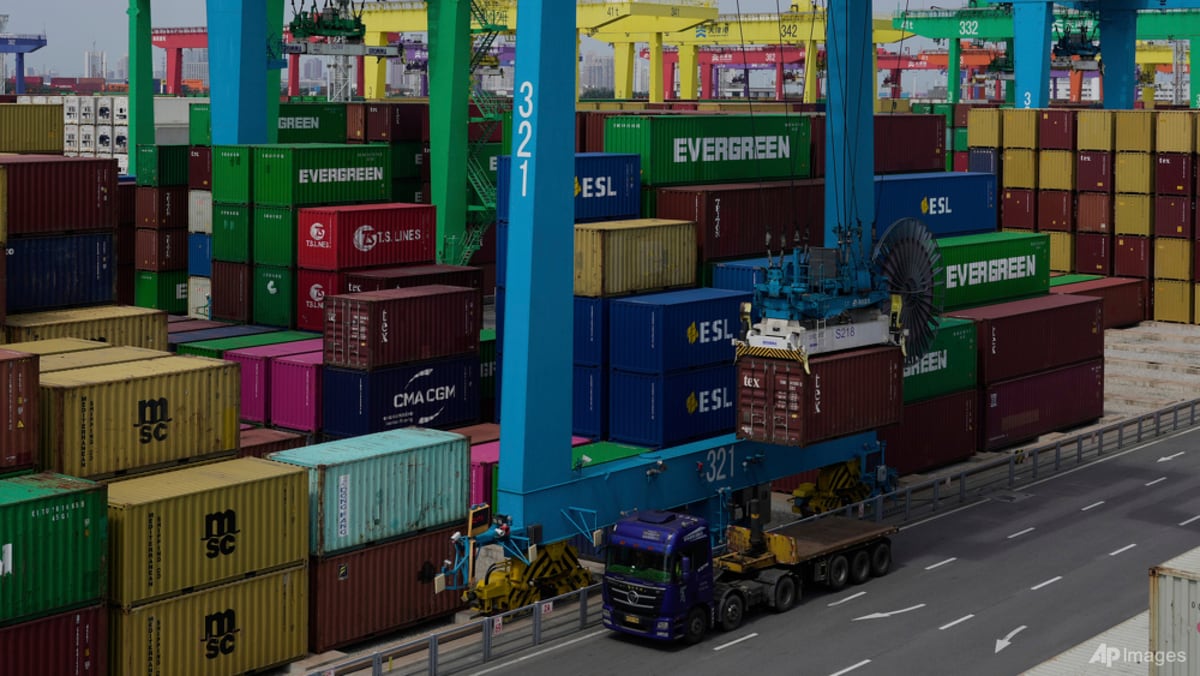
China recorded a sharp expansion in its international trade performance during August, driven by robust worldwide appetite for advanced electronic components and technology equipment linked to the ongoing global artificial intelligence infrastructure buildout. Official trade figures released on September 8 by the General Administration of Customs in Beijing revealed that Chinese exports grew by 25 percent compared to the same month in the prior year. The expansion represents a notable acceleration in outward shipments, surpassing previous growth trajectories and highlighting the central role Chinese manufacturing continues to play in supplying critical hardware, microelectronics, and industrial technology to international markets amid evolving global macroeconomic conditions.
Key facts
What happened
Official trade statistics released on September 8 by China's General Administration of Customs showed a pronounced expansion in both exports and imports for the month of August, exceeding baseline economic forecasts. Outward shipments from Chinese ports grew by 25 percent year-on-year, representing an acceleration in growth speed compared to performance metrics recorded earlier in the year. Import volumes also expanded substantially, pointing to sustained domestic processing activity and steady demand for foreign raw materials and intermediate industrial goods.
According to the customs authority, the single largest catalyst behind the export acceleration was an intense global demand spike for technology products, particularly hardware essential to the construction and maintenance of artificial intelligence computing infrastructure. Global technology enterprise spending on server clusters, data center power systems, printed circuit boards, high-capacity networking apparatus, and specialized electronic sub-assemblies generated a heavy order volume for Chinese manufacturers throughout the summer.
Industrial production centers situated across major coastal export hubs, including Guangdong province, Zhejiang province, and the industrial zones surrounding Shanghai, maintained elevated operational capacity to fulfill foreign contract deliveries. The surge in outbound shipments reflects both end-user infrastructure investments by foreign tech conglomerates and widespread inventory rebuilding across international supply chains.
Concurrently, the sharp rise in Chinese imports highlights the structural mechanics of the country's processing trade system. Chinese manufacturing enterprises routinely import substantial quantities of raw commodities, specialized chemicals, precision tools, and high-grade microchips from international suppliers. These components are integrated into complex finished products on domestic assembly lines before being shipped to overseas markets. The simultaneous expansion of both import and export streams indicates that China's broader industrial ecosystem operated at high capacity throughout August, balancing input sourcing with accelerated export output.
Why it matters
The August trade metrics carry far-reaching implications for global economic growth forecasts, technology industry capital spending, and international trade relations. First, the 25 percent surge in export volume demonstrates that the massive international buildout of artificial intelligence infrastructure is acting as a major macroeconomic stabilizer for East Asian trade flows. While public attention surrounding artificial intelligence frequently focuses on software algorithms and advanced semiconductor design originating in North America and Europe, the physical infrastructure required to operate these systems—ranging from server racks, cooling apparatus, and power conversion units to optical transceivers—remains heavily dependent on Chinese industrial output and specialized manufacturing scale.
Second, the trade expansion offers valuable momentum to China's domestic economy, which has navigated headwinds stemming from a prolonged downturn in the residential property sector and cautious domestic consumer spending. Strong export growth generates substantial foreign currency inflows, supports manufacturing employment across key industrial provinces, and boosts revenue for domestic manufacturing conglomerates and logistics providers.
Third, the strong export numbers are likely to reinvigorate political debates in Washington, Brussels, and other major capital cities regarding global trade balances and industrial capacity. European and American policymakers who have expressed concern over Chinese industrial overcapacity may interpret the 25 percent export acceleration as evidence that Chinese goods continue to expand their global market share rapidly. This dynamic could accelerate the implementation of trade protection measures, anti-dumping duties, or heightened export controls on dual-use technology components in the coming months.
The background
To fully understand the significance of China's August trade figures, it is essential to examine the historical trajectory of the country's industrial development and its structural integration into global technology supply chains over the past several decades. Following China's entry into the World Trade Organization in December 2001, the country rapidly transformed into the world's primary manufacturing hub. Initially reliant on low-cost labor to produce textiles, toys, and simple consumer electronics, Chinese industrial policy systematically prioritized moving up the value-added manufacturing ladder. Over the subsequent two decades, massive public and private investments in port logistics, high-speed rail networks, electrical grid capacity, and technical education created deeply concentrated industrial ecosystems capable of complex manufacturing at unprecedented scale.
In recent years, international trade dynamics have been increasingly shaped by geopolitical rivalry between the United States and China. Beginning in 2018, Washington imposed broad tariffs on hundreds of billions of dollars worth of Chinese imports under Section 301 of the Trade Act of 1974. Subsequent American administrations expanded trade restrictions by enacting targeted export controls aimed at restricting China's access to cutting-edge semiconductor manufacturing equipment and advanced artificial intelligence microchips. In response, Western multinational corporations initiated supply chain diversification strategies, often termed "nearshoring" or "friendshoring," aimed at shifting production capacity toward alternative manufacturing destinations in Southeast Asia, India, and Latin America.
Despite these policy initiatives and corporate restructuring efforts, China's core manufacturing ecosystem has proven resilient. The recent wave of global investment in generative artificial intelligence and enterprise compute infrastructure, which escalated dramatically beginning in 2023, required vast quantities of specialized hardware delivered within tight deadlines. Because alternative manufacturing locations often lack the specialized component supplier networks, raw material processing facilities, and high-volume assembly lines present in Chinese industrial hubs, international technology firms have continued to rely heavily on Chinese suppliers for non-restricted hardware components, power equipment, and structural electronic assemblies.
Reaction
The publication of the August trade dataset by the General Administration of Customs is prompting close review across financial markets, central banks, and trade policy institutions worldwide. Economic analysts and investment strategists tracking East Asian trade flows noted that the 25 percent export growth rate significantly exceeded broad consensus expectations, demonstrating the exceptional strength of the global technology replacement and upgrade cycle.
International business groups and foreign chambers of commerce operating in Beijing are analyzing the numbers to determine how the export rebound might influence domestic economic policy planning, including potential monetary easing or targeted government support for manufacturing enterprises. In foreign capitals, including Washington and Brussels, trade officials and policy advisers are scrutinizing the customs data to assess the impact of surging Chinese exports on bilateral trade deficits and to evaluate whether current tariff structures are effectively reshaping trade flows. Official statements from Chinese commercial representatives consistently emphasize that the country's trade growth reflects the high competitiveness, reliability, and innovation of domestic manufacturers in serving international market demand.
What we don't know yet
While the top-line trade statistics released by the General Administration of Customs establish the overall magnitude of the August trade surge, several important operational details remain unconfirmed pending further official disclosures. The initial summary dataset published on September 8 does not provide a comprehensive breakdown of export volumes by individual destination country, making it impossible to determine precisely how much of the 25 percent growth was absorbed directly by Western consumer markets versus intermediate transshipment hubs in Southeast Asia, Mexico, or Eastern Europe.
Additionally, detailed itemized customs entries specifying the exact financial value and unit volume for specific hardware subcategories—such as high-end optical transceivers versus standard enclosure units—have not yet been fully released. It also remains unclear whether the sharp increase in August exports reflects a sustained, multi-quarter expansion driven by fundamental corporate capital expenditure budgets, or if foreign buyers accelerated purchasing schedules to front-load inventory ahead of anticipated trade policy shifts or potential tariff increases in major Western markets. Finally, the exact proportion of the import rise attributable to raw material stockpiling versus immediate domestic manufacturing consumption requires further macroeconomic data to evaluate conclusively.
What to watch
In the coming weeks, market participants, corporate strategists, and policy researchers will track several key milestones to gauge the durability of China's trade momentum and its broader macroeconomic impact. First, the General Administration of Customs is scheduled to release its detailed monthly trade bulletin, which will disclose granular country-by-country trade balances and specific commodity breakdowns, clarifying the exact destination routes and product categories that drove the August expansion.
Second, upcoming monthly economic reporting from China's National Bureau of Statistics—including industrial production growth, retail sales figures, and fixed-asset investment data—will show whether the robust export performance is spilling over into broader domestic economic activity, employment levels, and corporate profitability. Third, international policy responses will be closely observed, particularly any prospective announcements by the Office of the United States Trade Representative or European trade commissioners regarding potential adjustments to existing tariff schedules or new anti-subsidy investigations. Finally, upcoming quarterly financial earnings reports and capital spending disclosures from major global cloud service providers and technology hardware buyers will provide crucial confirmation on whether global artificial intelligence infrastructure investments will sustain their current momentum through the remainder of the calendar year.
This report is based on original reporting published by CNA.
How this story was produced
This report was written by The Global Wire newsroom from reporting first published by CNA. We verify the core facts against the original report, write our own account, and add the background and consequences a short wire item leaves out. Drafting is AI-assisted inside an editor-supervised pipeline, and every story is checked for accuracy of attribution, structure and duplication before it appears — full detail in our AI and funding disclosure.
Spotted an error? Tell us at corrections@horizonglobalnews.com and read our corrections policy or editorial standards.





Reader comments
Loading comments…